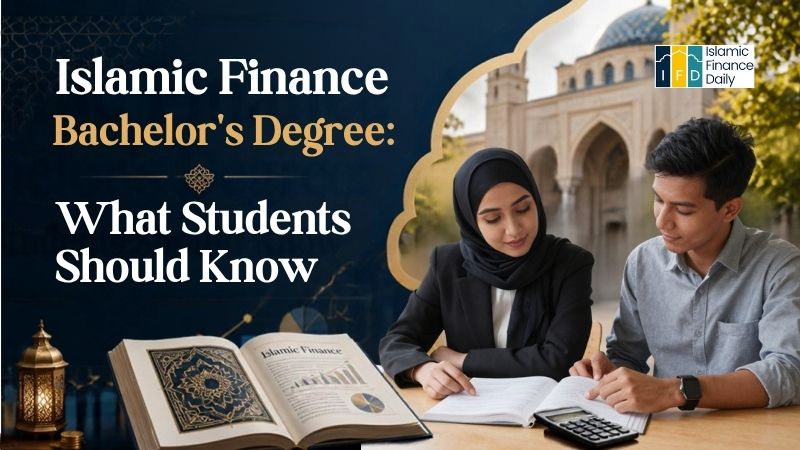
Islamic Finance Bachelor’s Degree: What Students Should Know
1. Introduction
An Islamic finance bachelor’s degree is an undergraduate programme designed to introduce students to finance, banking, economics and related business subjects alongside the principles and frameworks that underpin Islamic finance.
However, there is no single standard curriculum used by every university. The title of the degree, its balance between finance and Shari’ah-related subjects, the number of credits, practical training and elective options can differ by institution and country. For example, Universiti Utara Malaysia offers a Bachelor of Islamic Finance and Banking with Honours as an eight-semester programme, while other universities may place Islamic finance within broader finance, banking, economics or Islamic business degrees.
For students considering this pathway, the important question is therefore not simply whether a university offers a degree with “Islamic Finance” in its title. It is also important to understand what studying the subject at bachelor’s level actually involves, what academic foundations are developed, and what options may be available after graduation.
An Islamic finance bachelor’s degree can combine several areas of study. Depending on the programme, students may encounter conventional finance and accounting concepts, Islamic economics, Islamic commercial law, Islamic financial contracts, banking, investment, regulation and Shari’ah governance. Official course information from UUM, for example, includes subjects such as Islamic financial markets and institutions, Islamic economics, contracts in Islamic finance and banking, Islamic investment, regulation and Shari’ah governance, and managing Islamic banks.
This article explains what prospective students should understand about the bachelor’s-degree pathway, including the subjects they may study, typical programme duration, entry considerations, skills that may be developed and possible directions after graduation.
For students who are already comparing universities and individual programmes, see our related guide, “Best Universities for Islamic Finance: Programmes, Degrees & Study Options,” for a broader discussion of programme-selection considerations.
Student Reference Note: Universities mentioned in this article only as an example of how an Islamic banking and finance bachelor’s programme may be structured. It is not presented as a recommendation or as a universal model for Islamic finance education. Programme duration, curriculum, entry requirements, study modes and practical-training arrangements can vary between universities and countries. Students should research the universities and programmes available in their own country or preferred study destination and consult the relevant official university websites for the most current information.
2. What Is an Islamic Finance Bachelor’s Degree?
An Islamic finance bachelor’s degree is an undergraduate academic programme that combines the study of finance and business with the principles, institutions and practices associated with Islamic finance.
The exact structure depends on the university. Some programmes are specifically titled Islamic Finance and Banking, while others use titles such as Islamic Banking and Finance or incorporate Islamic finance into a broader business, economics or finance programme. For example, Universiti Utara Malaysia offers a Bachelor of Islamic Finance and Banking with Honours, while Universiti Sains Islam Malaysia offers a Bachelor of Islamic Banking and Finance with Honours.
At bachelor’s level, the degree is generally intended to provide students with an undergraduate foundation rather than specialised professional training in one narrow area. Students may study financial concepts alongside subjects related to Islamic economics, Islamic banking, financial markets, Shari’ah governance and Islamic financial contracts. The precise combination varies between programmes.
For example, published UUM course information includes subjects covering Islamic financial markets, instruments and institutions, Islamic banking, Islamic bank operations, Islamic economics, regulation and Shari’ah governance, Islamic investment and Islamic financial planning.
Some programmes also include a practical component. USIM’s Bachelor of Islamic Banking and Finance, for example, specifies 20 weeks of industrial training as part of the programme.
This means that students should not assume that an Islamic finance bachelor’s degree consists entirely of Shari’ah or Islamic studies. Depending on the curriculum, it can involve finance, economics, accounting, banking, management, quantitative subjects and Islamic commercial principles alongside specialised Islamic finance courses.
The degree can therefore be understood as an academic pathway that helps students build a foundation across two connected areas: the technical study of finance and the principles and structures used to understand financial activity from an Islamic perspective.
The next question for a prospective student is naturally: what subjects are actually studied during the degree? That depends heavily on the university and its academic approach.
3. What Do You Study in an Islamic Finance Bachelor’s Degree?
The subjects included in an Islamic finance bachelor’s degree depend on the university, programme title and academic structure. Some programmes have a strong banking and finance focus, while others place greater emphasis on Islamic economics, Shari’ah-related subjects, business or financial management.
A typical programme may therefore bring together several groups of subjects.
Islamic finance and banking
Students may study the structure and operation of Islamic financial institutions and the products and contracts used within them. Possible subjects include Islamic banking, Islamic financial systems, Islamic financial markets, Islamic investment and Islamic financial management.
For example, the published curriculum for the Bachelor of Islamic Banking and Finance with Honours at Universiti Sains Islam Malaysia includes Islamic Financial System, Principles and Practices of Islamic Banking, Islamic Capital Market, Islamic Wealth Management and Islamic Corporate Finance.
Islamic economics and Shari’ah-related subjects
Some programmes introduce students to the principles that distinguish Islamic finance from conventional financial activity. These may include Islamic economics, Fiqh al-Mu’amalat (Islamic commercial jurisprudence), Islamic financial contracts and subjects relating to Shari’ah governance.
USIM, for example, lists Islamic Economics and Fiqh Muamalat among the discipline core courses in its bachelor’s programme.
The depth of Shari’ah study can vary considerably. A student should therefore examine the actual curriculum rather than assume that a degree with “Islamic Finance” in its title will provide extensive training in Islamic jurisprudence.
Finance, accounting and quantitative subjects
Islamic finance students may also study subjects that are common to broader finance and business degrees. These can include financial management, accounting, investment, statistics, mathematics, risk management and financial markets.
USIM’s programme, for instance, includes Business Statistics, Business Mathematics, Principles of Financial Management, Investment, Credit Management and Risk Management.
This quantitative and financial foundation can be an important part of the undergraduate experience because students are not studying Islamic finance in isolation from the wider financial system.
Business and management subjects
Depending on the university, students may also encounter management, marketing, strategy, entrepreneurship or related business subjects. Some programmes offer these as electives rather than compulsory courses.
USIM’s published elective list, for example, includes Marketing, Strategic Management, Data and Business Analytics and Financial Technology, alongside more specialised options such as Shariah Audit and International Finance.
Practical training and projects
Some bachelor’s programmes also include an internship, practicum, research project or other practical component. These requirements are not universal, so students should check the programme structure of the university they are considering.
For example, USIM specifies 20 weeks of industrial training within its Bachelor of Islamic Banking and Finance programme.
Overall, an Islamic finance bachelor’s degree can involve much more than learning about Islamic banking products. Depending on the programme, students may study finance, economics, accounting, mathematics, banking, investment, Shari’ah and business management as interconnected areas.
The exact combination matters because two degrees with similar names can provide different academic experiences.
4. How Long Does an Islamic Finance Bachelor’s Degree Take?
The duration of an Islamic finance bachelor’s degree depends on the university, country, programme structure and study mode. There is therefore no single duration that applies to every programme.
A four-year full-time structure is used by some universities. For example, Universiti Sains Islam Malaysia (USIM) states that its Bachelor of Islamic Banking and Finance with Honours takes four years, or eight semesters, on a full-time basis.
Universiti Utara Malaysia (UUM) also lists its Bachelor of Islamic Finance and Banking with Honours as an eight-semester programme.
The number of semesters alone, however, does not necessarily tell a student how the degree will be experienced. A programme may include different combinations of core courses, electives, university-level subjects, internships, research projects and other requirements.
For example, USIM’s programme includes 20 weeks of industrial training as part of the undergraduate structure. This means that part of the overall degree period may be devoted to practical exposure rather than conventional classroom-based coursework.
Can the duration be different?
Yes. Students should check the official programme regulations rather than assuming that every bachelor’s degree takes four years.
Duration can differ because of factors such as:
- full-time versus part-time study;
- foundation or preparatory pathways;
- transfer or advanced standing arrangements;
- exemptions or recognised prior learning, where permitted;
- internship or industrial-training requirements;
- university-specific academic calendars and credit requirements.
Some universities also offer preparatory programmes before the bachelor’s degree. For example, USIM offers a one-year Preparatory of Accounting and Muamalat programme that can provide a pathway into its Bachelor of Islamic Banking and Finance programme, subject to the applicable requirements.
Students should therefore distinguish between the duration of the bachelor’s degree itself and the total time required to reach the degree through a foundation or preparatory route.
Before applying, it is useful to confirm the official programme page for the current academic year and check the stated duration, number of semesters or credits, internship requirements and any available progression routes.
5. What Are the Entry Requirements?
Entry requirements for an Islamic finance bachelor’s degree vary by university, country and programme. There is no single set of admission requirements that applies to all Islamic finance degrees.
In general, universities may require applicants to have completed an appropriate secondary-school qualification or equivalent before beginning an undergraduate programme. However, the specific qualification, grades, prerequisite subjects and language requirements depend on the institution and the education system in which the student studied.
For example, USIM’s published admission information for its Bachelor of Islamic Banking and Finance specifies particular academic qualifications and subject requirements for different applicant pathways. Its requirements also include English-language conditions for relevant applicants.
Other universities may have different requirements. Some may place greater emphasis on mathematics, accounting, economics or business-related subjects, while others may accept applicants from a broader range of secondary-school backgrounds.
Academic background
Students should check whether the programme specifies particular subjects at secondary-school level.
For an Islamic finance degree, requirements may sometimes include subjects such as:
- mathematics;
- economics;
- accounting;
- business studies; or
- Islamic studies or related subjects.
These are not universal requirements. A student should rely on the official admission requirements of the specific university rather than assuming that one institution’s prerequisites apply elsewhere.
English or other language requirements
Language requirements can also differ. A university may require evidence of proficiency in the language in which the programme is taught, particularly for international applicants.
The required test, minimum score and exemptions can vary by institution. Students should therefore check the university’s current requirements before submitting an application.
International students
Students applying outside their home country may have additional requirements relating to academic equivalency, visas, documentation, language proficiency or other national regulations.
These requirements are normally separate from the academic content of the degree itself and may involve both the university and the relevant authorities in the destination country.
What should prospective students do?
Rather than relying on general lists found online, prospective students should identify the specific bachelor’s programmes they are interested in and check the official admission page for each one.
A useful checklist is:
- What secondary-school qualification is accepted?
- Is a minimum grade or overall result required?
- Are particular subjects required?
- Is an English-language or other language test required?
- Are there separate requirements for international students?
- Is a foundation or preparatory programme available or required?
- Are there alternative admission routes for students with different educational backgrounds?
Entry requirements can change between academic years, so students should always confirm the current requirements directly with the university before applying.
6. Is an Islamic Finance Bachelor’s Degree Only About Islamic Finance?
No. An Islamic finance bachelor’s degree is generally broader than the name might suggest.
At undergraduate level, students may study Islamic finance alongside finance, accounting, economics, banking, mathematics, statistics, management and other business subjects. The balance between these areas depends on the university and its curriculum.
For example, the published curriculum of USIM’s Bachelor of Islamic Banking and Finance includes subjects such as Business Mathematics, Business Statistics, Principles of Financial Management, Investment, Risk Management and Islamic financial subjects.
This broader academic foundation is important because Islamic financial institutions operate within the wider financial and economic environment. Understanding concepts such as financial statements, investment, risk, financial markets and management can therefore form part of an undergraduate Islamic finance education.
At the same time, Islamic finance programmes may introduce students to areas that distinguish Islamic finance from conventional finance. Depending on the programme, these may include:
- Islamic economics;
- Islamic banking;
- Islamic financial contracts;
- Fiqh al-Mu’amalat;
- Islamic capital markets;
- Islamic investment;
- Islamic wealth management; and
- Shari’ah governance.
Not every programme will include all of these subjects, and the depth of study can differ significantly.
The balance can vary between programmes
Two universities may both offer bachelor’s degrees related to Islamic finance but structure them differently.
One programme might place greater emphasis on banking and financial management, while another might provide more coursework in Islamic economics and Shari’ah-related subjects. A third may integrate Islamic finance into a broader business or economics degree.
This is why students should look beyond the programme title and examine the actual course list, credit structure and academic progression.
Students who want substantial Shari’ah training should also pay particular attention to how much of the curriculum is devoted to Islamic jurisprudence and commercial law. An Islamic finance bachelor’s degree should not automatically be assumed to be equivalent to a degree in Shari’ah or Islamic jurisprudence.
Likewise, a student seeking a strong technical finance background should examine the programme’s coverage of accounting, quantitative methods, financial management, investment, banking and related areas.
The bachelor’s degree is therefore best understood as an interdisciplinary undergraduate pathway whose exact combination of Islamic finance, Shari’ah, finance, economics and business subjects depends on the institution.
The next section looks at an important distinction for prospective students: Islamic Finance vs Islamic Economics vs Islamic Banking & Finance degrees.
7. Islamic Finance vs Islamic Economics vs Islamic Banking & Finance Degrees
The names of undergraduate programmes in this field can look similar, but they do not necessarily describe the same academic pathway. Islamic Finance, Islamic Economics, and Islamic Banking & Finance programmes may overlap in some areas while placing different emphasis on economics, financial institutions, banking, business, Shariah, or broader Islamic economic principles.
There is no single curriculum that applies to every university. The programme title should therefore be treated as a starting point rather than a complete description of what a student will study.
Islamic Finance
A bachelor’s degree specifically focused on Islamic Finance generally centres on the principles and practices used in Islamic financial activities. Depending on the university, students may study areas such as Islamic financial contracts, Islamic banking, Islamic capital markets, takaful, Islamic investment, Shariah principles related to financial transactions, and financial management.
For example, Universiti Kuala Lumpur’s Bachelor in Islamic Finance with Honours describes its programme as covering a broad range of Islamic finance fields, while Universiti Sultan Zainal Abidin’s Bachelor of Business Administration (Islamic Finance) combines Islamic finance with business-management knowledge.
This type of degree may therefore suit students who want their undergraduate studies to have a relatively direct focus on Islamic financial services, while still gaining business or finance knowledge.
Islamic Economics
Islamic Economics has a broader economic perspective. Rather than concentrating primarily on financial institutions, an Islamic economics programme can examine economic theory, economic policy, development and Islamic economic principles.
For example, the current bachelor’s programme in Islamic Economics at Umm Al-Qura University includes subjects such as principles of economics, microeconomics, mathematics for economists, financial accounting, quantitative methods and Usul al-Fiqh for Economists.
This illustrates an important distinction: an Islamic Economics degree can include Islamic finance, but its academic scope may extend considerably beyond financial services.
Islamic Banking & Finance
Programmes titled Islamic Banking & Finance usually place more visible emphasis on financial institutions and banking alongside Islamic finance.
For example, the Islamic University of Malaysia (USIM) offers a Bachelor of Islamic Banking and Finance with Honours. Its programme description states that the degree covers both theoretical and practical aspects of Islamic banking and finance and is structured as a four-year, eight-semester programme.
Depending on the university, such a programme may include Islamic banking, financial markets, investment, risk management, Shariah-related subjects and other areas of finance and business.
The differences can be summarised broadly
| Degree title | General academic emphasis | Possible areas of study |
|---|---|---|
| Islamic Finance | Islamic financial activities and institutions | Islamic banking, Islamic capital markets, takaful, Islamic investments, Shariah and finance |
| Islamic Economics | Economics through an Islamic perspective | Economic theory, microeconomics, macroeconomics, economic policy, development, Islamic economic thought |
| Islamic Banking & Finance | Banking and finance with an Islamic focus | Islamic banking, financial markets, finance, Islamic financial products and related Shariah subjects |
These are general distinctions, not universal rules. Two universities using the same programme title can have noticeably different curricula.
For this reason, students should look beyond the degree title and examine the actual study plan and course descriptions of the programme they are considering.
For a broader discussion of comparing Islamic finance degree programmes and universities, see IFD’s “Best Universities for Islamic Finance: Programmes, Degrees & Study Options.”
Why the distinction matters
The difference can become particularly relevant when a student already has a possible academic direction in mind.
A student interested in financial institutions and Islamic financial products may find an Islamic Finance or Islamic Banking & Finance programme more closely aligned with those subjects. Someone more interested in economic theory, public policy, development or economic research may find an Islamic Economics programme more closely aligned with those interests.
However, the degree title alone does not determine a graduate’s future path. The actual curriculum, electives, internships, additional qualifications and subsequent education can all affect the academic and professional direction available to a graduate.
8. What Skills Can Students Develop?
An Islamic Finance bachelor’s degree can develop a combination of finance knowledge, analytical ability, communication skills and understanding of Islamic commercial principles. The exact learning outcomes depend on the university and curriculum.
For example, Universiti Islam Malaysia identifies learning outcomes covering problem-solving, practical decision-making, digital and numeracy skills, communication, teamwork, leadership and professional ethics. Dar Al-Hekma University’s Islamic Finance track similarly identifies analytical, research, communication, decision-making and problem-solving skills as programme outcomes.
Financial and technical knowledge
Students may develop an understanding of areas such as:
- financial management
- accounting
- banking and financial institutions
- Islamic financial contracts and products
- Islamic capital markets
- takaful
- investment and asset management
- financial analysis
- risk management
Not every programme includes all of these subjects. For example, the Bachelor of Islamic Finance at Universiti Islam Malaysia includes financial management, Islamic capital markets, accounting for Islamic finance, takaful, auditing and governance, and Islamic financing management among its listed core courses.
Analytical and problem-solving skills
Finance programmes generally require students to work with financial information, analyse problems and apply concepts to practical situations. Some Islamic finance programmes explicitly include financial analysis and problem-solving among their learning outcomes. KTO Karatay University’s Islamic Economics and Finance programme, for example, identifies data collection, evaluation, analysis and problem-solving as programme competencies.
Students may therefore encounter assignments, case studies, financial calculations, research projects or other activities requiring them to apply what they have learned rather than simply memorising concepts.
Understanding of Shariah and Islamic commercial principles
Another distinctive element may be the study of Shariah principles relevant to economics and financial transactions. Depending on the programme, this can include subjects related to Islamic commercial law, fiqh al-muamalat, Islamic financial contracts and the principles underlying Islamic financial products.
The depth of this component varies considerably. Some programmes integrate these subjects throughout the finance curriculum, while others give them greater emphasis through dedicated courses.
Communication and teamwork
Students can also develop transferable skills that are useful beyond a specific finance subject. Programme learning outcomes at Universiti Islam Malaysia, for example, include effective communication, teamwork, leadership and responsibility.
These skills may be developed through presentations, group assignments, research activities, classroom discussions and other forms of assessment, depending on the teaching approach used by the university.
Digital and quantitative skills
Because finance involves financial data and numerical analysis, students may encounter mathematics, statistics, accounting, financial analysis and digital tools during their degree. The exact level of quantitative work depends on the programme.
For example, Umm Al-Qura University’s Islamic Economics bachelor’s curriculum includes mathematics for economists, quantitative economic methods, financial accounting and finance and investment courses.
A combination rather than a single skill set
An Islamic Finance bachelor’s degree should therefore not be viewed simply as a programme for learning about Islamic banking. Depending on its curriculum, it can combine finance, economics, accounting, Islamic commercial principles, analytical methods and broader professional skills.
Students should review the actual course list and programme learning outcomes of each degree to understand what skills they are likely to develop, rather than assuming that all programmes with “Islamic Finance” in their title provide the same academic experience.
9. What Can You Do After an Islamic Finance Bachelor’s Degree?
An Islamic Finance bachelor’s degree can provide an academic foundation for further study or for pursuing entry-level opportunities in areas related to finance, banking, business and Islamic financial services. However, a degree does not guarantee employment in a particular role, and the opportunities available to a graduate depend on factors such as the programme studied, additional skills, experience, local regulations and the requirements of individual employers.
Potential areas of work
Depending on their education and additional experience, graduates may explore areas such as:
- Islamic banking
- conventional financial institutions with Islamic finance activities
- Islamic investment and asset management
- Islamic capital markets
- takaful and insurance-related services
- financial operations and administration
- accounting and financial services
- Shariah-related support functions
- research and academic support
- business and financial analysis
The precise career scope depends on the curriculum. For example, the Islamic Banking and Finance bachelor’s programme at Universiti Sains Islam Malaysia identifies theoretical and practical preparation in Islamic banking and finance as part of its programme objectives.
Some programmes also combine Islamic finance with broader economics, finance and business education. KTO Karatay University’s Islamic Economics and Finance programme, for example, includes economics, finance, management, accounting, mathematics, statistics and econometrics alongside Islamic economics and finance subjects.
This means graduates from similarly named programmes may have different academic backgrounds.
Further study after the bachelor’s degree
A bachelor’s degree can also serve as a foundation for postgraduate education. Depending on the student’s academic background and the admission rules of the institution, possible directions may include master’s-level study in areas such as:
- Islamic finance
- Islamic economics
- finance
- economics
- banking
- business administration
- accounting
- related Shariah or Islamic studies fields
The appropriate postgraduate route depends on the entry requirements of the individual programme. Students should therefore check the requirements of the master’s programme they may eventually want to pursue rather than assuming that every bachelor’s degree provides automatic eligibility.
Professional qualifications and additional learning
Some graduates may also choose to complement their bachelor’s degree with professional qualifications, specialist training, internships or other forms of practical learning.
This can be particularly relevant where a student wants to develop expertise in a specific area such as accounting, audit, Shariah, risk management, investment or Islamic financial standards.
However, professional qualifications should be viewed as additional education, not as a universal requirement for every Islamic finance graduate. Whether one is useful depends on the student’s intended field and the requirements of relevant employers or professional bodies.
Your first degree does not necessarily determine your entire career
An Islamic Finance bachelor’s degree provides a particular academic foundation, but graduates can continue developing their careers in different directions.
For example, a student may begin with Islamic finance and later specialise in finance, economics, accounting, research, business or another related field through postgraduate study and professional experience.
The important point is to distinguish between what the bachelor’s degree teaches and what a graduate may eventually become qualified to do. A programme can provide relevant knowledge and skills, but specific professional roles may have additional educational, regulatory or experience requirements.
For students considering their next step after graduation, it is therefore useful to examine the requirements of actual roles or postgraduate programmes rather than relying only on the title of the bachelor’s degree.
10. Can You Study Islamic Finance Online?
Yes, some Islamic finance-related bachelor’s programmes are available through online or distance-learning formats, but availability, delivery methods and programme recognition vary by university and country.
For example, the International Open University currently lists a Bachelor of Science in Islamic Economics, Banking & Finance as an online programme and states that its programmes are available 100% online. Its published study plan also distinguishes between full-time and part-time study.
Other institutions may use different models, such as distance education, blended learning or open learning. Therefore, students should not assume that an “online” programme at one university operates in exactly the same way as an online programme elsewhere.
What might online study involve?
Depending on the university, online study may include:
- recorded or live lectures
- online reading materials
- digital learning platforms
- online assignments and assessments
- discussion forums or virtual classes
- research projects
- examinations conducted online or through designated examination arrangements
The exact format should be confirmed directly with the university.
For example, the International Open University’s published curriculum shows semester-based online study covering subjects including accounting, economics, Islamic finance, Islamic economics, money and banking, and Islamic financial markets and institutions.
Online does not necessarily mean the same experience as campus study
An online bachelor’s degree can provide flexibility, but students should understand how the programme actually operates before enrolling.
Questions worth checking include:
- Are classes live, recorded, or both?
- How are examinations conducted?
- Are there compulsory attendance requirements?
- Is an internship required?
- How much interaction is there with lecturers and other students?
- What academic support is available?
- Which learning platform is used?
- Is the programme designed for full-time, part-time, or both types of students?
These details can differ significantly between programmes.
Recognition is particularly important
Students considering an online degree should also verify the legal and academic status of the specific programme, rather than assuming that an online degree automatically has the same recognition everywhere.
This can be especially important if the student intends to:
- apply for a master’s degree later;
- seek employment in another country;
- use the degree for professional or regulatory purposes; or
- have the qualification assessed by an education authority.
Recognition and equivalency are determined according to the relevant institution, country and purpose. The university itself may provide information about accreditation or recognition, but students may also need to check the requirements of the relevant national education authority.
Online Islamic finance programmes can also have different academic scopes
Another important point is that an online programme does not necessarily have to be titled “Bachelor’s in Islamic Finance.”
For example, the International Open University’s online bachelor’s programme is titled Bachelor of Science in Islamic Economics, Banking & Finance, illustrating how Islamic finance may be incorporated into a broader degree.
Therefore, students interested specifically in Islamic finance should examine the actual curriculum, qualification title and awarding institution rather than searching only for the words “online Islamic finance degree.”
Ultimately, the question is not simply whether a programme can be studied online. Students should understand what qualification they will receive, how the programme is delivered, and whether that qualification meets their intended academic or professional requirements.
11. What Should Students Check Before Applying?
Before applying for an Islamic Finance bachelor’s degree, students should look beyond the programme title and examine the actual degree structure, admission conditions and academic pathway.
Because programmes can differ substantially between universities, checking the details in advance can help students understand what they are actually applying for.
1. The exact degree title
Start by confirming the official name of the qualification.
A university may offer a degree titled Islamic Finance, Islamic Banking and Finance, Islamic Economics and Finance, or another similar name. These titles can represent different academic emphases.
The degree title should therefore be considered together with the programme’s curriculum and learning outcomes.
2. The curriculum and study plan
Read the current study plan rather than relying only on the programme description.
Look for the subjects included in the programme and consider whether they provide the academic areas you want to study. Depending on the university, these may include finance, accounting, economics, Islamic commercial law, Islamic banking, investment, capital markets, mathematics, statistics or other subjects.
Do not assume that a subject offered by one university will necessarily be part of another university’s programme.
3. Entry requirements
Check the specific admission requirements for the programme and intake.
Requirements can vary according to the university, country, applicant’s previous education and sometimes the applicant’s nationality or educational system.
Some universities may require particular secondary-school qualifications or subjects, while others may have different pathways for applicants with alternative qualifications.
For this reason, students should use the university’s current admissions information rather than relying on general statements about what is “required” for an Islamic Finance bachelor’s degree.
4. The language of instruction
Confirm the language in which the programme is actually taught.
This is particularly important for international students. A programme may have an English title while some or all teaching is conducted in another language.
Students should also check whether the university has separate language-proficiency requirements for admission.
5. The qualification awarded
Find out exactly which institution awards the degree and what qualification appears on the final certificate.
This can become important if you later want to pursue postgraduate study, apply for employment in another country, or have your qualification assessed by an external authority.
6. The programme’s academic status and recognition
Students should verify the programme’s current status through the university and, where relevant, the appropriate national higher-education or accreditation authority.
The terms accredited, recognised, approved and equivalent can have different meanings in different jurisdictions. A programme’s status should therefore be checked in the context of the country and the purpose for which you intend to use the qualification.
7. The current programme information
Programme structures can change. Course lists, admission requirements, delivery methods and other details published several years ago may no longer represent the current programme.
Before applying, use the latest official university information for the relevant academic intake.
Use university-selection guidance separately
Choosing between universities involves additional questions about factors such as tuition, location, study format, faculty and other considerations. These are covered separately in the IFD Learning Hub article “Best Universities for Islamic Finance: Programmes, Degrees & Study Options.”
For this article, the key point is simpler: understand exactly what the bachelor’s degree is and what you are being admitted to study before submitting an application.
12. Is an Islamic Finance Bachelor’s Degree Right for You?
An Islamic Finance bachelor’s degree can be one possible undergraduate pathway for students who are interested in the intersection of finance, economics, business and Islamic principles. Whether it is the appropriate choice depends on the student’s academic interests and longer-term plans.
The degree is not necessarily the right option for every student interested in Islamic finance. Different undergraduate programmes can provide different academic foundations.
You may want to consider it if you are interested in:
- how financial institutions operate within Islamic finance principles;
- Islamic banking and financial products;
- Islamic investment and capital markets;
- takaful and other areas of Islamic financial services;
- the relationship between Shariah principles and financial transactions;
- finance, accounting or economics alongside Islamic finance;
- pursuing further study in Islamic finance or a related field.
The balance between these areas will depend on the university’s curriculum.
Consider the academic emphasis carefully
Two programmes with similar names may provide different educational experiences.
For example, one programme may have a stronger emphasis on banking and financial markets, while another may include more economics, accounting, business management or Islamic studies.
Students should therefore ask themselves:
Do the subjects in this particular programme match the areas I actually want to study?
The answer should come from reviewing the programme’s current curriculum rather than from the degree title alone.
Think about your longer-term academic direction
Students who already have a possible area of interest may also want to consider how the bachelor’s degree connects with future study.
For example, someone interested in Islamic economics may prefer a programme with substantial economics content. A student interested in accounting may want a degree that provides sufficient accounting and financial-reporting study. Someone interested in Islamic banking may look for a curriculum with substantial banking and financial-services content.
This does not mean that a bachelor’s degree permanently determines a student’s career. Academic and professional paths can change after graduation through further education, training and work experience.
You do not have to decide your entire career before starting
An undergraduate degree is also a period in which students develop their interests.
A student may enter an Islamic Finance programme with a general interest in the field and later become more interested in areas such as:
- Islamic banking;
- investment;
- accounting;
- Shariah and Islamic commercial law;
- economics;
- research;
- financial technology;
- risk management; or
- postgraduate academic study.
The courses, projects and other academic experiences encountered during the degree can help students understand which areas they want to explore further.
The important question is not simply “Is Islamic finance a good degree?”
A more useful question is:
“Does this particular bachelor’s programme provide the academic foundation I want for my next stage of education or professional development?”
Students can answer that question by looking at the programme’s actual curriculum, qualification, admission requirements and intended academic pathway.
An Islamic Finance bachelor’s degree is one of several possible routes into the broader Islamic finance and economics field. Understanding the differences between programmes can help students make an informed academic decision without assuming that one degree structure will suit everyone.
13. Frequently Asked Questions
Is an Islamic Finance bachelor’s degree the same as an Islamic Banking degree?
Not necessarily. Programme titles and curricula vary between universities. An Islamic Finance degree may cover a broader range of subjects, while an Islamic Banking and Finance programme may place greater emphasis on banking and financial institutions. Students should compare the actual curriculum rather than relying only on the programme title.
How long does an Islamic Finance bachelor’s degree take?
The duration varies by university and country. Some programmes are structured over three years, while others may take four years or longer. For example, the Islamic Banking and Finance bachelor’s programme at the Islamic University of Malaysia is structured as a four-year, eight-semester programme.
Students should always check the official programme information for the university and country they are considering.
Do I need to study economics before enrolling?
Not necessarily. Admission requirements vary between universities. Some programmes may have specific requirements concerning previous subjects or qualifications, while others may accept students through different educational pathways.
The relevant university’s current admission requirements should be checked before applying.
Is mathematics part of an Islamic Finance bachelor’s degree?
It can be. The amount of mathematics and quantitative study varies between programmes.
Some curricula include mathematics, statistics, quantitative methods or related subjects. For example, Umm Al-Qura University’s Islamic Economics bachelor’s programme includes mathematics for economists and quantitative economic methods.
A student who wants to understand the quantitative component of a particular degree should review its published course list.
Can I study Islamic Finance if I have no previous Islamic studies background?
This depends on the admission requirements and curriculum of the university. Some bachelor’s programmes include Islamic studies, Shariah or Islamic commercial-law subjects as part of the degree itself.
Students should check whether their intended programme has any specific prerequisite subjects or qualifications.
Can an Islamic Finance graduate pursue a master’s degree?
A bachelor’s degree can provide a pathway to postgraduate study, but admission depends on the requirements of the master’s programme.
Possible postgraduate fields can include Islamic finance, Islamic economics, finance, economics, banking, business, accounting and related disciplines. The relevant university will determine whether a particular bachelor’s qualification meets its entry requirements.
Can I work in conventional finance after studying Islamic Finance?
An Islamic Finance degree can include broader subjects such as accounting, economics, finance and financial management, depending on the programme. This may give graduates knowledge applicable to areas beyond specifically Islamic financial institutions.
However, eligibility for a particular job depends on the employer’s requirements, the graduate’s skills and experience, and any professional or regulatory requirements applicable to that role.
Is an online Islamic Finance bachelor’s degree valid?
An online degree can be a legitimate form of higher education, but its recognition and suitability depend on the institution, programme and jurisdiction.
Students should verify the awarding institution, programme status and relevant recognition or accreditation before enrolling, particularly if they intend to use the qualification for employment or further study in another country.
Does an Islamic Finance degree guarantee a job in Islamic banking?
No degree can guarantee employment in a particular sector or role.
An Islamic Finance bachelor’s degree can provide relevant academic knowledge, but employment also depends on factors such as the student’s skills, experience, location, employer requirements and the availability of relevant positions.
Is an Islamic Finance bachelor’s degree only for students who want to work in Islamic banks?
No. Depending on the curriculum, students may study broader areas such as economics, accounting, finance, investment, business and financial management.
Graduates may subsequently pursue different academic or professional directions. The actual opportunities available to an individual depend on their education, skills, experience and the requirements of the relevant institution or employer.
14. Conclusion
An Islamic Finance bachelor’s degree can provide students with an undergraduate foundation covering areas such as Islamic finance, banking, economics, accounting, financial management and Islamic commercial principles, depending on the university.
There is no single standard curriculum for all Islamic Finance bachelor’s degrees. Programme titles, course structures, study duration, admission requirements and areas of specialisation can differ between universities and countries.
For students considering this academic pathway, understanding the actual programme curriculum is therefore more important than relying on the degree title alone. A programme with a particular emphasis on Islamic banking may provide a different academic experience from one that places greater emphasis on economics, accounting, investment or Shariah-related studies.
The degree can also serve as a foundation for different directions after graduation. Some students may enter finance-related employment, while others may pursue professional qualifications, practical experience or postgraduate study in Islamic finance, economics, finance, business or related disciplines.
Ultimately, choosing an Islamic Finance bachelor’s degree is an academic decision that should be based on the student’s interests, educational goals and understanding of the specific programme. Reviewing the current curriculum, qualification details and admission information directly from the university can help prospective students understand what they are actually choosing before they apply.