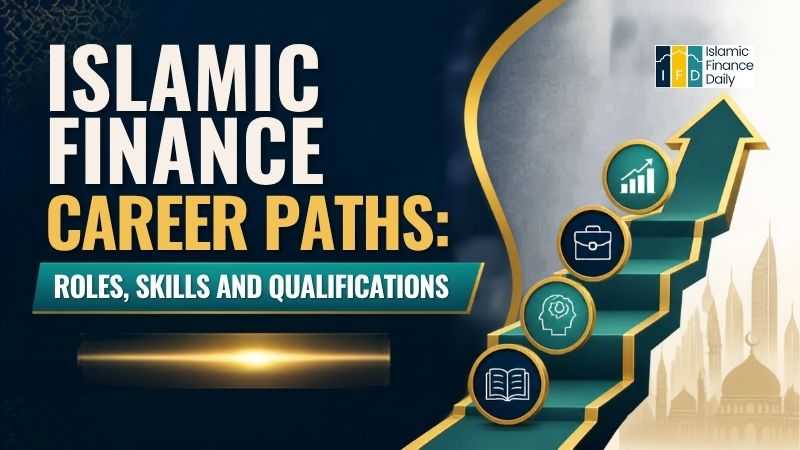
Islamic Finance Career Paths: Roles, Skills and Qualifications
1. Introduction
Islamic finance offers a range of career paths across different sectors and professional functions. The Islamic Financial Services Board (IFSB) identifies Islamic banking, Islamic capital markets and Takaful within the scope of Islamic financial services, while the wider industry also requires expertise in areas such as Shariah, accounting, auditing, governance, risk management, compliance, research and technology.
Because of this diversity, there is no single career path or qualification that applies to everyone working in Islamic finance. The skills and qualifications relevant to an Islamic banking professional can differ significantly from those relevant to an accountant, Shariah specialist, risk professional, researcher or fintech professional.
For someone considering a career in the field, the important question is therefore not simply “Which Islamic finance qualification should I take?” It is first necessary to understand which career path you want to explore and what that particular path involves.
Your existing background can also influence the route you take. A finance or accounting graduate may build on an existing technical foundation, while someone from Shariah, law, technology or another discipline may approach Islamic finance from a different starting point.
Professional qualifications can provide specialist pathways within the industry. For example, AAOIFI currently offers professional qualifications covering areas including Shariah Standards, Financial Accounting Standards, and Audit, Assurance, Governance and Ethics.
This guide explores the main Islamic finance career paths, the types of roles associated with them, the skills that can be relevant, and the academic or professional qualifications that may support different directions.
The aim is not to prescribe one route for everyone, but to help students and professionals understand where their existing background may fit, what they may need to learn, and how they can explore a suitable career path within Islamic finance.
2. How to Choose an Islamic Finance Career Path
Choosing an Islamic finance career path is easier when you begin with your existing background, skills and interests, rather than starting with a particular qualification.
The industry includes different types of work, and the knowledge required for one role may be quite different from another. A person interested in accounting may follow a different path from someone interested in Shariah, capital markets, risk management or technology.
Start With Your Existing Background
Your academic or professional background can provide a useful starting point.
For example:
- Finance or economics may provide a foundation for banking, investment, capital markets or financial analysis.
- Accounting or auditing may provide a foundation for accounting, reporting or audit-related roles.
- Shariah or Islamic studies may be relevant to specialised Shariah-related career paths.
- Law may be relevant to legal, regulatory, contractual and governance work.
- Technology or computer science may provide a foundation for fintech and digital financial services.
- Research or academic backgrounds may be relevant to research and education.
These are possible directions rather than fixed career requirements. The appropriate background depends on the particular role and employer.
Consider the Type of Work You Prefer
Your interests can also help narrow down your options.
If you enjoy financial analysis and financial products, you may want to explore banking, investment or Islamic capital markets.
If you are interested in accounting and financial reporting, Islamic finance accounting and auditing may be worth exploring.
If you are interested in Shariah and Islamic jurisprudence, you may want to investigate Shariah-related roles and the specialist educational requirements associated with them.
If you enjoy risk, controls and regulation, risk management, compliance and governance may be relevant areas.
If you are interested in technology and digital financial services, Islamic fintech may provide an area to explore.
If you enjoy research, writing and teaching, Islamic finance research and academia may be more suitable.
Look Beyond the Job Title
A job title alone does not always tell you what knowledge or skills a position requires.
Two positions with similar titles can have different responsibilities depending on the organisation. Before deciding on a career direction, examine actual job descriptions and identify the qualifications, experience, technical knowledge and professional skills employers are seeking.
This can help you distinguish between what you already have and what you need to develop.
You Do Not Need to Choose Everything at Once
Choosing a career direction does not mean that you must immediately commit to one specialised path.
For students and beginners, it can be useful to explore several areas before deciding where to specialise. Existing professionals may similarly discover that their current skills can be applied to more than one area of Islamic finance.
The purpose of choosing a direction at this stage is to create a clear starting point for your learning and career development.
Once you have identified a potential career path, the next step is to assess your current education and skills and identify any gaps you may need to address.
3. Islamic Banking Career Path
Islamic banking is one of the main areas in which professionals can build a career in Islamic finance. The career path is broader than working directly with Islamic financial products. Depending on the institution and role, professionals may work across banking operations, financing, product development, credit, risk management, compliance, Shariah governance, finance, technology, customer services and other functions.
Islamic banks and other institutions offering Islamic financial services operate within both financial and Shariah-related frameworks. The Islamic Financial Services Board (IFSB), for example, addresses areas such as risk management, corporate governance, conduct of business and Shariah governance for institutions offering Islamic financial services.
What Does an Islamic Banking Career Involve?
The day-to-day work depends heavily on the specific role. A person working in Islamic banking may be involved in areas such as:
- Evaluating financing applications
- Analysing customers and businesses
- Structuring or supporting Islamic financing transactions
- Developing Islamic banking products
- Managing banking operations
- Monitoring financial and operational risks
- Supporting regulatory and compliance activities
- Working with Shariah governance functions
- Preparing financial information and reports
- Managing customer relationships
- Supporting digital banking and technology functions
Islamic banking also involves specialised knowledge of Islamic contracts and financial products. AAOIFI’s Shari’ah Standards cover areas including banking, financing, investment banking and capital markets, illustrating the range of Islamic finance activities that may require specialised Shariah and technical knowledge.
Common Roles in Islamic Banking
There is no single job title that represents an Islamic banking career. Relevant roles may include:
Islamic Banking Officer or Relationship Manager
These professionals may work with individual or business customers, understand their financing or banking needs, and support the delivery of appropriate products and services.
Credit or Financing Analyst
Depending on the institution, analysts may assess financing applications, financial information, customer profiles and relevant risks before financing decisions are made.
Product Development Specialist
Product professionals may help design, structure or improve Islamic banking products. This can require an understanding of both conventional financial concepts and the Shariah principles applicable to the relevant product.
Islamic Finance Specialist
Some institutions employ professionals whose responsibilities specifically involve Islamic finance products, structures or Shariah-related matters.
Risk Professional
Risk teams assess and monitor financial and non-financial risks. In Islamic financial institutions, risk management can also require an understanding of the particular features of Islamic finance. IFSB guidance highlights the importance of risk management functions within Islamic financial institutions and the interaction between risk management and Shariah governance.
Compliance Professional
Compliance professionals may monitor whether activities meet applicable laws, regulations, internal policies and other relevant requirements. Depending on the jurisdiction and institution, Islamic financial institutions may also have specific Shariah compliance arrangements.
Finance and Accounting Professional
Finance professionals may work on financial reporting, management accounting, budgeting, financial analysis and other functions. The precise accounting framework will depend on the jurisdiction and institution.
Shariah Governance Professional
Some Islamic banks have specialised functions supporting Shariah governance, review or compliance. These roles require particular care because general Islamic finance knowledge should not be confused with the specialist qualifications and experience that may be expected for dedicated Shariah positions.
Skills Relevant to Islamic Banking
The skills needed depend on the role, but several areas can be particularly relevant.
Financial and analytical skills can be useful for roles involving financing, credit analysis, financial management, investment or risk.
Islamic finance knowledge can help professionals understand how Islamic financial products and transactions are structured and how relevant Shariah principles apply.
Risk and compliance knowledge can be relevant for professionals working in control functions. Islamic financial institutions must consider both general financial and regulatory risks and issues specific to Islamic financial services.
Communication and relationship-management skills are important in customer-facing, advisory and managerial positions.
Research and problem-solving skills can be particularly useful in product development, Shariah-related work, risk, compliance and specialist advisory functions.
The combination of skills will vary according to the position. A relationship manager, for example, will have a different skills profile from a risk analyst or Shariah governance specialist.
Relevant Educational and Professional Backgrounds
There is no universal educational route into Islamic banking. Relevant backgrounds may include finance, accounting, economics, business, banking, Islamic finance and other related disciplines, depending on the role and employer.
For some positions, conventional finance or accounting knowledge can provide a useful technical foundation, while additional Islamic finance education can help a professional understand the specific principles, contracts and structures used in Islamic banking.
For specialised Shariah-related positions, however, general Islamic finance training should not be presented as equivalent to specialist Shariah education or professional experience.
Professional qualifications may also be relevant depending on the function. The appropriate qualification can differ significantly between banking, accounting, risk, compliance, Shariah and other specialist roles. Requirements should therefore be checked against the specific employer, position and jurisdiction rather than assumed to apply across the entire Islamic banking sector.
Who Might Be Suited to This Career Path?
Islamic banking may be particularly relevant for people who are interested in combining financial services with Islamic finance principles. It can suit individuals who enjoy areas such as financial analysis, banking operations, customer relationships, risk management, product development, compliance or specialised Islamic finance work.
It can also provide a possible route for existing finance professionals who want to develop Islamic finance expertise without necessarily changing their entire professional discipline.
For example, an accountant may develop Islamic finance knowledge and pursue opportunities in an Islamic financial institution, while a risk professional may build expertise in the specific risks associated with Islamic financial services. The career direction depends on the person’s existing background, target role and the requirements of the employer.
Developing an Islamic Banking Career
Career development in Islamic banking can take different forms. A professional might begin in a general banking or finance position and gradually specialise in Islamic finance. Another person may enter through an Islamic finance-focused academic programme and then develop practical banking experience.
A useful long-term approach is to build two complementary areas of competence:
- A strong technical foundation in the relevant professional function.
- A sound understanding of Islamic finance principles relevant to that function.
For example, someone pursuing risk management may need strong risk and analytical capabilities alongside knowledge of Islamic financial structures and their specific risk characteristics. Someone working in product development may need financial product knowledge together with an understanding of relevant Islamic contracts and Shariah considerations.
Islamic banking therefore should not be viewed as a single job category. It is a collection of related career paths within banking, with different combinations of finance, Islamic finance, technical and professional skills.
Internal linking opportunity: This section can naturally link to the Learning Hub’s guides on Islamic finance skills and qualifications, as well as the broader article “Islamic Finance Careers: A Complete Guide for Students and Professionals” for readers who want a wider overview of available career areas.
4. Islamic Capital Markets & Sukuk Career Path
Islamic capital markets provide another specialised career path within Islamic finance. This area covers activities related to raising capital, investing, structuring financial instruments and supporting transactions that are designed to comply with applicable Shariah principles.
Sukuk is an important part of this career area, but professionals may also work across investment management, securities, research, advisory, structuring, risk, compliance and other capital-markets functions.
What Does an Islamic Capital Markets Career Involve?
The work can vary considerably depending on the organisation and position. Professionals may be involved in:
- Structuring Islamic capital-market transactions
- Supporting sukuk issuances
- Analysing issuers and investment opportunities
- Conducting financial and market research
- Preparing transaction documentation
- Supporting investors and clients
- Managing investment portfolios
- Assessing financial and market risks
- Supporting regulatory and compliance requirements
- Working with Shariah advisers and governance functions
Sukuk transactions can involve multiple parties and areas of expertise. Depending on the structure and jurisdiction, these may include issuers, arrangers, investors, legal advisers, financial advisers, Shariah advisers, rating agencies and other professional service providers.
Common Roles in Islamic Capital Markets
Sukuk or Capital Markets Analyst
Analysts may support transaction analysis, financial modelling, market research, documentation and preparation of materials for clients or investors.
Investment Banking Professional
Professionals working in investment banking may participate in capital raising, transaction structuring and advisory activities. In Islamic capital markets, this can include supporting Shariah-compliant financing and sukuk transactions.
Sukuk Structuring Specialist
Structuring professionals work on the design and execution of transactions. The role can require an understanding of financial structures, applicable regulations, documentation and the Shariah considerations relevant to the transaction.
Investment or Portfolio Manager
Asset-management professionals may manage portfolios containing Shariah-compliant investments. Their work can involve investment analysis, portfolio construction, monitoring and risk management.
Equity or Investment Research Analyst
Research professionals analyse companies, securities, sectors and markets. In a Shariah-compliant investment environment, the role may also involve understanding applicable screening or investment criteria.
Capital Markets Compliance Professional
Compliance professionals support adherence to applicable securities laws, regulations, internal policies and other requirements. The precise responsibilities depend on the jurisdiction and institution.
Shariah and Advisory Professionals
Specialists may be involved in reviewing transaction structures and documentation from a Shariah perspective. Dedicated Shariah roles require specialist knowledge and should not be treated as equivalent to general Islamic finance training.
Skills Relevant to Sukuk and Capital Markets
A career in Islamic capital markets can require a combination of conventional capital-markets knowledge and Islamic finance expertise.
Financial analysis is relevant to understanding issuers, transactions, securities and investment opportunities.
Capital-markets knowledge can help professionals understand how securities are issued, traded, valued and analysed.
Financial modelling and quantitative skills may be useful for roles involving transaction analysis, valuation or investment research.
Islamic finance knowledge is relevant when working with Shariah-compliant structures. Professionals may need to understand the underlying concepts and contracts used in particular transactions.
Research and analytical skills are important because capital-markets professionals regularly evaluate financial information, market conditions and investment opportunities.
Communication and presentation skills can also be valuable, particularly in investment banking, advisory, client-facing and investor-relations roles.
Not every position requires the same combination of skills. A portfolio manager, for example, may have a different technical focus from a sukuk structuring professional or a capital-markets compliance specialist.
Relevant Educational and Professional Backgrounds
Relevant academic backgrounds may include finance, economics, accounting, business, mathematics and other related disciplines. Islamic finance or Shariah studies may provide additional knowledge for professionals working specifically with Islamic capital-market products.
For certain roles, professional qualifications in areas such as investment, finance, accounting or risk may also be relevant. Islamic finance qualifications can provide additional specialised knowledge, depending on the individual’s career direction.
However, there is no universal qualification that applies to every Islamic capital-markets position. Requirements can differ according to the employer, role, jurisdiction and level of responsibility.
Professionals should therefore distinguish between qualifications that are professionally relevant and qualifications that are specifically required for a particular position.
Developing a Career in Islamic Capital Markets
Someone entering this field can develop by combining capital-markets expertise with Islamic finance knowledge.
For example, a finance graduate may begin by developing skills in financial analysis and investment research before specialising in Islamic capital markets. An existing investment professional may instead build knowledge of Islamic contracts, Shariah-compliant investment principles and sukuk structures.
For those interested specifically in sukuk, it can be useful to understand how different transactions are structured and how financial, legal, regulatory and Shariah considerations interact. Because transaction structures and regulatory requirements can vary, professionals should study the specific markets and jurisdictions in which they intend to work.
This career path may therefore be particularly suitable for people interested in investment, financial markets, transaction structuring, research or advisory work, while also wanting to develop specialised knowledge of Islamic finance.
Internal linking opportunity: This section can naturally link to relevant Learning Hub content on Islamic finance qualifications, Islamic finance skills and sukuk-related educational resources, where available.
5. Takaful Career Path
Takaful is the Islamic insurance sector and represents a distinct career path within Islamic finance. The sector combines insurance-related activities with structures and governance arrangements designed to address applicable Shariah principles. The Islamic Financial Services Board (IFSB) describes Takaful as the Islamic counterpart of conventional insurance and notes that it exists in both Family and General forms.
A career in Takaful therefore requires more than simply understanding Islamic finance. Depending on the position, professionals may need knowledge of insurance, underwriting, claims, actuarial analysis, investment, risk management, compliance, governance or Shariah-related matters.
What Does a Takaful Career Involve?
Takaful organisations perform many functions that are also found within the wider insurance industry, while operating within the specific framework applicable to Takaful.
Professionals may work in areas such as:
- Underwriting and risk assessment
- Claims management
- Actuarial analysis
- Product development
- Takaful operations
- Investment management
- Risk management
- Compliance
- Finance and accounting
- Customer and participant services
- Shariah governance
- Retakaful
- Regulatory and supervisory functions
The exact structure of a Takaful operation can differ between markets and institutions. IFSB guidance specifically recognises that different Takaful operators may use different operational models and terminology.
Common Roles in Takaful
Underwriting Professional
Underwriters assess risks and support decisions concerning the terms and conditions under which coverage is provided. In Takaful, this work takes place within the particular structure of the Takaful undertaking.
Claims Professional
Claims teams assess and process claims submitted by participants. Their work can involve reviewing documentation, applying relevant policies or procedures and communicating with participants.
Actuarial Professional
Actuarial specialists use quantitative methods to analyse financial and insurance-related risks. Their work can be relevant to areas such as pricing, reserving, modelling and financial management, depending on the organisation and jurisdiction.
Takaful Product Specialist
Product professionals may help develop or improve Takaful products and services. This can require an understanding of customer needs, insurance principles, financial considerations and relevant Shariah requirements.
Risk Management Professional
Risk management is an important function within Takaful. IFSB standards specifically address risks relevant to Takaful undertakings, including risks associated with the structure and management of Takaful funds.
Investment Professional
Takaful operators may have investment-related activities involving the management of assets and funds. Professionals in this area may work in investment analysis, portfolio management, risk or related functions.
Compliance and Governance Professional
Compliance and governance professionals may support regulatory compliance, internal controls, governance arrangements, disclosure and conduct requirements. IFSB guidance on Takaful governance addresses areas including governance structures, participant interests, disclosure and accountability.
Shariah Governance Professional
Some Takaful institutions have specialised Shariah governance functions. These positions require appropriate specialist knowledge and should not be treated as roles that can automatically be entered through a general Islamic finance course.
Skills Relevant to Takaful
The skills required will depend on the specific career path.
Insurance knowledge can be important for professionals working in underwriting, claims, product development and related functions.
Risk and analytical skills are relevant to underwriting, actuarial work, risk management and investment activities.
Financial knowledge can support professionals working with investments, accounting, financial analysis and business planning.
Islamic finance knowledge can help professionals understand the principles and structures that distinguish Takaful from conventional insurance.
Communication skills are particularly relevant in participant-facing, claims, sales, relationship and management positions.
Governance and compliance knowledge can be useful for professionals working with regulatory requirements, internal controls and Shariah governance.
Because Takaful involves both insurance and Islamic finance considerations, professionals may benefit from developing expertise in one technical area while building sufficient knowledge of the other.
Relevant Educational and Professional Backgrounds
Potential academic backgrounds may include insurance, actuarial science, finance, accounting, economics, business, mathematics, Islamic finance and related disciplines.
The most relevant background depends on the intended role. An actuarial position, for example, may require a very different technical foundation from a compliance, investment or customer-service position.
Professional qualifications can also vary according to the function. Insurance-related qualifications may be relevant for certain insurance careers, while accounting, investment, risk or compliance qualifications may be more appropriate for other roles.
Islamic finance education can provide additional context for professionals who need to understand Takaful structures and Shariah considerations. However, it should not be assumed that a general Islamic finance qualification is a substitute for specialist professional training in insurance, actuarial science or Shariah.
Takaful and Retakaful
Another specialised area is Retakaful, which relates to Islamic reinsurance arrangements. The IFSB has specific guidance addressing Retakaful, reflecting the importance of risk transfer and reinsurance-related considerations within the Takaful sector.
This can create additional opportunities for professionals with backgrounds in reinsurance, risk, underwriting, actuarial analysis, investment or Islamic finance.
For someone interested in this area, developing conventional insurance or reinsurance expertise alongside Islamic finance knowledge may be a useful combination, depending on the role and employer.
Developing a Career in Takaful
A person entering Takaful does not necessarily need to begin in a role specifically labelled “Islamic finance.” Existing insurance professionals can develop Islamic finance knowledge and seek opportunities within Takaful, while Islamic finance graduates can build insurance-related technical skills.
For example:
- An insurance professional may develop knowledge of Takaful structures and Shariah considerations.
- A finance graduate may develop insurance and risk-management skills before specialising in Takaful.
- An accounting professional may pursue opportunities in the finance function of a Takaful operator.
- A risk professional may specialise in risks specific to Takaful operations.
- A person with appropriate specialist Shariah training may pursue Shariah-related responsibilities within the sector.
The appropriate development path depends on the role being targeted. Takaful should therefore be viewed not as one occupation, but as a group of career opportunities combining insurance, financial services, risk, governance and Islamic finance.
Internal linking opportunity: This section can naturally link to Learning Hub resources on Islamic finance skills, Islamic finance qualifications and related career guides. A broader internal link to “Islamic Finance Careers: A Complete Guide for Students and Professionals” can also help readers understand how Takaful fits within the wider Islamic finance career landscape.
6. Shariah Career Path
The Shariah career path is one of the most specialised areas within Islamic finance. It focuses on applying, reviewing and supporting compliance with Shariah principles in financial products, transactions, contracts and institutional activities.
Shariah-related work can exist across Islamic banks, Takaful operators, Islamic capital markets, investment institutions, advisory firms, regulators and other organisations involved in Islamic finance. The IFSB identifies Shariah governance as an important component of the broader governance framework for Islamic financial institutions, while AAOIFI maintains Shariah Standards covering a wide range of Islamic financial contracts and products.
This career path requires particular caution when discussing qualifications. General knowledge of Islamic finance is not the same as specialist Shariah expertise. Completing a short Islamic finance course does not, by itself, establish that someone is qualified to act as a Shariah scholar, Shariah adviser, Shariah reviewer or Shariah auditor.
What Does a Shariah Career Involve?
Shariah professionals can be involved in different stages of an Islamic financial institution’s activities. Depending on the role, responsibilities may include:
- Reviewing financial products and structures
- Examining contracts and transaction documentation
- Providing Shariah advice
- Supporting Shariah governance processes
- Reviewing whether activities comply with applicable Shariah rulings
- Conducting or supporting Shariah reviews
- Participating in Shariah board or committee activities
- Researching Islamic commercial law and financial transactions
- Supporting the development of Shariah-compliant products
- Communicating Shariah considerations to business and control functions
The precise responsibilities depend on the institution, jurisdiction and position. IFSB guidance recognises that there is no single Shariah governance model that applies universally; governance arrangements can differ according to the size, complexity and nature of an institution and the regulatory environment in which it operates.
Common Roles in Shariah
Shariah Scholar or Shariah Adviser
These specialists provide Shariah expertise in relation to Islamic financial products, transactions and activities. Depending on the jurisdiction and institutional structure, they may serve on a Shariah board, committee or equivalent body.
Shariah Governance Professional
Professionals working within Shariah governance functions may help coordinate Shariah-related processes, documentation, research, reviews and communication between the institution and its Shariah advisers.
Shariah Reviewer
A Shariah reviewer may examine whether products, transactions or activities have been implemented in accordance with applicable Shariah requirements and rulings. The exact scope of the role depends on the institution and jurisdiction.
Shariah Auditor
Shariah auditing involves specialist review and assurance activities concerning compliance with Shariah principles and rules. AAOIFI’s standards include specific material relating to internal Shariah audit and external Shariah audit, demonstrating that Shariah audit is a distinct professional area rather than simply another name for general Islamic finance education.
Shariah Researcher
Researchers may study Islamic commercial law, contemporary financial transactions, contracts and Shariah issues arising from new financial products and practices.
Knowledge and Skills Relevant to Shariah Careers
A specialist Shariah career requires a different skills profile from many conventional finance roles.
Shariah and Islamic jurisprudence knowledge is central to specialist positions. This can include knowledge relevant to Islamic commercial transactions and the principles used to assess financial activities.
Research skills are important because Shariah professionals may need to examine classical and contemporary sources, financial structures, contracts and emerging issues.
Understanding of financial products is also valuable. A Shariah specialist working in banking or capital markets needs to understand the actual financial transaction being reviewed rather than considering the Shariah question in isolation.
Analytical and interpretive skills can help professionals examine how financial structures operate and identify the relevant Shariah considerations.
Communication skills are important because Shariah professionals may need to explain complex Shariah issues to executives, lawyers, product specialists, compliance teams and other professionals.
Professional independence and ethical conduct are also important components of effective Shariah governance. IFSB guidance highlights areas including the competence, independence, confidentiality and consistency of Shariah boards.
Relevant Educational Backgrounds
Educational pathways for Shariah careers can differ substantially from those for general Islamic finance roles.
For specialist Shariah positions, relevant backgrounds may include formal studies in Shariah, Islamic jurisprudence or related fields. Depending on the position, additional knowledge of finance, accounting, economics, law or banking can also be useful.
The combination of Shariah knowledge and financial-sector understanding can be particularly valuable because professionals working in this area may need to assess sophisticated financial transactions and communicate their analysis within a modern financial institution.
However, there is no single educational pathway that should automatically be presented as qualifying a person for every Shariah role. Requirements may depend on the position, institution, jurisdiction, seniority and responsibilities involved.
Professional Qualifications and Experience
Professional Islamic finance qualifications can help develop knowledge of Islamic financial concepts, standards and practices. They should not, however, automatically be described as substitutes for specialist Shariah education or experience.
AAOIFI’s standards demonstrate the breadth of Shariah-related work within Islamic finance. Its current standards include areas such as Shariah governance, Shariah compliance functions, internal Shariah audit and Shariah decision-making processes.
For someone considering this career path, it is therefore useful to distinguish between:
- General Islamic finance education
- Specialist Shariah education
- Professional Islamic finance qualifications
- Specialist Shariah qualifications
- Practical financial-sector experience
- Experience in Shariah review, governance or related functions
These categories complement one another but are not interchangeable.
Developing a Shariah Career
A person interested in Shariah careers should first identify the type of role they want to pursue. Someone interested in academic Shariah research may require a different development path from someone aiming to work within the Shariah governance function of an Islamic bank.
For individuals pursuing specialist roles, development may involve combining formal Shariah studies with an understanding of contemporary financial products and institutional practices. Practical exposure to Islamic banking, Takaful, capital markets or other areas can help connect theoretical knowledge with real financial transactions.
Professionals who already work in finance can also develop Shariah knowledge as an additional area of expertise. However, moving into a specialist Shariah position may involve additional educational and professional requirements beyond simply completing an introductory Islamic finance course.
Internal linking opportunity: This section can naturally link to Learning Hub resources covering Islamic finance certifications, AAOIFI qualifications, Islamic finance skills and Shariah-related educational resources. It can also link back to “Islamic Finance Careers: A Complete Guide for Students and Professionals” for readers who want to compare Shariah with other Islamic finance career paths.
7. Islamic Finance Accounting & Auditing Career Path
Accounting and auditing are important functions within Islamic financial institutions because financial reporting and assurance activities may involve Islamic financial contracts, investment structures and Shariah-related considerations in addition to conventional accounting and auditing requirements. The exact accounting framework applied can vary by jurisdiction and institution. The IFSB notes that Islamic financial institutions may use combinations of IFRS, AAOIFI standards and national accounting frameworks depending on the applicable requirements.
What Does This Career Path Involve?
An Islamic finance accounting and auditing career combines accounting or audit expertise with an understanding of how Islamic financial transactions and institutions are structured.
Accounting professionals may work on areas such as:
- Preparation and analysis of financial statements
- Financial reporting
- Accounting treatment for Islamic financial products
- Investment accounts and related reporting
- Financial controls
- Management accounting
- Accounting policies and procedures
- Financial analysis
Auditing professionals may work on:
- Internal or external audits
- Examination of financial records and controls
- Audit planning and testing
- Risk and control assessments
- Financial reporting assurance
- Compliance with applicable accounting and auditing requirements
Within Islamic financial institutions, professionals may also need to understand how particular Islamic contracts affect accounting treatment and financial reporting.
AAOIFI’s Accounting, Auditing and Governance Standards provide guidance covering areas including the presentation of financial statements for Islamic financial institutions, accounting treatment for specific Islamic finance products and external auditing of Islamic financial institutions.
Examples of Roles
Depending on the organisation and level of seniority, relevant roles may include:
- Accountant
- Financial reporting specialist
- Management accountant
- Financial analyst
- Internal auditor
- External auditor
- Audit manager
- Accounting policy specialist
- Finance manager
- Internal control specialist
- Shariah-related audit or assurance roles
Not every role requires specialised Islamic finance expertise to the same extent. Someone working in general financial reporting may have different requirements from a professional specifically responsible for accounting treatment of Islamic financial products or auditing an Islamic financial institution.
Knowledge and Skills That Can Be Relevant
A strong foundation in accounting is generally important for this career path. Depending on the position, useful technical knowledge may include financial reporting, financial statement analysis, auditing, internal controls, taxation, risk and financial analysis.
For professionals working specifically with Islamic financial institutions, additional knowledge of Islamic finance can be valuable. This may include:
- Islamic financial contracts
- Islamic banking products
- Investment accounts
- Sukuk and Islamic capital market structures
- Shariah principles relevant to financial transactions
- AAOIFI accounting and auditing standards
- Shariah governance and compliance concepts
The depth of Islamic finance knowledge required will depend on the role.
Academic and Professional Backgrounds
Relevant academic backgrounds may include accounting, finance, economics, business or related disciplines. A professional accounting or auditing background can also provide a foundation for moving into Islamic financial institutions, subject to the requirements of the particular employer.
Professionals may then develop additional Islamic finance knowledge through specialised study, professional development or experience working with Islamic financial institutions.
There is no single academic or professional qualification that universally applies to every accounting and auditing role in Islamic finance. Requirements can differ according to the employer, jurisdiction, function and seniority.
Understanding AAOIFI Standards
For professionals interested in accounting and auditing within Islamic finance, familiarity with AAOIFI standards can be particularly relevant.
AAOIFI maintains separate sets of standards covering Shariah, accounting, auditing, ethics and governance. Its Accounting, Auditing and Governance Standards include accounting standards as well as auditing, ethics and governance standards for the Islamic finance industry.
The importance of understanding these standards depends on the professional environment. AAOIFI states that its standards are used as mandatory regulatory requirements in some jurisdictions and as internal guidelines in others.
This is why aspiring professionals should check the accounting and reporting requirements applicable in the country and institution where they intend to work rather than assuming that one framework applies everywhere.
Who Might Be Interested in This Path?
This career path may be particularly suitable for people who enjoy accounting, financial reporting, auditing, controls and detailed financial analysis and who also want to understand how these functions operate within Islamic financial institutions.
It can also be relevant to existing accountants and auditors who want to add Islamic finance knowledge to their professional background.
For someone already working in accounting or audit, the transition may therefore involve building knowledge of Islamic financial products, contracts and applicable standards rather than starting their professional career from the beginning.
Internal link opportunity: This section can naturally link to a future Islamic Finance Accounting or AAOIFI Certification guide when those Learning Hub resources are published.
8. Risk, Compliance & Governance Career Path
Risk, compliance and governance functions help financial institutions identify risks, meet applicable regulatory requirements and maintain appropriate systems of oversight and control. In Islamic financial institutions, these functions can also involve understanding the particular risks and governance considerations associated with Shariah-compliant products and activities.
What Does This Career Path Involve?
Risk professionals focus on identifying, assessing, monitoring and managing different types of financial and operational risk. Depending on the institution, this can include credit risk, market risk, liquidity risk, operational risk and other risks relevant to the organisation.
Compliance professionals help institutions understand and follow applicable laws, regulations, policies and internal requirements. Their work can involve compliance monitoring, regulatory reporting, reviewing policies and procedures, and supporting the organisation in managing compliance risks.
Governance roles focus more broadly on how an institution is directed, controlled and supervised. This can involve internal policies, committees, accountability structures, controls and oversight.
In Islamic finance, these functions may intersect with Shariah governance. The exact responsibilities depend on the institution, jurisdiction and position, and Shariah governance should not be treated as identical to conventional regulatory compliance.
Examples of Roles
Depending on the organisation, relevant roles may include:
- Risk analyst
- Credit risk analyst
- Market or liquidity risk specialist
- Operational risk specialist
- Risk manager
- Compliance officer
- Compliance analyst
- Regulatory compliance specialist
- Internal control specialist
- Governance specialist
- Shariah governance professional
- Risk and compliance manager
Some positions may be dedicated Islamic finance roles, while others may be broader risk, compliance or governance positions within an Islamic bank, takaful operator, investment firm or other financial institution.
Skills and Knowledge That Can Be Relevant
Risk and compliance professionals generally benefit from strong analytical and problem-solving abilities. Depending on the position, relevant technical knowledge may include:
- Risk management
- Financial analysis
- Regulatory frameworks
- Internal controls
- Compliance monitoring
- Data analysis
- Corporate governance
- Financial products and markets
- Policy and procedure development
For professionals working specifically in Islamic finance, additional knowledge may include:
- Islamic financial contracts
- Islamic banking products
- Shariah principles relevant to financial transactions
- Shariah governance
- Islamic capital markets
- Takaful structures
- Applicable standards and regulatory requirements
The importance of each area depends on the role. A risk analyst, for example, may need much deeper quantitative and risk-management skills than a professional working primarily on governance documentation.
Academic and Professional Backgrounds
Relevant academic backgrounds may include finance, economics, accounting, business, law, mathematics, statistics, risk management or other related disciplines.
Professionals can also enter this area from existing risk, audit, compliance, legal or financial services backgrounds and then develop specialised Islamic finance knowledge.
Professional qualifications may be relevant depending on the position. However, there is no single qualification that universally qualifies someone for every risk, compliance or governance role in Islamic finance. Employers may set different requirements based on the responsibilities of the position and the regulatory environment in which the institution operates.
Shariah Governance and Risk
One important distinction is between general risk and compliance functions and Shariah governance responsibilities.
Islamic financial institutions have specific Shariah governance considerations because their products and operations are expected to comply with applicable Shariah requirements. The IFSB has published standards addressing Shariah governance systems for institutions offering Islamic financial services, including matters relating to the Shariah governance framework and oversight.
This does not mean that every risk or compliance professional becomes a Shariah specialist. Rather, professionals working in Islamic finance may need sufficient understanding of Shariah-related requirements to recognise where their responsibilities intersect with the institution’s Shariah governance framework.
Those seeking specialist Shariah roles should develop the appropriate Shariah knowledge and professional background rather than assuming that a general risk or compliance qualification is sufficient.
Who Might Be Interested in This Path?
This career path may suit people who enjoy analysing problems, understanding regulations, assessing risk and working with organisational controls and policies.
It can also be a natural area for existing professionals in banking, audit, compliance, risk management or governance who want to move into Islamic financial institutions.
For someone entering Islamic finance from another financial-services role, the key development areas may therefore be Islamic finance knowledge alongside the existing technical skills of the profession, rather than replacing the professional skills they already possess.
9. Islamic Fintech Career Path
Islamic fintech brings together Islamic finance with financial technology, creating career opportunities that can involve digital banking, payments, investment platforms, financing solutions, data, software and other technology-enabled financial services. The exact nature of the work depends on the business model, technology and regulatory environment of the organisation.
What Does This Career Path Involve?
Professionals working in Islamic fintech may contribute to the development, operation, regulation or analysis of technology-enabled financial products and services.
Areas of work can include:
- Digital Islamic banking
- Islamic digital payments
- Online financing platforms
- Digital investment and wealth-management services
- Islamic crowdfunding
- Financial data and analytics
- Blockchain and distributed-ledger applications
- Financial software and technology infrastructure
- Product development
- Technology risk and compliance
The Islamic fintech field can therefore bring together professionals from both finance and technology backgrounds. Someone does not necessarily need to become a software developer to work in Islamic fintech; the relevant skills depend on the role.
Examples of Roles
Potential roles may include:
- Fintech product manager
- Business analyst
- Software or systems specialist
- Data analyst
- Financial technology consultant
- Product operations specialist
- Risk or compliance specialist
- Shariah governance professional
- Islamic finance specialist
- Digital banking specialist
- Technology project manager
Some roles are highly technical, while others focus on finance, product development, operations, compliance or business strategy.
Skills That Can Be Relevant
The technical skills required depend heavily on the position. Technology-focused roles may require knowledge of areas such as:
- Software development
- Data analysis
- Databases
- Cybersecurity
- Cloud technologies
- Artificial intelligence
- Blockchain or distributed-ledger technology
Other roles may require less technical expertise but stronger knowledge of:
- Financial products
- Islamic finance
- Product management
- Business analysis
- Regulatory requirements
- Risk management
- Compliance
- Operations
Professionals working on Islamic financial products may also need to understand the relevant Islamic contracts and Shariah considerations. This can be particularly important when technology is being used to deliver or structure an Islamic financial product.
Combining Finance and Technology
One of the distinctive features of an Islamic fintech career is that professionals can approach the sector from different directions.
A finance professional may develop technology and digital-product skills, while a technology professional may develop knowledge of Islamic finance and financial services.
For example, someone with a background in software development could specialise in financial technology and subsequently build knowledge of Islamic financial products. Conversely, someone with an Islamic finance or banking background could develop skills in digital product management, data or technology implementation.
Neither route is universally required. The appropriate combination depends on the specific role.
Shariah and Product Development
Islamic fintech can also create a need for collaboration between technology, product, finance and Shariah professionals.
When a digital platform offers an Islamic financial product, the technology itself does not determine whether the product is Shariah-compliant. The underlying transaction, contractual structure, operational process and relevant Shariah requirements all need to be considered.
As a result, professionals involved in Islamic fintech may benefit from understanding how technology affects the implementation of Islamic financial contracts and processes.
This does not mean that every fintech professional needs specialist Shariah qualifications. Rather, the level of Shariah knowledge should correspond to the responsibilities of the role.
Who Might Be Interested in This Path?
Islamic fintech may be particularly relevant for people who are interested in both financial services and technology.
It can also provide a potential direction for:
- Technology professionals interested in financial services
- Finance professionals interested in digital transformation
- Islamic finance professionals interested in new financial delivery models
- Product managers and business analysts
- Data and technology specialists
- Entrepreneurs and innovation professionals
For someone considering this career path, it is useful to identify whether their intended role is primarily technical, financial, product-oriented, operational, regulatory or Shariah-related. That distinction will help determine which additional skills and qualifications are most relevant.
10. Islamic Finance Research & Academia Career Path
Research and academia provide another career path within Islamic finance for people interested in developing knowledge, conducting research, teaching and contributing to the broader understanding of Islamic financial systems. This path can exist within universities, research institutions, professional organisations, financial institutions and specialised Islamic finance centres.
What Does This Career Path Involve?
Islamic finance researchers may study topics such as:
- Islamic banking and financial markets
- Sukuk and Islamic capital markets
- Takaful
- Islamic financial contracts
- Shariah governance
- Islamic accounting and auditing
- Islamic economics
- Islamic finance regulation
- Islamic fintech
- Contemporary issues in Islamic finance
Research work can involve reviewing existing literature, collecting and analysing data, conducting interviews or other forms of research, writing academic papers and presenting findings.
Academic roles may additionally involve teaching students, developing course materials, supervising research and participating in academic conferences or professional activities.
The balance between research, teaching and other responsibilities varies between institutions and positions.
Examples of Roles
Potential roles in this area include:
- Research assistant
- Research associate
- Islamic finance researcher
- Academic lecturer
- University professor
- Research fellow
- Policy researcher
- Research analyst
- Academic programme coordinator
- Islamic finance subject-matter specialist
Some research roles may be highly academic, while others may focus on industry research, policy, market analysis or applied research.
Knowledge and Skills That Can Be Relevant
Research-oriented careers generally require strong analytical and research abilities. Depending on the position, useful skills may include:
- Academic research
- Data analysis
- Financial analysis
- Literature review
- Critical thinking
- Academic and professional writing
- Presentation
- Qualitative or quantitative research methods
- Understanding of Islamic finance
For Islamic finance research specifically, knowledge of Islamic financial contracts, Shariah principles, financial markets and relevant economic or regulatory issues can be valuable.
Researchers working on specialised Shariah topics may require a much deeper background in Shariah studies than someone conducting research primarily on Islamic banking markets or financial performance.
Academic Backgrounds
Relevant academic backgrounds can vary according to the research topic. They may include Islamic finance, Islamic economics, economics, finance, accounting, business, law, Shariah studies or related disciplines.
For academic positions, the level and type of academic qualification required will depend on the institution, country and position. A research assistant position, for example, may have different requirements from a senior academic or research leadership role.
Professionals who already work in Islamic finance can also move toward research by developing stronger research, analytical and writing capabilities and contributing to industry studies, publications or academic projects.
Industry Research and Academia
A career in Islamic finance research does not necessarily mean becoming a university professor.
Research can also take place within:
- Financial institutions
- Research centres
- Think tanks
- Professional organisations
- Regulatory institutions
- Consulting firms
- Industry associations
- Specialist Islamic finance organisations
This creates different routes for people who enjoy research but do not necessarily want a conventional academic career.
Who Might Be Interested in This Path?
This path may suit people who enjoy asking questions, analysing information and developing a deeper understanding of Islamic finance.
It can be particularly relevant for students considering postgraduate study, professionals interested in research and policy, and individuals who want to combine Islamic finance knowledge with economics, finance, Shariah, accounting, law or data analysis.
For someone considering academia, it is useful to distinguish between research-focused, teaching-focused and industry-focused roles, because the skills and qualifications expected can differ substantially between them.
11. Islamic Finance Consulting & Advisory Career Path
Consulting and advisory work can provide another career path for professionals with expertise in Islamic finance or in a related professional field.
The nature of this work can vary depending on the organisation and the type of advisory service being provided. Professionals may contribute to areas such as strategy, financial services, transactions, governance, risk, Shariah-related matters, research or business analysis.
Common Areas of Work
Depending on the organisation and role, professionals in Islamic finance consulting and advisory may work on:
- Islamic financial products and services
- Business and strategic analysis
- Islamic banking
- Sukuk and Islamic capital markets
- Takaful
- Risk and governance
- Regulatory and compliance matters
- Shariah-related advisory work
- Research and industry analysis
- Organisational and operational projects
The specific responsibilities can differ considerably between consulting firms, specialist Islamic finance advisers, financial institutions and other organisations.
Skills That Can Be Relevant
Consulting and advisory roles generally require a combination of technical knowledge and professional skills. Depending on the position, relevant capabilities may include:
- Financial analysis
- Islamic finance knowledge
- Research
- Problem-solving
- Analytical thinking
- Report writing
- Communication
- Presentation skills
- Project management
- Understanding of the relevant regulatory environment
The appropriate combination depends on the particular area of consulting or advisory work.
Professional Backgrounds
There is no single academic background that applies to every consulting or advisory position in Islamic finance.
Professionals may come from backgrounds such as finance, accounting, economics, law, Shariah, business, risk management or other relevant disciplines, depending on the role.
Existing professionals can also build on their previous experience by developing Islamic finance knowledge relevant to their area of expertise.
For example, an accounting professional may focus on Islamic finance accounting and reporting, while someone with a risk background may develop expertise relevant to risk management within Islamic financial institutions.
Shariah Advisory Requires Specialist Expertise
Shariah-related advisory work should be distinguished from general Islamic finance consulting.
A general Islamic finance course or introductory certification should not automatically be presented as qualifying someone to provide Shariah advice. Specialist Shariah roles can have their own educational, professional and experience requirements, which vary according to the position and institution.
For anyone considering this particular path, the requirements of the specific role should be checked carefully with the relevant employer or institution.
Who Might Consider This Career Path?
Consulting and advisory may be worth exploring for professionals who enjoy research, analysis, problem-solving and working across different projects or organisations.
It can also be relevant to experienced professionals who already have expertise in a particular area and want to apply that expertise within Islamic financial services.
The key is to identify the specific type of advisory work you want to pursue and then develop the technical and Islamic finance knowledge relevant to it.
12. Skills Needed Across Islamic Finance Careers
Although different Islamic finance career paths require different technical knowledge, several skills can be useful across the industry. The importance of each skill depends on the specific role, so this section should be viewed as a general guide rather than a list of universal requirements.
Technical and Financial Skills
Depending on the career path, professionals may need knowledge of areas such as:
- Finance and financial analysis
- Accounting and financial reporting
- Risk management
- Investment and capital markets
- Banking
- Insurance and Takaful
- Regulatory and compliance matters
- Financial products and structures
The relevant technical skills will depend on the position. An accountant, for example, will need a different technical skill set from a technology professional working in Islamic fintech.
Islamic Finance Knowledge
Understanding the principles and structures relevant to Islamic financial services is also important for professionals working specifically within the industry.
Depending on the role, this may include knowledge of:
- Principles of Islamic finance
- Shariah principles relevant to financial transactions
- Islamic financial contracts
- Islamic banking products
- Sukuk and Islamic capital markets
- Takaful
- Shariah governance
- Applicable Islamic finance standards
The depth of knowledge required varies considerably. A professional working in a specialist Shariah role, for example, may require substantially different knowledge from someone working in technology or general operations at an Islamic financial institution.
Research and Analytical Skills
Research and analytical ability can be useful across many Islamic finance functions.
Professionals may need to:
- Analyse financial information
- Research regulations and standards
- Understand financial products
- Evaluate information from different sources
- Identify relevant issues
- Prepare reports or recommendations
These skills can be particularly relevant in areas such as research, consulting, investment, risk, Shariah research and policy.
Communication Skills
Islamic finance professionals often work across different functions and may need to communicate financial, technical or Shariah-related information to people with different areas of expertise.
Useful communication skills can include:
- Clear writing
- Professional communication
- Presentations
- Explaining complex concepts clearly
- Listening and collaboration
The importance of these skills can increase in roles involving clients, advisory work, management, research or cross-functional teams.
Digital and Technology Skills
Technology skills are increasingly relevant to financial services generally and can be particularly important for professionals working in Islamic fintech or digital financial services.
Depending on the role, this may involve areas such as:
- Data analysis
- Digital products
- Technology systems
- Software or technical development
- Digital financial services
- Technology-related risk and compliance
Not every Islamic finance professional needs advanced technical skills. The appropriate level depends on the role.
Professional and Interpersonal Skills
Other skills that can support an Islamic finance career include:
- Problem-solving
- Critical thinking
- Attention to detail
- Teamwork
- Time management
- Adaptability
- Professional ethics
These are transferable skills that can complement technical and Islamic finance knowledge.
Skills Should Match the Career Path
The most important point is that you do not need to master every skill listed above.
Someone pursuing Islamic finance accounting should prioritise accounting and reporting knowledge. Someone interested in Sukuk may focus more heavily on capital markets and financial analysis. A Shariah professional may need specialised Shariah knowledge, while a fintech professional may place greater emphasis on technology and digital financial services.
The best approach is therefore to identify your target career path first and then determine which skills are genuinely relevant to that path.
13. Qualifications for Different Career Paths
There is no single qualification that prepares a person for every career in Islamic finance. The most relevant combination of academic education, professional qualifications, Islamic finance knowledge and practical experience depends on the role, employer, jurisdiction and level of responsibility.
A useful way to think about qualifications is to start with the career function rather than choosing a qualification simply because it contains the words “Islamic finance.”
For example, someone targeting Islamic finance accounting may need a different combination of qualifications from someone pursuing Shariah advisory, risk management, sukuk structuring or Islamic fintech.
Academic Qualifications
Academic qualifications can provide the foundation for many Islamic finance careers. Relevant fields may include:
- Finance
- Accounting
- Economics
- Business
- Banking
- Law
- Islamic finance
- Shariah
- Islamic studies
- Mathematics, statistics or data-related disciplines
- Information technology and computer science
The appropriate academic background depends on the intended career.
For example, a person interested in Islamic finance accounting may benefit from an accounting background, while someone interested in Islamic fintech may come from technology, data or finance. A person pursuing specialist Shariah work may require substantially different academic preparation, particularly in Shariah and Islamic jurisprudence.
An Islamic finance degree can therefore be relevant, but it should not be presented as a universal requirement for working in Islamic finance.
Professional Qualifications
Professional qualifications can become particularly useful when they correspond closely to a person’s intended function.
For example, accounting professionals may pursue professional accountancy qualifications, while investment professionals may pursue qualifications relevant to investment analysis or portfolio management. Similarly, risk and compliance professionals may benefit from qualifications related to their respective disciplines.
Islamic finance-specific qualifications can then be used to add specialised knowledge to an existing professional foundation.
This approach is reflected in the range of Islamic finance qualifications offered by professional bodies. AAOIFI, for example, currently offers qualifications and certificates covering areas including Shariah standards, financial accounting standards, and audit, assurance, governance and ethics.
Islamic Finance Qualifications
Islamic finance qualifications can be useful for people who need structured knowledge of Islamic financial principles, products, contracts and practices.
One example is the CISI Islamic Finance Qualification (IFQ). CISI describes the IFQ as a Level 3 Certificate in Islamic Finance covering Islamic finance from both technical and Shariah perspectives. It is intended for both existing and prospective Islamic finance professionals.
Such qualifications can be particularly useful for:
- Finance professionals moving into Islamic finance
- Banking professionals seeking Islamic finance knowledge
- Students interested in the sector
- Professionals working with Islamic financial products
- Individuals who need a structured introduction to Islamic finance
However, an Islamic finance qualification should not automatically be interpreted as a qualification for a specific job. Its value depends on how closely its content matches the professional responsibilities being pursued.
Qualifications by Career Path
The following table provides a general guide, not a list of mandatory requirements. Actual requirements vary by employer, jurisdiction and position.
| Career Path | Relevant Background | Useful Knowledge and Skills | Potential Qualifications |
|---|---|---|---|
| Islamic Banking | Finance, banking, economics, business, accounting | Banking, financial analysis, Islamic contracts, risk, customer relationships | Banking, finance or Islamic finance qualifications |
| Islamic Capital Markets & Sukuk | Finance, economics, investment, accounting | Capital markets, valuation, financial analysis, Islamic structures | Investment, finance or Islamic finance qualifications |
| Takaful | Insurance, actuarial science, finance, economics, business | Insurance, risk, actuarial analysis, Islamic finance | Insurance, actuarial, finance or Islamic finance qualifications |
| Shariah | Shariah, Islamic jurisprudence, Islamic studies | Fiqh al-muamalat, Shariah research, financial products | Specialist Shariah and relevant Islamic finance qualifications |
| Accounting & Auditing | Accounting, finance, business | Financial reporting, audit, accounting standards, Islamic finance | Accountancy and Islamic finance/accounting qualifications |
| Risk, Compliance & Governance | Finance, economics, law, business, risk | Risk management, compliance, governance, regulation | Risk, compliance, governance or Islamic finance qualifications |
| Islamic Fintech | Computer science, technology, finance, data | Technology, financial products, data, product development, Islamic finance | Technology, finance or Islamic finance qualifications |
| Research & Academia | Islamic finance, economics, finance, Shariah, related disciplines | Research, writing, analysis, academic methods | Relevant undergraduate/postgraduate qualifications |
| Consulting & Advisory | Finance, accounting, economics, business, law or related fields | Analysis, problem-solving, Islamic finance, communication | Relevant professional and Islamic finance qualifications |
The table should be used as a starting point for exploring career options rather than as a checklist of compulsory qualifications.
Combining a Core Profession With Islamic Finance Knowledge
For many professionals, the most practical approach may be to combine an existing professional discipline with Islamic finance knowledge.
Consider the following examples:
Accountant + Islamic finance knowledge
This combination can be relevant to Islamic financial reporting, accounting and audit functions. AAOIFI’s CIPA qualification, for example, is specifically designed around accounting for Islamic financial institutions and incorporates AAOIFI’s financial accounting, Shariah, audit, assurance, governance and ethics standards.
Finance professional + Islamic finance knowledge
A finance professional may add Islamic finance education to an existing foundation in financial analysis, banking, investment or corporate finance.
Risk professional + Islamic finance knowledge
A risk specialist can develop an understanding of the particular characteristics and risks associated with Islamic financial institutions and products.
Technology professional + Islamic finance knowledge
Someone with a technology or data background may combine technical capabilities with knowledge of Islamic financial products and business models when exploring Islamic fintech.
Shariah specialist + finance knowledge
A person with specialist Shariah education may develop additional knowledge of banking, capital markets, accounting or financial products to better understand the transactions and institutions they are reviewing.
This “core discipline + Islamic finance knowledge” approach can be more useful than assuming that an Islamic finance qualification alone determines a person’s career direction.
Qualifications Should Match the Level of Specialisation
Another important consideration is the depth of knowledge required.
An introductory qualification may be appropriate for someone who needs a general understanding of Islamic finance. A specialist professional working directly with Islamic accounting standards, Shariah review or other technical functions may require substantially deeper education and professional experience.
AAOIFI’s current qualification structure illustrates this distinction. Its portal describes CPSS as an advanced-level certificate focused on understanding, interpreting and implementing AAOIFI Shari’ah Standards, while CPFAS focuses on AAOIFI Financial Accounting Standards.
This means that the right question is not simply:
“Which Islamic finance qualification should I take?”
A better question is:
“What knowledge and professional competence does my target role require?”
Once the target role is clear, qualifications can be evaluated according to how well they support that role.
Qualifications Are Only One Part of Career Development
Qualifications can demonstrate structured learning, but they are only one component of professional development.
Depending on the career path, employers may also consider:
- Relevant work experience
- Technical skills
- Islamic finance knowledge
- Professional certifications
- Research ability
- Communication skills
- Industry knowledge
- Practical experience
- Knowledge of applicable regulations and standards
This is particularly important for senior or highly specialised positions, where practical experience can be an important part of professional competence.
A Practical Way to Choose Qualifications
Before enrolling in a qualification, consider these five questions:
- What role am I targeting?
- What knowledge does that role require?
- What qualifications are actually requested or valued by employers in my target market?
- Does the qualification provide the knowledge I currently lack?
- How will I combine the qualification with practical experience?
This approach can help prevent a common mistake: collecting qualifications without developing the professional capabilities required for the intended career.
Internal linking opportunity: This section can naturally link to Learning Hub resources on Islamic Finance Certifications, Best Islamic Finance Certifications for Beginners, AAOIFI Certification Guide for Beginners, and What is the IFQ? These resources can provide more detailed information about individual qualifications without making this career-path article unnecessarily repetitive.
14. Certifications and Professional Qualifications
Professional certifications can help candidates build specialised knowledge, demonstrate structured learning and strengthen their understanding of Islamic finance. However, certifications should be viewed as part of a broader career-development strategy rather than as automatic qualifications for a particular job.
The most suitable certification depends on the career path, existing academic background, professional experience, target role and jurisdiction.
Islamic Finance Certifications
Islamic finance certifications can be particularly useful for professionals who already have a background in finance, banking, accounting, business or another relevant discipline and want to develop specialised Islamic finance knowledge.
They can also provide a structured starting point for students and career changers who need to understand Islamic financial concepts, contracts, products and industry practices.
One example is the CISI Islamic Finance Qualification (IFQ). CISI describes the IFQ as a Level 3 Certificate in Islamic Finance that covers both the technical and Shariah aspects of Islamic finance. It is designed for existing and prospective professionals in the sector.
The relevance of such a qualification will depend on the candidate’s career objective. A person working in banking may use Islamic finance education differently from someone working in investment management, accounting, compliance or consulting.
AAOIFI Qualifications
AAOIFI is an important professional body to consider when researching qualifications related to Islamic finance standards.
Its current qualification portfolio includes programmes covering areas such as Shari’ah Standards, financial accounting standards, accounting, governance, ethics and Shari’ah advisory and auditing. The precise qualification titles, eligibility conditions, examination arrangements and programme structures should always be checked against AAOIFI’s current official information before enrolment.
For example, AAOIFI’s qualification portfolio includes:
- CPSS — Certificate of Proficiency in Shari’ah Standards
- CPAGE — Certificate of Proficiency in Accounting, Governance and Ethics
- CPFAS — Certificate of Proficiency in Financial Accounting Standards
- CSAA — Certified Shari’ah Advisor and Auditor
- CIPA — Certified Islamic Professional Accountant
- CSE — Certificate of Shari’ah Expertise
These qualifications serve different purposes. They should therefore not be treated as interchangeable or as a universal pathway into Islamic finance.
Accounting and Auditing Qualifications
Professionals pursuing Islamic finance accounting or auditing may benefit from combining a conventional accounting foundation with knowledge of Islamic financial reporting and relevant AAOIFI standards.
For example, AAOIFI’s CIPA programme focuses specifically on accounting for Islamic financial institutions and includes areas connected to AAOIFI’s financial accounting, Shari’ah, audit, assurance, governance and ethics standards.
This illustrates an important principle: a specialised Islamic finance qualification can complement a professional discipline rather than replace it.
Someone interested in Islamic finance accounting should therefore consider both their accounting expertise and their knowledge of Islamic financial reporting requirements.
Qualifications for Shariah-Related Careers
Shariah-related careers require particular caution.
A general Islamic finance certificate can provide useful knowledge of Islamic financial principles, but it should not automatically be presented as sufficient preparation for specialist roles such as Shariah adviser, Shariah scholar, Shariah reviewer or Shariah auditor.
These roles can involve specialised Shariah education, knowledge of Islamic jurisprudence, financial-sector understanding and relevant professional experience. Requirements can also vary between jurisdictions and institutions.
Professionals considering this path should therefore examine the specific requirements of the position rather than assuming that completing a particular certificate establishes professional eligibility.
Certifications for Risk, Compliance and Governance
Risk, compliance and governance professionals can also combine their core professional qualifications with Islamic finance education.
For example, someone working in risk management may benefit from qualifications and experience in risk alongside knowledge of the particular characteristics of Islamic financial institutions. Similarly, a compliance professional may combine compliance expertise with knowledge of Islamic financial products, Shariah governance and applicable regulatory requirements.
The most relevant qualification will therefore depend on the actual function rather than simply the fact that the employer operates according to Islamic finance principles.
Certifications for Islamic Capital Markets
Professionals interested in sukuk, investment management or Islamic capital markets may consider qualifications related to investment, securities, financial analysis or capital markets, alongside Islamic finance education.
The combination can be useful because capital-markets roles require technical knowledge of investments and financial markets, while Islamic capital-markets roles may also require an understanding of Shariah-compliant structures and relevant standards.
Again, the qualification that is most useful will depend on the intended role. A portfolio-management position and a sukuk-structuring position may require different technical competencies.
How to Evaluate a Certification
Before choosing a certification, candidates should look beyond the title of the programme.
Consider:
- Content: Does the curriculum cover the knowledge relevant to your target role?
- Provider: Is the qualification issued by a recognised professional body or institution?
- Level: Is the programme appropriate for your current knowledge and experience?
- Career relevance: Does it support the type of work you want to pursue?
- Professional requirements: Is the qualification actually requested or recognised for the roles you are targeting?
- Current status: Are the syllabus, eligibility requirements and examination arrangements still current?
- Practical application: Can you apply the knowledge through work, projects, research or other practical experience?
This evaluation is particularly important because qualifications can change over time. Candidates should consult the official provider before relying on information about eligibility, examination requirements, programme structure or recognition.
Certification Is Not the Same as Professional Competence
A certificate can demonstrate that a person has completed a programme or examination, but professional competence usually involves more than completing a qualification.
Depending on the career path, employers may also consider:
- Academic education
- Technical skills
- Relevant work experience
- Islamic finance knowledge
- Analytical ability
- Communication skills
- Knowledge of regulations and standards
- Practical exposure to financial products or transactions
For specialist positions, professional experience may become increasingly important as responsibilities grow.
The strongest approach is therefore often to combine relevant education + professional expertise + Islamic finance knowledge + practical experience, rather than relying on certification alone.
Internal linking opportunity: This section can naturally link to dedicated Learning Hub articles such as “Islamic Finance Certifications,” “Best Islamic Finance Certifications for Beginners,” “AAOIFI Certification Guide for Beginners,” and “What is the IFQ?” Those articles can provide deeper information about individual programmes without repeating the same material throughout this career-path guide.
15. Career Paths for Students
Students interested in Islamic finance do not need to have every career decision finalised before entering the industry. At an early stage, the more practical objective is to build a foundation, explore different areas and gradually identify the type of work that best matches their interests and strengths.
Islamic finance offers career opportunities across banking, capital markets, Takaful, accounting, Shariah, risk, compliance, technology, research and advisory. The skills required for these paths can differ significantly, so students can benefit from exploring the industry before committing to a highly specialised direction.
Start With a Relevant Foundation
Students may come from a range of academic backgrounds. Depending on the career path, relevant areas of study can include:
- Finance and banking
- Accounting
- Economics
- Business and management
- Islamic finance
- Shariah and Islamic studies
- Law
- Mathematics and statistics
- Data and technology
- Computer science
There is no single degree that guarantees entry into every Islamic finance role. A student studying accounting, for example, may develop towards Islamic finance accounting or auditing, while a finance student may be interested in banking, investment or capital markets.
The important consideration is how the student’s academic background connects with the type of work they eventually want to pursue.
Build Islamic Finance Knowledge Alongside Your Main Discipline
For many students, a useful approach is to combine a core academic or technical discipline with Islamic finance knowledge.
For example:
- A finance student may study Islamic banking, sukuk and investment structures.
- An accounting student may develop knowledge of Islamic financial reporting and relevant standards.
- A technology student may explore financial technology and Islamic fintech applications.
- A law student may develop knowledge of financial regulation and Islamic commercial transactions.
- A Shariah student may build a stronger understanding of contemporary financial products and institutions.
This combination can help students develop both a professional foundation and an understanding of the Islamic finance environment in which they may eventually work.
Gain Practical Exposure
Practical experience can help students understand how theoretical knowledge applies in a professional setting.
Depending on availability, useful opportunities may include:
- Internships
- Graduate programmes
- Work placements
- Part-time roles
- Research projects
- University competitions
- Case studies
- Student societies
- Industry events and seminars
- Volunteering on relevant projects
The value of these experiences is not limited to adding a line to a CV. They can also help students determine whether they are more interested in areas such as banking, investment, research, technology, accounting or governance.
Even experience outside a dedicated Islamic finance institution can be relevant if it helps develop transferable skills in finance, analysis, technology, research, communication or another professional area.
Explore Career Paths Before Specialising
Students do not necessarily need to choose a narrow specialisation immediately.
Someone interested broadly in Islamic finance may initially explore several areas before deciding where to focus. For example, a student might begin by learning about Islamic banking and later discover a stronger interest in risk management, Islamic capital markets or Takaful.
A practical approach is to ask:
- What type of work do I enjoy?
- Do I prefer analysis, research, client interaction, technology or operations?
- Which academic subjects am I strongest in?
- Do I want to develop as a specialist or work across a broader range of functions?
- Which Islamic finance sectors are active in the markets where I want to work?
The answers can help narrow the range of potential career paths.
Consider Qualifications Carefully
Students may be interested in obtaining an Islamic finance certification before graduation. A structured qualification can be useful for developing foundational knowledge, particularly when a university programme does not cover Islamic finance in detail.
However, students should avoid assuming that collecting multiple certificates automatically improves their career prospects.
Before pursuing a qualification, consider whether it:
- Matches your current level of knowledge
- Supports your intended career direction
- Complements your academic background
- Provides knowledge that you do not already have
- Is offered by a recognised institution or professional body
- Fits realistically alongside your studies
It is generally more useful to understand the purpose of a qualification than to pursue it simply because it is associated with Islamic finance.
Develop Transferable Professional Skills
Students should also focus on skills that are valuable across different career paths.
Depending on the role, these may include:
- Financial analysis
- Accounting
- Research
- Data analysis
- Written communication
- Presentation skills
- Problem-solving
- Excel and other relevant technical tools
- Digital and technology skills
- Professional communication
Islamic finance knowledge can provide specialisation, but employers may also look for the underlying technical and professional skills required to perform the job.
A Possible Development Approach for Students
A student does not need to follow every step in exactly the same order, but a general approach could be:
- Build a strong foundation in your main academic discipline.
- Develop a working understanding of Islamic finance.
- Explore different Islamic finance career paths.
- Identify the areas that best match your interests and skills.
- Gain practical experience where possible.
- Develop technical and professional skills relevant to your target role.
- Consider additional qualifications where they provide genuine value.
The aim is not to become qualified for every possible Islamic finance job before graduation. Instead, students can focus on developing a credible foundation and a clearer sense of direction.
A graduate entering the industry may continue developing specialised knowledge after starting work. Career paths often become clearer through practical experience, exposure to different functions and a better understanding of where an individual’s strengths are most relevant.
Internal linking opportunity: This section can naturally link to “How to Start a Career in Islamic Finance: A Step-by-Step Guide”, as well as relevant Learning Hub resources on Islamic Finance Skills, Islamic Finance Certifications and Best Islamic Finance Certifications for Beginners.
16. Career Paths for Existing Finance Professionals
Existing finance professionals may already possess many of the technical and professional skills that are relevant to Islamic finance. For this group, moving into Islamic finance does not necessarily mean starting a completely new career. In many cases, the transition can involve applying an existing professional discipline within an Islamic finance environment and developing additional knowledge of Islamic financial principles, products and standards.
The most appropriate path depends on the professional’s current function and the type of Islamic finance role they want to pursue.
Finance Professionals
Professionals working in banking, corporate finance, financial analysis or related areas may already have experience that can transfer into Islamic financial institutions.
They can build additional knowledge in areas such as:
- Islamic financial contracts
- Islamic banking products
- Shariah principles relevant to their work
- Islamic capital markets
- Sukuk
- Shariah governance
- Applicable Islamic finance standards
The specific knowledge required will depend on the intended position.
Accountants and Auditors
Accountants and auditors may be able to apply their existing expertise to Islamic financial institutions while developing knowledge of the accounting and reporting frameworks relevant to those institutions.
For professionals working specifically with AAOIFI standards, additional specialised education may be useful. AAOIFI maintains financial accounting standards alongside its Shari’ah, governance, ethics, auditing and related standards.
This creates a potential pathway for an existing accounting professional to specialise in Islamic finance without abandoning their underlying accounting discipline.
Risk Professionals
Risk professionals can also develop towards Islamic finance.
Their existing knowledge of credit risk, market risk, operational risk, liquidity and other risk areas can provide a useful foundation. They may then need to understand how the characteristics of Islamic financial products and institutions affect risk management.
The IFSB has issued standards and guidance addressing risk management in Islamic financial institutions, including principles relevant to the distinctive features of Islamic banking and other Islamic financial services.
Compliance and Governance Professionals
Compliance professionals may find opportunities within Islamic financial institutions where their existing regulatory and control experience can be combined with knowledge of Islamic finance and Shariah governance.
The additional knowledge required may include:
- Islamic financial products
- Shariah governance structures
- Relevant Islamic finance standards
- Regulatory requirements applicable to the institution
- Internal compliance procedures
The exact requirements will depend on the institution and jurisdiction.
Investment and Capital Markets Professionals
Investment professionals can develop Islamic finance expertise while retaining their existing investment skills.
For example, someone working in investment analysis or portfolio management may study:
- Shariah-compliant investment principles
- Islamic capital markets
- Sukuk
- Islamic funds
- Relevant screening methodologies
- Islamic financial structures
This can create a pathway into Islamic asset management, Islamic capital markets or related investment functions.
Insurance Professionals
Professionals from the conventional insurance industry may also explore opportunities in Takaful.
Their existing knowledge of underwriting, claims, actuarial work, risk and insurance operations can provide a professional foundation. Additional Islamic finance education can help them understand the principles and structures relevant to Takaful.
As with other career transitions, the appropriate additional knowledge depends on the position being targeted.
Technology and Data Professionals
Islamic finance is not limited to traditional banking and finance roles. Technology professionals may also find opportunities in Islamic fintech and digital financial services.
A software developer, data analyst, product manager or technology specialist may already possess the technical skills required for their profession. They can then develop knowledge of Islamic financial products, customer requirements and relevant Shariah considerations.
The combination of technology expertise and Islamic finance knowledge can be particularly relevant to professionals interested in building or supporting digital financial products.
Shariah Professionals
The transition can also work in the opposite direction.
Professionals with a specialist Shariah background may develop additional knowledge of banking, accounting, capital markets, Takaful or financial technology. This can help them understand the practical context in which Shariah-related decisions are applied.
However, specialist Shariah roles require particular care. General Islamic finance education should not be treated as equivalent to formal Shariah education, and existing finance professionals should not assume that completing an Islamic finance certification automatically qualifies them for specialist Shariah positions.
How Existing Professionals Can Make the Transition
An existing professional can begin by identifying the overlap between their current expertise and Islamic finance.
For example:
| Existing Background | Potential Islamic Finance Direction |
|---|---|
| Banking | Islamic banking |
| Accounting | Islamic finance accounting and reporting |
| Audit | Islamic finance audit |
| Risk | Islamic financial institution risk |
| Compliance | Islamic finance compliance and governance |
| Investment | Islamic asset management and capital markets |
| Insurance | Takaful |
| Technology | Islamic fintech |
| Research | Islamic finance research and analysis |
| Shariah | Shariah governance and advisory |
This is a general career-mapping guide rather than a list of guaranteed job transitions.
Build on Existing Expertise Rather Than Starting Again
One of the main advantages for an experienced professional is that they may already have developed skills that would otherwise take years to acquire.
For example, an experienced accountant does not necessarily need to abandon accounting and become a general Islamic finance professional. Instead, they may focus on understanding the Islamic financial reporting environment relevant to their target role.
Similarly, an experienced risk professional can build Islamic finance knowledge around an existing risk-management foundation.
This approach can make career development more focused:
Existing professional expertise → Islamic finance knowledge → Practical application → Specialisation
The exact pathway will depend on the individual’s experience and target market.
Research the Target Employer and Role
Existing professionals should also examine actual job descriptions when deciding what additional qualifications or skills to develop.
Requirements can vary between:
- Countries
- Regulators
- Financial institutions
- Professional functions
- Seniority levels
- Specialist roles
A qualification that is highly relevant to one position may have limited relevance to another. Before investing significant time or money in a certification, professionals should therefore identify the roles they are realistically targeting and compare the stated requirements.
For existing finance professionals, the objective is generally not to collect as many Islamic finance qualifications as possible. It is to develop the specific Islamic finance knowledge and professional capabilities that complement their existing expertise.
Internal linking opportunity: This section can naturally link to “How to Start a Career in Islamic Finance: A Step-by-Step Guide” for readers considering a transition, as well as Learning Hub resources covering Islamic finance certifications and professional skills.
17. Career Change Into Islamic Finance
Moving into Islamic finance from another professional field can be approached in different ways. A career changer does not necessarily need to start again from the beginning; in many cases, existing professional experience can provide a foundation for moving into an Islamic finance role.
The key is to identify which existing skills are transferable and then determine what additional Islamic finance knowledge is needed for the target role.
Start With Your Existing Professional Strengths
Before choosing a qualification or applying for positions, identify the skills you already possess.
For example:
- An accountant may already have strong financial reporting and analytical skills.
- A banking professional may understand credit, financing, customer relationships and banking operations.
- An investment professional may have experience in financial analysis and portfolio management.
- An insurance professional may have relevant knowledge of underwriting, claims and risk.
- A lawyer may have experience with contracts, regulation and legal documentation.
- A technology professional may have software, data or product-development skills.
- A researcher or academic may have strong analytical, writing and research capabilities.
These existing capabilities can provide the professional foundation. Islamic finance education can then be used to develop knowledge specific to the new career direction.
Identify the Gap
The next step is to determine what you do not yet know.
For example, a conventional banking professional moving toward Islamic banking may need to develop knowledge of Islamic contracts, Shariah principles and Islamic financial products.
An accountant interested in Islamic finance may need to understand relevant Islamic accounting standards and how they apply to financial institutions.
A technology professional interested in Islamic fintech may need to understand Islamic financial products and the business or regulatory environment in which those products operate.
The gap will therefore be different for every career changer.
Choose a Specific Target Rather Than “Islamic Finance” as a Whole
“Islamic finance” is a broad industry rather than a single occupation.
A career changer should ideally identify a more specific direction, such as:
- Islamic banking
- Islamic capital markets
- Sukuk
- Takaful
- Islamic finance accounting
- Risk management
- Compliance
- Shariah governance
- Islamic fintech
- Research
- Consulting and advisory
Once the target is more specific, it becomes easier to determine which knowledge, skills and qualifications are relevant.
Consider Qualifications as a Bridge
An Islamic finance qualification can sometimes help a career changer demonstrate that they have developed knowledge of the sector.
For someone coming from conventional finance, an Islamic finance qualification may help bridge the knowledge gap between their existing professional experience and Islamic financial products and principles.
For someone coming from outside finance, however, an Islamic finance qualification may need to be combined with more fundamental technical knowledge in the relevant professional discipline.
For example, an introductory Islamic finance qualification alone would not normally substitute for the technical preparation required for a specialised accounting, actuarial, technology or Shariah position.
The purpose of the qualification should therefore be clear: it should address a genuine knowledge gap relevant to the target career.
Gain Relevant Practical Experience
Career changers may face a challenge that students do not always face: they already have professional experience, but that experience may not be directly labelled as Islamic finance experience.
One way to address this is to look for opportunities where existing expertise and Islamic finance knowledge overlap.
Depending on the person’s circumstances, this could include:
- Working on Islamic finance-related projects
- Supporting Islamic finance clients
- Researching Islamic financial products
- Taking responsibility for relevant assignments within an existing organisation
- Moving internally to an Islamic finance-related function
- Completing relevant internships or project work
- Participating in professional events and industry discussions
The objective is to build evidence that the person can apply their existing professional skills in an Islamic finance context.
Internal Transfers Can Be Worth Considering
A career change does not always require changing employers immediately.
Professionals already working in financial services may be able to explore opportunities within their existing organisation, particularly where the organisation has Islamic finance operations or Shariah-compliant products.
For example, an existing employee in risk, compliance, finance, technology or operations may be able to develop Islamic finance expertise and eventually move into a related function.
Whether such opportunities exist will depend entirely on the organisation.
Career Changers From Outside Finance
People moving into Islamic finance from unrelated sectors may need to build more foundational knowledge.
For example, someone moving from a non-financial profession into Islamic banking may first need to develop knowledge of banking and financial concepts before specialising in Islamic finance.
Similarly, someone moving from a technology career into Islamic fintech may already have strong technical skills but need to learn how financial products, regulation and Islamic finance principles work.
This means the transition can involve two learning requirements:
- Understanding the professional function or industry being entered.
- Understanding the Islamic finance principles relevant to that function.
The amount of additional education required depends on the person’s starting point.
Avoid Trying to Change Everything at Once
A career change can become unnecessarily difficult if a person tries to replace their entire professional background rather than building on it.
A more focused approach is often to ask:
“How can I apply what I already know to an Islamic finance environment?”
An experienced accountant can explore Islamic accounting.
An experienced risk professional can explore Islamic financial institution risk.
An investment professional can explore Islamic asset management.
An insurance professional can explore Takaful.
A technology professional can explore Islamic fintech.
This does not guarantee employment, but it can provide a clearer direction for developing relevant knowledge and experience.
Research Actual Job Requirements
Before committing to a particular qualification or career path, career changers should examine current vacancies for the types of roles they want.
Look for recurring requirements related to:
- Academic background
- Professional qualifications
- Technical skills
- Islamic finance knowledge
- Years or type of experience
- Regulatory knowledge
- Technology skills
- Communication requirements
Job descriptions should be treated as evidence of what particular employers are seeking, not as universal requirements for the entire Islamic finance industry.
Requirements can differ by employer, country, jurisdiction and seniority.
A Practical Transition Model
A career change can therefore be approached through four stages:
1. Existing expertise
Identify the professional skills and experience you already possess.
2. Islamic finance knowledge
Develop the Islamic finance knowledge relevant to your intended role.
3. Targeted experience
Look for opportunities to apply both areas together.
4. Specialisation
Gradually develop deeper expertise in the specific Islamic finance career path you have chosen.
This approach allows career changers to build on their previous experience rather than treating their existing career as irrelevant.
Internal linking opportunity: This section can naturally link to “How to Start a Career in Islamic Finance: A Step-by-Step Guide” for the broader process of entering the industry, while the certification-related Learning Hub articles can provide further guidance on choosing relevant qualifications.
How Career Paths Can Develop Over Time
An Islamic finance career does not have to follow a single fixed route. A professional may begin in one function, develop additional expertise and later move into another area of Islamic finance. Career development can depend on a person’s education, professional experience, interests, skills, qualifications and the opportunities available within their organisation or market.
From Entry-Level Roles to Specialist Positions
Many professionals begin with responsibilities that allow them to develop a foundation in their chosen field. For example, someone entering banking may initially work in operations, customer service, analysis or another supporting function before moving into a more specialised role.
Similarly, an accounting professional may begin with general accounting responsibilities before developing expertise in financial reporting, audit or Islamic financial institutions.
Over time, professionals may take on more complex responsibilities, manage projects or teams, or specialise in a particular technical area.
The progression is not necessarily linear. A person may move between related functions as their experience develops.
Developing Specialisation
As professionals gain experience, they may choose to specialise in a particular area.
For example, a professional with a banking background might develop expertise in:
- Islamic retail banking
- Corporate banking
- Credit analysis
- Treasury
- Product development
- Risk management
- Shariah governance
An accounting professional might specialise in financial reporting, auditing, Islamic accounting standards or internal controls.
Specialisation can make a career path more focused, particularly when a professional develops a combination of industry experience and technical knowledge.
Moving Between Related Career Paths
Some Islamic finance career paths overlap considerably. This can allow professionals to move between related functions when their existing skills and experience are relevant.
For example:
- An accountant may move toward audit or financial reporting.
- An auditor may develop into risk or internal control work.
- A banking professional may move into risk or compliance.
- A finance professional may move into Islamic fintech product development.
- A researcher may move into consulting, policy or industry analysis.
- A technology professional may move into fintech product or business analysis.
Such transitions are not automatic. The suitability of a move depends on the responsibilities of the new role and the additional knowledge or experience required by the employer.
Building an Islamic Finance Specialisation
Professionals who enter Islamic finance from conventional finance, accounting, technology, law or another discipline may gradually build Islamic finance expertise alongside their existing professional skills.
This can create a combination of two areas of knowledge. For example, an accountant may develop knowledge of Islamic financial contracts and applicable accounting standards, while a technology professional may develop knowledge of Islamic financial products and digital financial services.
The value of this combination depends on the role. Some positions may require deep specialist knowledge, while others may benefit from broader familiarity with Islamic finance.
Professional qualifications, specialised courses, practical experience, research and exposure to Islamic financial institutions can all be possible ways of developing this knowledge. The appropriate route depends on the individual’s career objective.
Moving Into Management and Leadership
Career development can also involve taking on greater responsibility rather than changing professional fields.
An individual may progress from an analytical or specialist position into roles involving:
- Team management
- Project management
- Department leadership
- Policy development
- Strategic planning
- Governance
- Senior advisory responsibilities
At these levels, technical expertise remains important, but communication, decision-making, leadership and understanding of the wider business environment can become increasingly relevant.
Career Development Is Not the Same for Everyone
There is no universal progression model for Islamic finance professionals.
One person may build a long-term career within a single specialist function, while another may move between banking, risk, compliance, consulting, research or technology. Career development can also be influenced by the country, regulatory environment, employer structure and availability of specialist roles.
For this reason, career planning should focus not only on obtaining a qualification or reaching a particular job title, but also on developing a combination of relevant knowledge, technical capability, professional experience and transferable skills.
Internal link opportunity: This section can naturally link to the article How to Start a Career in Islamic Finance: A Step-by-Step Guide when that article is published, particularly where readers need practical guidance on developing their career.
19. How to Match Your Background to an Islamic Finance Career
Choosing an Islamic finance career path becomes easier when you consider the skills and experience you already have rather than assuming that everyone needs to follow the same route. Different professional backgrounds can provide a useful foundation for different areas of Islamic finance.
The objective is not to find a perfect match immediately. Instead, identify where your existing education and experience overlap with the requirements of a potential career path, then determine what additional knowledge or skills you may need to develop.
If You Have a Finance or Banking Background
People with backgrounds in finance, banking or economics may already have knowledge that can be applied across several Islamic finance career paths.
Potential areas may include:
- Islamic banking
- Islamic capital markets
- Sukuk
- Risk management
- Compliance
- Investment
- Financial analysis
- Islamic fintech
- Research
The next development step may involve building knowledge of Islamic financial contracts, Shariah principles, Islamic financial products and the regulatory or governance environment relevant to the intended role.
If You Have an Accounting or Auditing Background
Accounting and auditing professionals may find their existing technical knowledge relevant to Islamic financial institutions.
Potential directions can include:
- Islamic financial reporting
- Accounting
- External audit
- Internal audit
- Internal controls
- Governance
- Risk and compliance
Additional knowledge of Islamic financial products and applicable Islamic accounting and auditing standards may be useful, particularly for roles that specifically involve Islamic financial institutions.
If You Have a Shariah or Islamic Studies Background
A background in Shariah or Islamic studies can provide a foundation for specialised areas of Islamic finance, particularly where detailed understanding of Islamic jurisprudence and financial contracts is relevant.
Potential areas may include:
- Shariah research
- Shariah advisory work
- Shariah governance
- Shariah review
- Islamic finance research
- Islamic finance education
However, a general background in Islamic studies should not automatically be treated as equivalent to professional experience or specialist qualifications for a particular Shariah role. Requirements vary according to the position, institution and jurisdiction.
If You Have a Technology Background
Technology professionals may find opportunities in Islamic fintech and digital financial services.
Relevant areas can include:
- Software development
- Data
- Artificial intelligence
- Blockchain
- Digital banking
- Product development
- Technology operations
- Cybersecurity
Developing an understanding of Islamic finance can help technology professionals understand the products and processes they are working with, while their existing technical expertise may remain the primary requirement for technology-focused positions.
If You Have a Legal Background
Legal professionals may find their skills relevant to areas involving financial contracts, regulation, governance, compliance and Islamic financial transactions.
Depending on the role and jurisdiction, relevant areas may include:
- Islamic finance documentation
- Regulatory compliance
- Financial services law
- Corporate governance
- Islamic capital markets
- Contract analysis
- Legal advisory work
Additional knowledge of Islamic financial structures and Shariah principles may be useful where the work specifically involves Islamic finance transactions.
If You Are Coming From Another Professional Field
You do not necessarily need to have started your career in Islamic finance to move toward the sector.
Professionals from areas such as consulting, project management, marketing, operations, technology, education, data or business development may be able to apply their existing skills to relevant positions within Islamic financial institutions or related organisations.
The important question is whether the target role uses skills that you already possess and what additional Islamic finance knowledge or technical capability you would need to develop.
A Practical Way to Assess Your Background
A useful approach is to compare three things:
- What you already know — your academic background, technical skills and professional experience.
- Where you want to go — the specific Islamic finance function or role that interests you.
- What is missing — Islamic finance knowledge, technical skills, qualifications or experience that could strengthen your profile.
This approach is more useful than assuming that one degree or certification automatically leads to one particular career.
Your existing background can be a starting point, while additional education, professional qualifications, practical experience and specialised knowledge can help you move toward the career path you ultimately choose.
20. Common Mistakes When Choosing an Islamic Finance Career Path
Choosing an Islamic finance career path is easier when the decision is based on a realistic understanding of the work, skills and qualifications involved. However, people entering the field can sometimes make decisions based on assumptions rather than the requirements of a particular role or career area.
Avoiding these common mistakes can help students, professionals and career changers make more informed choices.
Choosing a Career Based Only on the Job Title
Job titles do not always provide enough information about the actual work involved.
For example, two professionals working in Islamic finance may have very different responsibilities depending on whether they work in banking, risk management, Shariah, accounting, compliance, technology or advisory services. Even within the same organisation, responsibilities can vary according to seniority and department.
Before choosing a path, look beyond the job title and examine:
- The type of work performed
- The technical knowledge required
- The professional skills involved
- The relevant regulatory or Shariah considerations
- The qualifications commonly associated with the role
- The experience employers may seek
This approach provides a more useful picture of whether a particular career path matches your background and interests.
Assuming One Qualification Leads Directly to One Career
Another common mistake is treating an Islamic finance qualification as a direct route into a particular job.
Qualifications can provide relevant knowledge and demonstrate professional development, but they do not necessarily create a universal career pathway. Requirements can differ according to the role, employer, jurisdiction and level of responsibility.
For example, AAOIFI currently offers qualifications and certificates covering areas including Shariah standards, financial accounting standards, Shariah expertise and Shariah auditing. Their relevance depends on the professional direction being considered.
A better approach is to start with the career path and then determine which qualifications, if any, are relevant to that path.
Treating an Islamic Finance Qualification as a Substitute for Core Professional Skills
Islamic finance knowledge is important, but many roles also require strong conventional professional skills.
Depending on the position, these may include accounting, financial analysis, risk management, compliance, data analysis, research, technology, communication or project management.
The IFSB, for example, emphasises the importance of appropriate knowledge, skills, experience and qualifications for responsibilities within Islamic financial institutions. It also notes that capabilities should be appropriate to the particular responsibilities being performed.
This means that a candidate should consider both sides of the profile:
Professional foundation + Islamic finance knowledge
A strong combination may be more useful than focusing exclusively on Islamic finance terminology or certificates.
Assuming Every Islamic Finance Role Requires the Same Shariah Knowledge
Islamic finance professionals do not all perform Shariah-related functions.
A professional working in accounting, technology, risk or operations may need an understanding of Islamic finance principles relevant to their responsibilities, while a specialist Shariah role can involve substantially deeper Shariah expertise.
The level of Shariah knowledge should therefore be considered in relation to the actual responsibilities of the position.
This distinction is particularly important when considering specialist Shariah careers. A general Islamic finance course should not automatically be treated as preparation for a specialist Shariah advisory, Shariah audit or Shariah governance position.
Choosing a Path Without Checking Actual Job Requirements
Career planning should eventually be connected to real employment opportunities.
A useful way to test a potential career path is to review current vacancies from relevant employers and compare several job descriptions. Look for recurring requirements rather than relying on a single vacancy.
Pay attention to:
- Academic backgrounds
- Professional qualifications
- Technical skills
- Software or analytical capabilities
- Industry experience
- Communication requirements
- Regulatory or jurisdiction-specific knowledge
- Seniority requirements
Job advertisements should not be treated as universal rules for an entire profession, but they can provide useful evidence about what individual employers are seeking.
Focusing Too Much on Qualifications and Not Enough on Experience
A qualification can strengthen a professional profile, but career development also involves applying knowledge in practical settings.
This is particularly relevant for specialised areas where professional judgement and experience matter. AAOIFI’s current professional qualification framework, for example, includes practical experience requirements for its CIPA fellowship pathway.
For someone planning a career in Islamic finance, practical development might include relevant employment, internships, supervised work, research projects, industry assignments or other experience appropriate to the intended role.
The objective should not simply be to collect certificates. It should be to develop capabilities that can be applied professionally.
Ignoring the Difference Between General and Specialist Career Paths
Some career areas have relatively broad entry points, while others become specialised as professionals progress.
For example, someone may begin with a general finance, accounting, technology or business background and later specialise in Islamic financial institutions or products. Other paths, particularly specialist Shariah roles, may require a much more specific educational and professional foundation.
Understanding this distinction helps avoid unrealistic expectations about how quickly someone can move into a highly specialised position.
Choosing a Career Path Solely Because It Is Popular
A career path should be assessed according to its suitability rather than popularity.
Islamic banking, capital markets, Takaful, Shariah, accounting, risk, compliance, fintech, research and consulting involve different types of work. A person who enjoys analytical work may find one area more suitable, while someone interested in technology, legal analysis, research or client advisory work may prefer another.
The better question is not simply:
“Which Islamic finance career is the best?”
Instead, ask:
“Which career path best matches my existing background, interests, skills and willingness to develop?”
Failing to Consider Jurisdiction
Islamic finance operates across different regulatory and legal environments. Professional requirements can therefore vary between countries and institutions.
A qualification or professional pathway that is relevant in one jurisdiction may not have exactly the same role elsewhere. Regulatory expectations, employer practices, recognised qualifications and Shariah governance frameworks can differ.
For this reason, career research should include the country or market in which you intend to work.
Expecting a Short Course to Replace a Professional Foundation
Short courses can be useful for gaining introductory knowledge or developing specific skills. They should not automatically be viewed as substitutes for the academic, professional and practical foundations required for specialised careers.
This is particularly important for people considering Shariah-related positions. Specialist responsibilities require appropriate expertise rather than simply completion of a short Islamic finance programme.
The appropriate learning route depends on the intended role and the competencies required for that role.
Not Updating Your Knowledge
Islamic finance is influenced by developments in standards, regulation, products, technology and professional practice. Continuing professional development can therefore remain relevant after someone enters the industry.
AAOIFI’s professional resources, for example, are structured around standards and their application, while the IFSB emphasises maintaining appropriate knowledge and skills for responsibilities within Islamic financial institutions.
Career planning should therefore be viewed as an ongoing process rather than a decision that ends once someone obtains a qualification or secures their first job.
A Better Way to Choose
Instead of choosing a career path based on a single qualification, job title or trend, use a broader assessment.
Consider:
- What is my existing professional or academic background?
- Which types of work do I find most suitable?
- Which Islamic finance areas interest me?
- What skills do I already have?
- What skills would I need to develop?
- Which qualifications are relevant to the roles I am considering?
- What do actual employers in my target market ask for?
- What practical experience could help me progress?
- Are there jurisdiction-specific requirements I need to understand?
- How could this career path develop over the next several years?
This produces a more realistic career plan than selecting a qualification first and trying to determine afterwards where it might lead.
The aim is not to find a single perfect career path. It is to understand the relationship between background, skills, Islamic finance knowledge, qualifications and professional experience, and then use that information to make a more informed career decision.
21. Frequently Asked Questions
What is an Islamic finance career path?
An Islamic finance career path is a professional route within areas such as Islamic banking, capital markets and Sukuk, Takaful, Shariah, accounting and auditing, risk and compliance, fintech, research, academia, and consulting.
The skills and qualifications relevant to each path can differ considerably. A person should therefore consider the requirements of the specific role rather than treating Islamic finance as a single profession.
Do I need an Islamic finance degree to work in Islamic finance?
Not necessarily. Educational requirements vary by role, employer, country and level of seniority.
Some positions may be suitable for candidates with backgrounds in finance, economics, accounting, law, technology, mathematics, business or other relevant disciplines, combined with appropriate Islamic finance knowledge. Other specialist roles may have more specific educational or professional expectations.
The best approach is to examine the requirements of the roles you are interested in and identify any knowledge or qualifications you need to develop.
Which Islamic finance career path is best?
There is no single career path that is best for everyone.
Islamic banking, Sukuk and capital markets, Takaful, Shariah, accounting, risk, compliance, fintech, research and consulting involve different responsibilities and skill sets. The most suitable option depends on your academic and professional background, interests, existing skills and long-term career objectives.
Which qualifications are useful for an Islamic finance career?
The appropriate qualification depends on the career path.
Academic degrees, Islamic finance qualifications, accounting qualifications, risk or compliance credentials, technology qualifications and other professional certifications may all be relevant in different circumstances.
Professional qualifications should therefore be selected according to the role you want to pursue rather than simply choosing the largest number of certificates.
Can accountants work in Islamic finance?
Yes. Accounting is an established area of Islamic finance, and accounting professionals can apply their existing expertise within Islamic financial institutions and related organisations.
Depending on the position, professionals may also need knowledge of Islamic financial transactions, relevant accounting standards and the particular reporting environment in which they work.
Can conventional finance professionals move into Islamic finance?
Yes. Existing finance professionals may be able to transfer relevant experience into Islamic finance, although the transition will depend on the target role and employer.
A professional may already have useful skills in areas such as banking, investment, accounting, risk, compliance, technology or financial analysis. Additional Islamic finance knowledge may then help them understand how those skills apply in an Islamic finance environment.
Is a Shariah qualification enough to become a Shariah adviser?
A qualification or course should not automatically be treated as sufficient preparation for a specialist Shariah advisory role.
Shariah-related responsibilities can require specialised knowledge and professional experience, and requirements can differ according to the institution, jurisdiction and specific role. Anyone considering this path should examine the expectations of the relevant employer, regulator or professional institution rather than assuming that one qualification provides universal eligibility.
Can I enter Islamic finance through fintech?
Potentially, yes. Islamic fintech includes technology-related work connected with Islamic financial products and services, so professionals with backgrounds in software, data, product development, cybersecurity, finance or related areas may find relevant opportunities.
The specific skills required depend on the technology and financial function involved.
Should I get a qualification before applying for Islamic finance jobs?
Not always.
If you already have relevant academic or professional experience, it may be possible to apply for suitable positions while developing your Islamic finance knowledge alongside your job search.
For students or career changers, a relevant qualification may help demonstrate knowledge and commitment, but its value should be considered alongside practical experience and other professional skills.
How can I decide which Islamic finance career path suits me?
Start by comparing your current background with the requirements of several career paths.
Consider your:
- Academic background
- Professional experience
- Technical skills
- Interest in Islamic finance
- Interest in particular types of work
- Existing knowledge gaps
- Preferred working environment
- Target country or market
You can then review current job descriptions and relevant professional qualifications to identify the skills and knowledge that may be useful for your preferred direction.
Can an Islamic finance career change over time?
Yes. Career development does not necessarily follow a single fixed route.
A professional may begin in one function and later specialise, move into another related area, take on management responsibilities, or develop expertise that allows them to work across different parts of the industry.
The possibilities depend on an individual’s experience, skills, qualifications, professional performance and the opportunities available within their market.
What is the most important skill for an Islamic finance professional?
There is no single skill that applies equally to every Islamic finance role.
Technical competence is important, but professionals may also need analytical ability, communication, research, problem-solving and an understanding of Islamic finance principles. The relative importance of these skills depends on the function.
Rather than trying to develop every possible skill, it is more useful to identify the capabilities most relevant to the career path you intend to pursue.
How often should I reassess my career path?
There is no universal schedule. However, reassessing your direction periodically can help you determine whether your skills, qualifications and experience remain aligned with your professional goals.
Changes in your interests, responsibilities, qualifications, experience or target market may also justify revisiting your career plan.
Ultimately, choosing an Islamic finance career path is an ongoing process. The objective is to build a combination of relevant professional skills, Islamic finance knowledge, qualifications and experience that fits the specific direction you want to pursue.
22. Conclusion
Choosing an Islamic finance career path requires more than identifying an attractive job title or obtaining a particular qualification. Different areas of the industry involve different responsibilities, technical skills, professional knowledge and experience.
For students, the starting point may be developing a strong academic and professional foundation while gaining an understanding of Islamic finance. Existing finance professionals may be able to build on their current expertise and add Islamic finance knowledge relevant to their chosen direction. Career changers may need to identify transferable skills while addressing specific knowledge or experience gaps.
The most useful approach is to consider the relationship between career interests, existing skills, Islamic finance knowledge, qualifications and practical experience. Requirements can vary by role, employer, jurisdiction and level of seniority, so career decisions should be based on current and relevant information rather than assumptions about the industry as a whole.
Islamic banking, capital markets and Sukuk, Takaful, Shariah, accounting and auditing, risk and compliance, fintech, research, academia, and consulting each offer different professional directions. There can also be movement between related functions as professionals gain experience and develop new capabilities.
For anyone considering a career in Islamic finance, the objective should therefore be to identify a path that fits their background and interests, understand what that path involves, and then develop the knowledge, skills, qualifications and experience relevant to the roles they want to pursue.
Editorial Note: This article is based on publicly available information from official institutions, professional bodies and other recognised sources. Qualification requirements, job requirements, programmes and professional practices may change. Readers should consult the relevant official institution, certification provider or employer for the latest information.