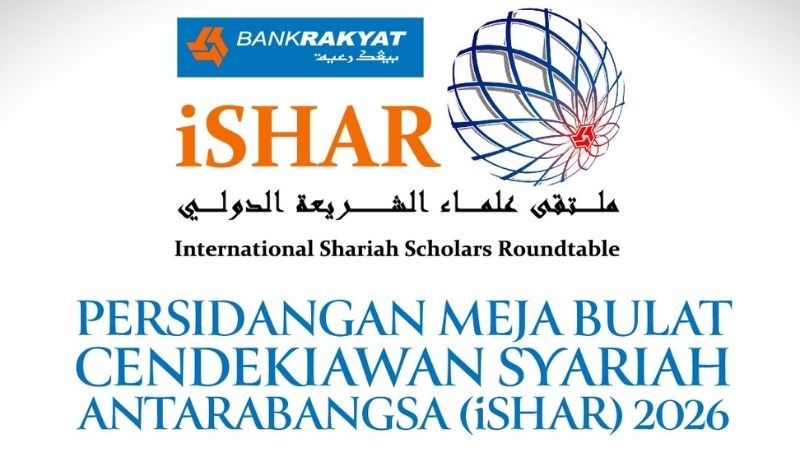
A two-day regional conference bringing together Shariah scholars and Islamic finance professionals from Southeast Asia to discuss contemporary Shariah issues, regional Islamic finance developments, industry applications and innovative solutions for strengthening the Islamic finance ecosystem.
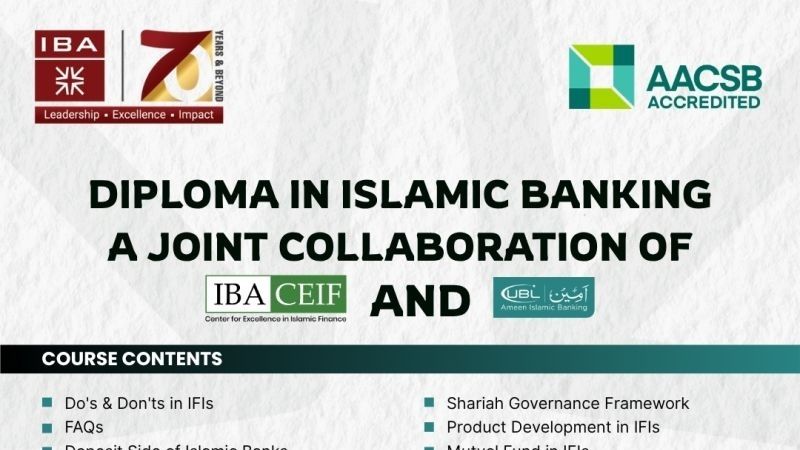
The Diploma in Islamic Banking is a comprehensive training programme designed to provide practical knowledge of Islamic Financial Institutions and their operations. The programme covers Islamic banking principles, deposit management, financing structures, trade finance, treasury, risk management, Sukuk, Islamic mutual funds, Shariah audit, governance, product development and Anti-Money Laundering requirements. It is intended for banking professionals, commerce graduates and others seeking practical expertise in Islamic finance.
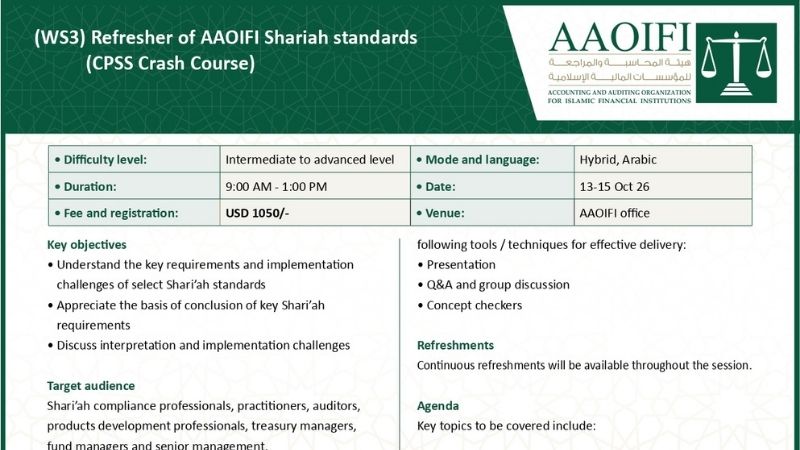
Refresher of AAOIFI Shariah Standards (CPSS Crash Course) is a three-day intermediate-to-advanced workshop scheduled for 13–15 October 2026. The workshop will be delivered in Arabic in a hybrid format at the AAOIFI office, with sessions running from 9:00 AM to 1:00 PM. The programme focuses on selected AAOIFI Shariah Standards covering finance, investment, participation, capital markets and banking services. The participation fee is USD 1,050.
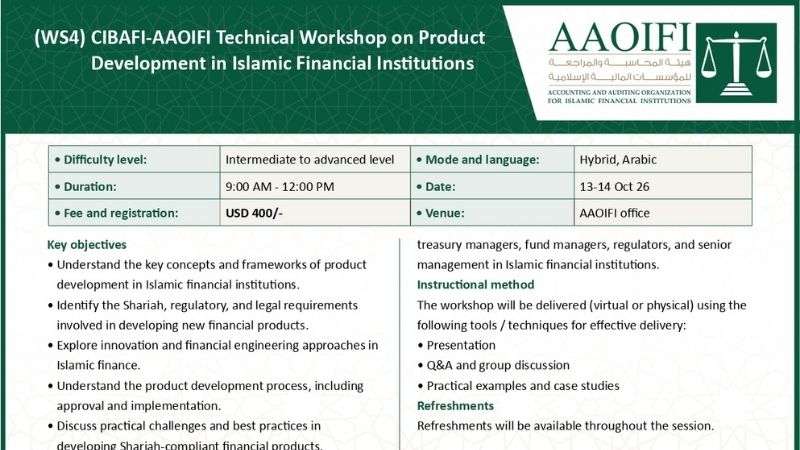
The CIBAFI-AAOIFI Technical Workshop on Product Development in Islamic Financial Institutions is a two-day intermediate-to-advanced workshop focused on product development, innovation and financial engineering in Islamic finance. The workshop will take place on 13–14 October 2026, with sessions from 9:00 AM to 12:00 PM, and will be delivered in Arabic in a hybrid format at the AAOIFI office. The participation fee is USD 400.
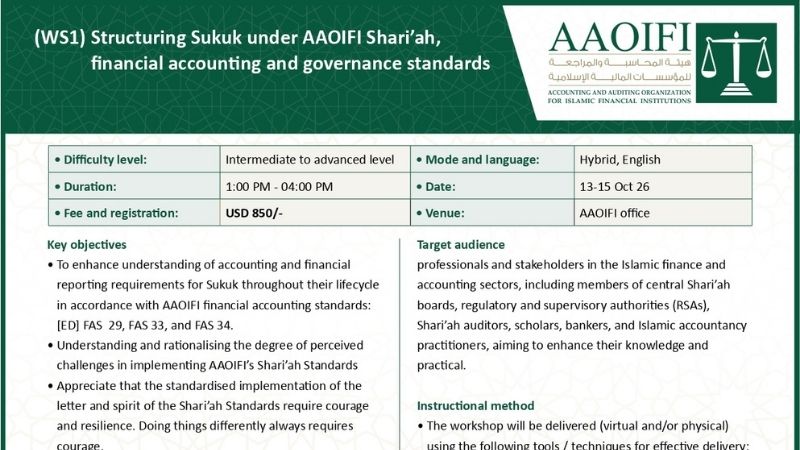
Structuring Sukuk under AAOIFI Shari’ah, Financial Accounting and Governance Standards is a three-day intermediate-to-advanced workshop covering Shari’ah, financial accounting and governance requirements for Sukuk throughout their lifecycle. The workshop is scheduled for 13–15 October 2026 and will be delivered in English in a hybrid format. It covers AAOIFI Shari’ah Standards on Sukuk, relevant financial accounting standards and AAOIFI GS 12 on Sukuk Governance. The participation fee is USD 850.
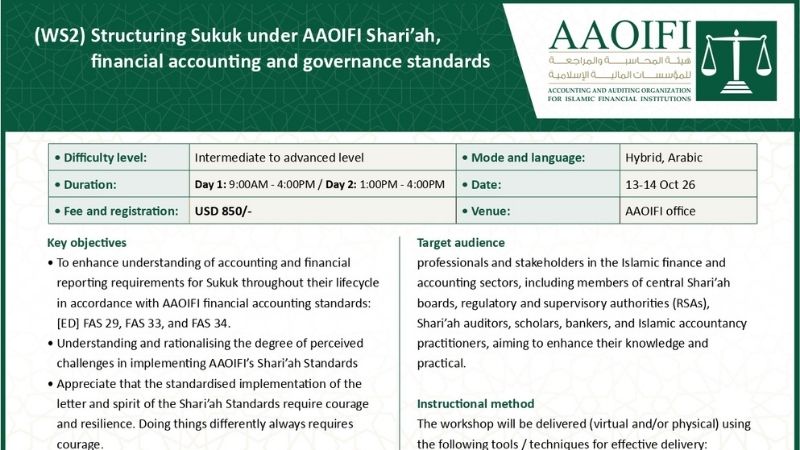
The Structuring Sukuk under AAOIFI Shari’ah, Financial Accounting and Governance Standards workshop is a two-day intermediate-to-advanced programme covering Shari’ah, financial accounting and governance requirements for Sukuk throughout their lifecycle. The workshop will be delivered in Arabic in a hybrid format on 13–14 October 2026 at the AAOIFI office. The programme addresses AAOIFI Shari’ah Standards on Sukuk, financial accounting standards and AAOIFI GS 12 on Sukuk Governance. The fee is USD 850.
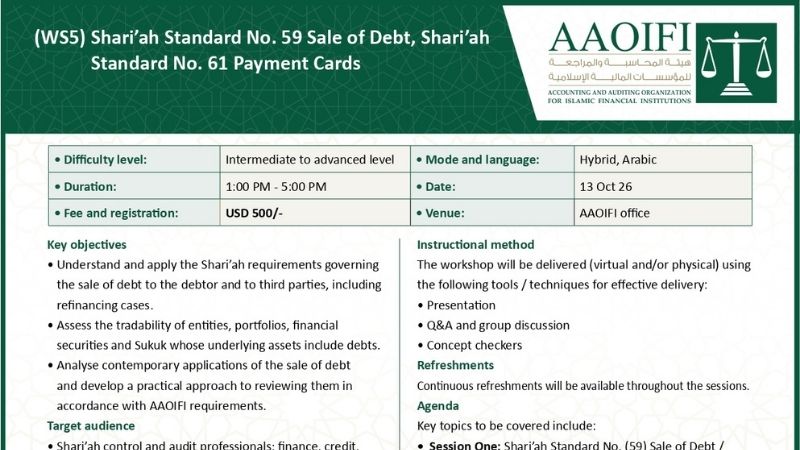
The Shari’ah Standard No. 59 Sale of Debt, Shari’ah Standard No. 61 Payment Cards workshop is a one-day intermediate-to-advanced programme covering the Shari’ah requirements applicable to the sale of debt and payment cards. The workshop is scheduled for 13 October 2026, from 1:00 PM to 5:00 PM, and will be delivered in Arabic in a hybrid format at the AAOIFI office. The participation fee is USD 500.
NACIF 2026, the North American Conference on Islamic Finance, will bring together Islamic finance scholars and practitioners for an international forum focused on knowledge sharing, discussion, and collaboration around developments and practices in the Islamic finance industry. The fourth annual conference will take place at Lake Forest College in Lake Forest, Illinois, from October 16–18, 2026. The official program includes academic presentations, industry presentations, keynote sessions, training programs, and a student poster showcase.
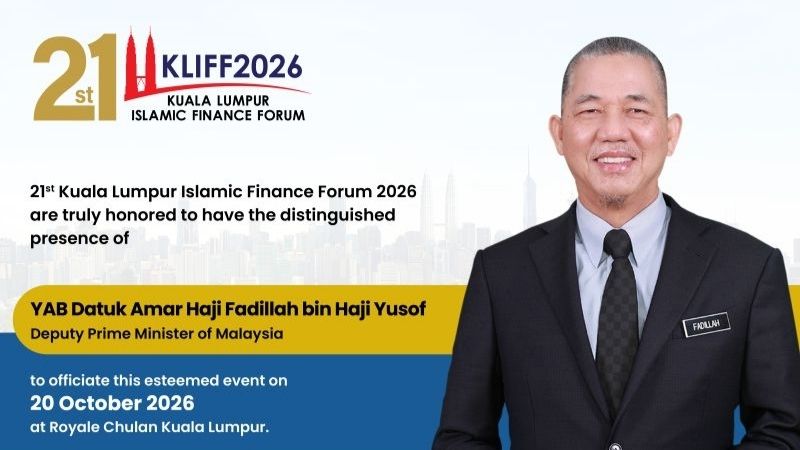
The 21st Kuala Lumpur Islamic Finance Forum 2026 is a two-day international forum bringing together Islamic finance leaders, policymakers, Shariah scholars, regulators and industry professionals to explore impact, innovation and sustainable growth in Islamic finance.
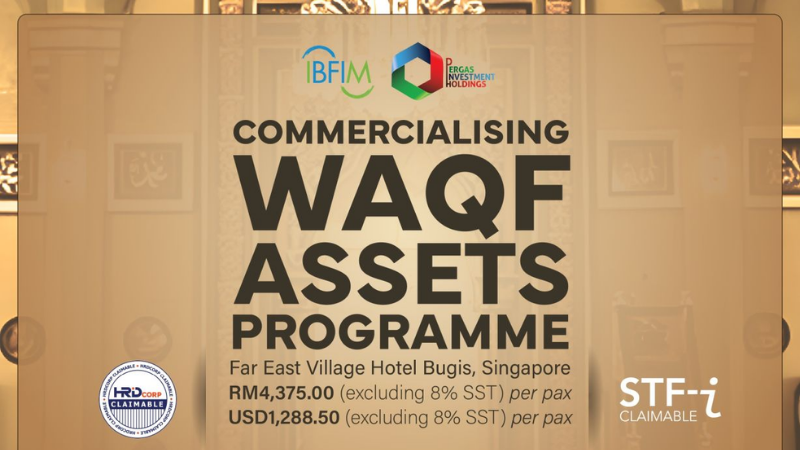
A three-day in-person programme focused on the sustainable commercialisation of Waqf assets, covering Waqf governance, regulatory frameworks, Islamic finance solutions, case studies, property and social enterprise models, and digital technologies for Waqf management and stakeholder engagement.