Malaysia Islamic Finance Industry: Complete Overview
Country: Malaysia
Series: Global Islamic Finance Industry by Country
Research updated: November 2026
1. Introduction
Malaysia has developed one of the world’s most comprehensive Islamic finance ecosystems, supported by a dedicated regulatory framework, established Islamic financial institutions, an active sukuk market and an extensive Islamic finance education and research network.
Over several decades, the country has moved from the establishment of its first Islamic financial institutions to a sophisticated financial system in which Islamic banking, takaful, Islamic capital markets and Islamic investment management operate alongside conventional financial services.
Malaysia’s position was reaffirmed in the 2026 Islamic Finance Development Indicator (IFDI), published by the Islamic Corporation for the Development of the Private Sector (ICD), in collaboration with London Stock Exchange Group (LSEG). Malaysia ranked first among 140 countries for the fourteenth consecutive year.
The country’s development offers an important example of how legislation, regulatory institutions, market infrastructure and knowledge development can contribute to the growth of an Islamic financial system.
2. Historical Development of Islamic Finance in Malaysia
Malaysia’s Islamic finance journey developed through several institutional and regulatory milestones.
An important early institution was the Pilgrims Fund Board, commonly known as Tabung Haji, which was established in 1969. It was created to help Malaysian Muslims save for pilgrimage and invest their savings in accordance with Shariah principles.
A major milestone followed in 1983 with the enactment of the Islamic Banking Act 1983. This legislation provided the foundation for the establishment of Islamic banks and gave Bank Negara Malaysia the authority to supervise and regulate their operations.
Bank Islam Malaysia Berhad, Malaysia’s first Islamic bank, commenced operations in 1983.
The development of takaful followed in 1984, when Malaysia introduced the Takaful Act 1984 and established its first takaful operator. This extended the Islamic financial system beyond banking into Shariah-compliant protection services.
In 1993, Malaysia introduced the Islamic Banking Scheme, enabling conventional banking institutions to offer Islamic banking services alongside their conventional operations.
These developments contributed to the formation of a dual financial system in which Islamic and conventional financial services operate within the same national financial framework.
Over time, Malaysia expanded its Islamic financial infrastructure to include Islamic money markets, sukuk, Islamic investment products, takaful, Shariah governance institutions and specialised financial education.
3. Regulatory and Shariah Governance Framework
Malaysia’s Islamic finance industry operates under a structured regulatory framework involving several key institutions.
Bank Negara Malaysia (BNM)
Bank Negara Malaysia is the country’s central bank and the principal regulator of Islamic banking and takaful.
Its responsibilities include supervising Islamic financial institutions, maintaining financial stability, developing Islamic money markets and establishing regulatory requirements for Shariah-compliant financial activities.
The Islamic Financial Services Act 2013 (IFSA) is a central part of this framework. It came into force on 30 June 2013 and provides for the regulation and supervision of Islamic financial institutions, including requirements relating to Shariah compliance.
Securities Commission Malaysia (SC)
The Securities Commission Malaysia regulates and develops the country’s capital market, including its Islamic capital market.
Its responsibilities include overseeing market intermediaries, regulating capital market activities and providing guidelines for Shariah-compliant securities and sukuk.
The SC also supports the development of sustainable and responsible investment instruments, including SRI Sukuk.
Shariah Advisory Council
Malaysia has a formal Shariah governance structure that includes the Shariah Advisory Council of Bank Negara Malaysia and the Shariah Advisory Council of the Securities Commission Malaysia.
These councils provide authoritative Shariah advice within their respective regulatory jurisdictions.
Islamic financial institutions also maintain their own Shariah governance arrangements in accordance with applicable regulatory requirements.
Together, these arrangements contribute to regulatory clarity and the consistent application of Shariah principles across the financial system.
4. Islamic Banking in Malaysia
Islamic banking is one of the largest components of Malaysia’s Islamic finance industry.
The country operates a dual banking system, allowing Islamic banks and conventional banks offering Islamic banking services to operate within the same financial market.
Islamic banking institutions provide Shariah-compliant financial products and services to individuals, businesses and government-related entities.
These include:
- Personal and business financing.
- Home financing.
- Corporate and commercial financing.
- Islamic deposit and investment products.
- Trade finance.
- Islamic treasury and liquidity management services.
According to Bank Negara Malaysia’s 2025 Annual Report, Islamic financing accounted for 48% of total financing in Malaysia in 2025.
The figure demonstrates the substantial role of Islamic financing in the country’s financial system.
Malaysia’s continued development of Islamic banking also includes efforts to strengthen value-based intermediation, improve financial inclusion and expand the use of risk-sharing financial arrangements.
5. Sukuk and Islamic Capital Markets
Malaysia is one of the world’s most established sukuk markets.
The country’s Islamic capital market provides financing and investment opportunities through sukuk, Shariah-compliant listed securities, Islamic collective investment schemes and other investment products.
According to the Securities Commission Malaysia’s Annual Report 2025:
- The total Islamic capital market reached RM2.74779 trillion at the end of 2025.
- Islamic capital market assets represented 63.70% of the overall capital market.
- Sukuk outstanding reached RM1.43302 trillion.
- The market capitalisation of Shariah-compliant securities reached RM1.31477 trillion.
- There were 867 Shariah-compliant securities among 1,082 listed securities.
Sukuk also represented a significant proportion of the country’s debt capital market.
Total sukuk issuance reached RM284.48 billion in 2025, accounting for 66.51% of total bond and sukuk issuance.
Malaysia has also developed the Sustainable and Responsible Investment (SRI) Sukuk framework, supporting the use of Islamic capital market instruments for projects with environmental and social objectives.
In 2025, corporate SRI sukuk issuance amounted to RM25.95 billion.
These developments demonstrate the importance of sukuk and Shariah-compliant securities within Malaysia’s broader capital market.
6. Takaful Industry
Takaful is another established component of Malaysia’s Islamic financial system.
The industry developed following the introduction of the Takaful Act 1984, providing a regulatory foundation for Shariah-compliant protection services.
Takaful operates on principles of mutual assistance and shared responsibility, with participants contributing to arrangements designed to provide financial protection against specified risks.
Malaysia’s takaful market includes family takaful and general takaful services.
The sector serves individuals, households and businesses through protection products and related services.
Bank Negara Malaysia reported that takaful participation reached 24.5% in 2025.
The regulator has also continued to develop the sector through initiatives aimed at improving access to protection. One example is iTEKAD Protection, introduced in 2025 to support more affordable social takaful solutions for microentrepreneurs.
7. Islamic Investment and Asset Management
Malaysia has developed an established Islamic asset management industry, providing Shariah-compliant investment opportunities for domestic and international investors.
The sector includes Islamic unit trust funds, wholesale funds, Islamic real estate investment trusts (REITs), exchange-traded funds (ETFs) and private investment mandates.
The Securities Commission Malaysia reported that Islamic assets under management reached RM274.01 billion at the end of 2025, representing approximately 23.97% of the country’s total fund management industry assets.
The same report identified 64 fund management companies managing Islamic funds, comprising 24 full-fledged Islamic fund management companies and 40 conventional fund management companies with Islamic investment windows.
This infrastructure provides investors with access to a range of Shariah-compliant investment products and asset classes.
8. Islamic Fintech and Financial Innovation
Malaysia’s Islamic finance ecosystem is also developing in response to digitalisation and financial innovation.
Islamic financial institutions and market participants are exploring technology-enabled services, including digital banking, electronic payments, online financing and digital investment solutions.
The development of digital Islamic finance also raises important considerations concerning Shariah governance, consumer protection, cybersecurity and regulatory oversight.
Malaysia’s broader financial innovation agenda provides opportunities to integrate technology with established Islamic financial products and services.
Recent developments in tokenised sukuk also demonstrate the potential for digital infrastructure to support innovation in Islamic capital markets.
However, individual fintech developments should be assessed according to their actual business activities and regulatory status rather than assuming that every digital financial service is Shariah-compliant.
9. Islamic Finance Education, Research and Professional Development
Knowledge development has been an important part of Malaysia’s Islamic finance strategy.
The country has established specialised academic and professional institutions that contribute to Islamic finance education, research, training and industry development.
Examples include:
- International Centre for Education in Islamic Finance (INCEIF University).
- International Shari’ah Research Academy for Islamic Finance (ISRA).
- International Islamic University Malaysia (IIUM).
These institutions contribute through academic programmes, professional development, research publications, Shariah studies and industry engagement.
Malaysia’s broader Islamic finance knowledge ecosystem also includes professional associations, training providers, research centres and international industry initiatives.
This educational infrastructure supports the development of professionals in Islamic banking, Shariah advisory, Islamic capital markets, takaful and related fields.
10. Malaysia’s International Position in Islamic Finance
Malaysia continues to hold an influential position in the international Islamic finance industry.
The 2026 ICD–LSEG Islamic Finance Development Report placed Malaysia first in the Islamic Finance Development Indicator for the fourteenth consecutive year.
The report also identified Malaysia as the world’s third-largest Islamic finance market by assets in 2025, with approximately US$862 billion.
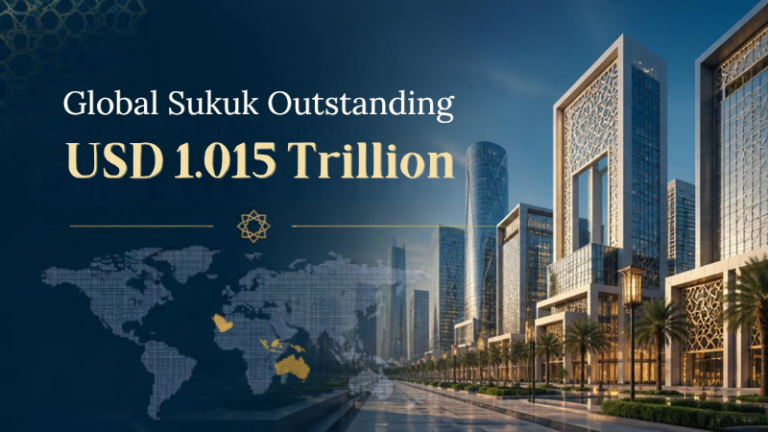
Its outstanding sukuk reached approximately US$359 billion at the end of 2025, placing it among the world’s largest sukuk markets.
Malaysia’s international role is supported by its regulatory experience, Islamic capital market infrastructure, Shariah governance arrangements, financial institutions and educational institutions.
The country also contributes to international discussions on Islamic finance standards, sustainable finance, financial inclusion and cross-border market development.
11. Recent Developments and Future Direction
Malaysia’s Islamic finance development agenda continues to evolve.
Bank Negara Malaysia’s 2025 Annual Report identifies several priorities, including:
- Advancing value-based intermediation.
- Strengthening Islamic financial institutions.
- Expanding financial inclusion.
- Supporting risk-sharing financial arrangements.
- Improving Islamic money market infrastructure.
- Developing social finance and takaful solutions.
- Strengthening Shariah research and talent development.
The i-CITA programme, launched in September 2025 with RM100 million in matching funds, is intended to encourage greater use of risk-sharing contracts such as mudarabah and musyarakah.
The regulator is also working towards the use of the Malaysia Islamic Overnight Rate (MYOR-i) as a benchmark for Islamic products, with mandatory adoption planned from the second half of 2027.
These initiatives indicate that Malaysia’s development strategy is not limited to expanding the size of the industry. It also focuses on strengthening market infrastructure, improving the economic and social contribution of Islamic finance and supporting new financial solutions.
12. Conclusion
Malaysia’s Islamic finance industry demonstrates how a comprehensive financial ecosystem can develop through long-term institutional planning, dedicated legislation, regulatory oversight, market infrastructure and investment in knowledge.
From the establishment of Tabung Haji and the country’s first Islamic bank to the expansion of sukuk, takaful and Islamic investment management, Malaysia has progressively developed a financial system in which Islamic finance plays a substantial role.
Its continued first-place position in the 2026 Islamic Finance Development Indicator reflects the depth of this ecosystem and its established position in the international Islamic finance industry.
As the sector evolves, Malaysia’s experience remains an important reference point for countries seeking to develop or strengthen their own Islamic financial markets.
References and Further Reading
- Bank Negara Malaysia – Annual Report 2025: Promoting a Progressive and Inclusive Islamic Financial System
- Bank Negara Malaysia – Islamic Financial Services Act 2013
- Bank Negara Malaysia – Significant Milestones in the Malaysian Money Market
- Securities Commission Malaysia – Annual Report 2025
- LSEG and ICD – Islamic Finance Development Report 2026
- Bank Negara Malaysia – Malaysia International Islamic Financial Centre
Disclaimer: IslamicFinanceDaily.com publishes this article for informational purposes only. The content is based on publicly available information and official announcements from the referenced institution. IslamicFinanceDaily.com does not provide financial, investment, or legal advice. Readers should verify information with the original source before making any financial or business decisions.