Qatar Islamic Finance Industry: Complete Overview
1. Introduction: Qatar’s Islamic finance industry
Qatar has developed into one of the leading Islamic finance markets in the Gulf Cooperation Council (GCC) region. Its industry is supported by established Islamic banks, a growing sukuk market, takaful operators, Islamic investment institutions and a regulatory framework that accommodates Shariah-compliant financial activities.
Islamic finance forms an important part of Qatar’s wider financial services sector and contributes to the country’s economic diversification objectives under Qatar National Vision 2030.
The country has developed a substantial Islamic banking sector, with institutions such as Qatar Islamic Bank, Masraf Al Rayan, Qatar International Islamic Bank and Dukhan Bank serving retail, corporate and institutional customers.
Qatar has also developed its position in Islamic capital markets through sovereign and corporate sukuk issuance, while the Qatar Financial Centre (QFC) provides an international platform for financial institutions offering Shariah-compliant services.
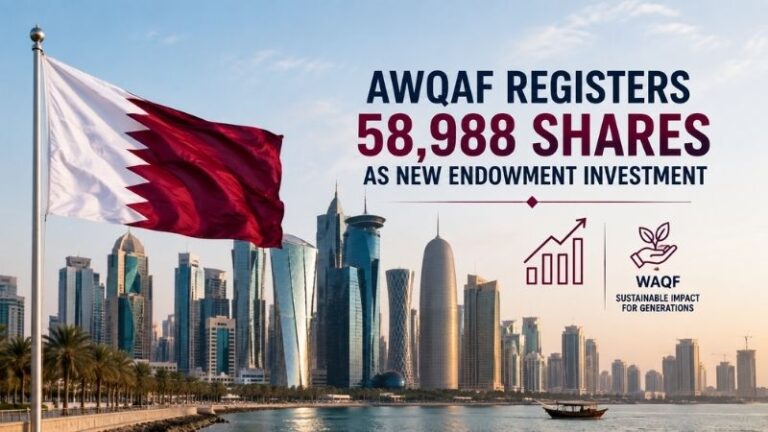
According to the Qatar Islamic Finance Report 2025, developed by London Stock Exchange Group (LSEG), Islamic finance assets in Qatar reached approximately QAR 694 billion by the end of 2024. The report identifies Islamic banking and sukuk as the dominant components of the country’s Islamic financial system. Data Analytics+1
More recent figures published in the 2025 annual Islamic finance report by Bait Al Mashura Finance Consultations indicate that total Islamic finance assets reached approximately QAR 718.5 billion in 2025, representing annual growth of 5.3%. qna.org.qa+1
These developments demonstrate Qatar’s established position in Islamic finance and its continuing efforts to strengthen the sector through financial innovation, regulatory development and international engagement.
2. Historical development of Islamic finance in Qatar
Qatar’s modern Islamic banking industry began in the early 1980s with the establishment of Qatar Islamic Bank (QIB), the country’s first Islamic financial institution.
The sector subsequently expanded through the establishment of additional Islamic banks, specialised financing companies and investment institutions.
Some important milestones include:
- 1982 – Establishment of Qatar Islamic Bank: Decree No. 45 established QIB as Qatar’s first Islamic financial institution.
- 1983 – Commencement of banking operations: QIB began its banking activities, providing Shariah-compliant financial services.
- 1989 – Establishment of Al Jazeera Finance: The company became one of Qatar’s early specialised Islamic financing institutions.
- 1990s – Expansion of Islamic banking: The industry developed through the establishment and expansion of additional Islamic financial institutions.
- 2000s – Development of Islamic capital markets: Qatar increased its participation in international sukuk markets and expanded its Islamic investment activities.
- 2005 – Establishment of Qatar Financial Centre: QFC was established as an international business and financial centre, providing a platform for financial services and investment activities.
- 2011 – Establishment of Qatar Financial Markets Authority: The QFMA strengthened the regulatory framework governing Qatar’s capital markets.
- 2021 – Al Khalij Commercial Bank merger: The merger with Masraf Al Rayan expanded the country’s Islamic banking sector.
- 2023 – Third Financial Sector Strategy: Qatar launched a financial sector strategy incorporating Islamic finance, digital innovation and sustainability.
- 2025 – Qatar Islamic Finance Report: LSEG and QFC published a report examining the development and performance of Qatar’s Islamic finance industry. The largest Islamic bank in Qatar+3
These developments reflect the transition of Qatar’s Islamic finance industry from an emerging banking segment into a diversified financial services market.
3. Market size and global position
Qatar is among the significant Islamic finance markets internationally, with Islamic banking accounting for a substantial share of its domestic banking system.
The Qatar Islamic Finance Report 2025, produced by LSEG, provides an overview of the industry’s development through 2024. A subsequent report by Bait Al Mashura provides updated figures for 2025.
Qatar Islamic finance market – 2025
QAR 718.5 billion
Total Islamic finance assets, 2025
5.3%
Annual asset growth
QAR 616.5bn
Islamic banking assets
85.8%
Islamic banking share of total Islamic finance assets
11%
Sukuk share of total Islamic finance assets
Source: Bait Al Mashura, Islamic Finance in the State of Qatar Report 2025, as reported by Qatar News Agency, September 2026. qna.org.qa+1
The sector’s development is also reflected in the performance of Islamic banking over the preceding five years.
| Indicator | 2020 | 2024 |
|---|---|---|
| Islamic banking assets | QAR 451bn | QAR 585.5bn |
| Share of QCB-regulated banking assets | 27% | 29% |
Islamic banking assets grew at a compound annual growth rate (CAGR) of 6.8% between 2020 and 2024, compared with 4.5% for conventional banks, according to the LSEG report. lseg.com
Note on reported figures: The 2024 total Islamic finance asset figures differ between the LSEG report and Bait Al Mashura’s report. They use different reported totals, approximately QAR 694 billion and QAR 683 billion respectively. The 2025 figures above are presented separately and should not be treated as a direct restatement of the earlier LSEG dataset.
4. Regulatory framework and Shariah governance
Qatar’s Islamic finance industry operates under a regulatory framework involving several authorities responsible for banking supervision, financial markets, insurance and specialised financial services.
Unlike jurisdictions with a single centralised national Shariah authority, Qatar’s Islamic financial institutions generally maintain their own Shariah supervisory boards, operating within the applicable regulatory framework.
Qatar Central Bank (QCB)
The Qatar Central Bank is the principal regulator responsible for supervising banks and financial institutions operating under its jurisdiction.
Its responsibilities include:
- Licensing and supervising banks and financial institutions.
- Regulating Islamic banking activities.
- Supervising insurance and takaful activities.
- Maintaining financial stability and monetary policy.
- Developing regulations for financial institutions and payment services.
The QCB’s regulatory responsibilities extend to both conventional and Islamic financial institutions. Oxford Business Group
Qatar Financial Centre Regulatory Authority (QFCRA)
The Qatar Financial Centre Regulatory Authority regulates financial services conducted within the Qatar Financial Centre.
Its regulatory framework includes Islamic banking business prudential rules and requirements applicable to firms providing Shariah-compliant financial services.
QFC’s Islamic banking framework recognises financing structures including:
- Murabaha
- Ijara
- Mudarabah
- Musharakah
These structures support the provision of Shariah-compliant financing and banking services within the QFC environment. Qatar Financial Centre+1
Qatar Financial Markets Authority (QFMA)
The Qatar Financial Markets Authority regulates Qatar’s capital markets and oversees activities involving listed securities and market participants.
Its responsibilities include establishing market regulations, supervising securities-related activities and supporting the development of Qatar’s capital markets.
Qatar Stock Exchange (QSE)
The Qatar Stock Exchange operates the country’s securities market and provides facilities for trading shares, debt instruments and sukuk.
It also maintains the Al Rayan Islamic Index, which tracks listed companies meeting the relevant Shariah compliance requirements. Oxford Business Group+2
Institutional Shariah governance
Islamic banks and takaful companies in Qatar generally operate with their own Shariah supervisory boards.
These boards oversee the Shariah compliance of products, transactions and institutional activities.
International standards and guidance issued by organisations such as AAOIFI and the Islamic Financial Services Board (IFSB) also contribute to the development of the country’s Islamic finance practices. Oxford Business Group
5. Islamic banking sector
Islamic banking is the largest segment of Qatar’s Islamic financial system.
The country has four principal domestic Islamic commercial banks, providing services to individuals, businesses, corporations and institutional customers.
The main institutions include:
Qatar Islamic Bank (QIB)
Established in 1982, QIB was Qatar’s first Islamic financial institution and has become one of the country’s largest Islamic banks.
Its services include retail banking, corporate banking, personal finance, trade finance, investment services and digital banking.
QIB reported total assets of QAR 221.1 billion at the end of 2025. The largest Islamic bank in Qatar
Masraf Al Rayan
Masraf Al Rayan is one of Qatar’s major Islamic banks, providing retail, corporate and wholesale banking services.
Its merger with Al Khalij Commercial Bank in 2021 expanded its operations and strengthened its position in the domestic Islamic banking sector. Oxford Business Group+1
Qatar International Islamic Bank (QIIB)
QIIB is a Qatar-based Islamic bank offering retail and corporate banking services.
Its activities include personal financing, corporate financing, deposits, investment products and international sukuk issuance.
In December 2025, QIIB achieved a significant capital market milestone when its QAR 500 million sukuk became the first Islamic sukuk listed on the Qatar Stock Exchange. qiib.com.qa
Dukhan Bank
Dukhan Bank is another major Islamic financial institution in Qatar, providing a range of Shariah-compliant retail, corporate and investment banking services.
The bank also participates in industry development initiatives, including its strategic partnership with Bait Al Mashura for the Doha Islamic Finance Conference. The Peninsula Newspaper
Together, these institutions form the core of Qatar’s Islamic commercial banking sector.
Islamic banking growth is supported by demand for Shariah-compliant financing, corporate banking services, real estate financing and digital banking solutions.
6. Sukuk and Islamic capital markets
Qatar has developed an important position in international sukuk markets through sovereign and corporate issuances.
Its Islamic capital market includes government sukuk, bank sukuk, corporate issuances and Shariah-compliant listed securities.
Sovereign sukuk
The Government of Qatar has participated in international Islamic capital markets through sovereign sukuk issuance.
These instruments provide Shariah-compliant financing opportunities and support the government’s funding and debt management activities.
Qatar’s sovereign debt instruments are included within the debt market infrastructure of the Qatar Stock Exchange. Debt Market
QIIB sukuk listing – 2025
An important development occurred in December 2025 when Qatar International Islamic Bank’s QAR 500 million sukuk was listed on the Qatar Stock Exchange.
The issuance carried an annual return of 4.40% and had a three-year maturity.
It represented the first Islamic sukuk listing in the history of the Qatar Stock Exchange, creating an additional route for local and international investors to access Islamic debt instruments. qiib.com.qa
First green sukuk listed in Qatar – 2026
In February 2026, AlRayan Bank introduced another important development in the country’s Islamic capital market with the listing of Qatar’s first green sukuk.
The QAR 500 million issuance had a three-year tenor and an annual profit rate of 4.25%.
The listing combined Shariah-compliant financing with sustainability-related investment objectives and expanded the range of Islamic financial instruments available in Qatar’s domestic market. qna.org.qa
Al Rayan Islamic Index
The Qatar Stock Exchange Al Rayan Islamic Index provides a benchmark for companies that meet applicable Shariah compliance requirements.
The index supports the development of Shariah-compliant investment products and provides investors with a reference for identifying eligible listed companies.
The index was originally developed in connection with the Al Rayan Qatar ETF. Business Administration Center
These developments demonstrate Qatar’s efforts to deepen its domestic Islamic capital market while maintaining its participation in international sukuk markets.
7. Takaful industry
Takaful is an established component of Qatar’s Islamic financial services industry. Its development has been supported by dedicated insurance regulation, increasing demand for Shariah-compliant insurance products and the expansion of health, motor and corporate insurance services.
Qatar introduced specific regulatory provisions for Islamic insurance through Law No. 13 of 2012. In April 2024, additional regulations governing digital insurance and takaful activities came into force. Oxford Business Group+1
Major takaful operators
The country’s principal takaful operators include:
- Qatar Islamic Insurance Company (QIIC) – One of Qatar’s earliest and largest takaful operators, established in 1995.
- Al Khaleej Takaful Insurance Company – Provides Shariah-compliant insurance services.
- Damaan Islamic Insurance Company (Beema) – Offers family, health, motor and general takaful products.
- General Takaful Company – Provides Islamic insurance services within the Qatar General Insurance and Reinsurance group.
- Doha Islamic Insurance – Shamel – Provides Shariah-compliant insurance services and operates as part of Doha Insurance Group. Oxford Business Group+2
Qatar’s takaful market covers several business segments, including family and health takaful, motor, property and general accident insurance.
According to the LSEG Qatar Islamic Finance Report 2025, takaful’s contribution to the country’s total gross written premiums increased from 6% in 2020 to 11% in 2024. lseg.com
The sector’s continued development is supported by the increasing use of digital insurance services and demand for Shariah-compliant protection products.
8. Islamic investment and asset management
Qatar’s Islamic investment industry includes specialised investment companies, Islamic funds and financial institutions providing Shariah-compliant investment and wealth management services.
The Qatar Financial Centre provides an important platform for investment management firms and financial institutions operating under its regulatory framework.
QInvest
QInvest is an important participant in Qatar’s Islamic investment banking sector.
Its activities include investment banking, asset management, real estate investment and Shariah-compliant financial solutions.
Lesha Bank
Lesha Bank operates as an Islamic investment bank and is listed on the Qatar Stock Exchange.
Its activities include investment management, real estate investments, private equity and other investment solutions. Oxford Business Group+1
The First Investor Company
The First Investor Company is a Qatar-based Islamic investment institution providing investment banking and asset management services.
The Investment House
The Investment House is another participant in Qatar’s Islamic investment sector, with activities involving Shariah-compliant investment and financial services. Oxford Business Group
Qatar’s Islamic investment ecosystem also includes Shariah-compliant funds and exchange-traded investment products.
The Al Rayan Qatar ETF, associated with the Al Rayan Islamic Index, provides an example of how the country’s listed equity market infrastructure supports Shariah-compliant investment opportunities.
These institutions and products contribute to the development of investment alternatives beyond traditional Islamic banking.
9. Islamic fintech and financial innovation
Qatar has identified financial technology and digital transformation as important components of its financial sector development strategy.
The Third Financial Sector Strategy places digital innovation and advanced technologies among its central themes, alongside Islamic finance, sustainability and regulatory governance. Government Communications Office
Islamic fintech development in Qatar includes digital banking, electronic payments, financing platforms, investment services and technology-enabled financial products.
Qatar’s position in global Islamic fintech
According to the Global Islamic Fintech Report 2025–2026, Qatar ranked sixth globally as an Islamic fintech hub.
The report estimated Qatar’s Islamic fintech market at US$3.1 billion in 2024–2025 and projected it to reach US$4.8 billion by 2029, representing a projected compound annual growth rate of 9%. qna.org.qa
Digital banking initiatives
Qatar’s Islamic banks have introduced digital solutions to improve customer access and operational efficiency.
Qatar Islamic Bank, for example, has expanded its digital banking services through mobile applications, corporate banking solutions and digital payment technologies.
Its initiatives include QIB Lite, introduced in 2023, and QIB SoftPOS, which enables businesses to accept payments using Android devices. The largest Islamic bank in Qatar
Qatar Financial Centre
The QFC supports the establishment and development of financial technology businesses, including companies providing Islamic financial services.
Its regulatory environment allows eligible firms to offer Shariah-compliant banking, financing, insurance, capital markets and fintech services. Qatar Financial Centre
The development of Islamic fintech provides opportunities for Qatar to expand its financial services ecosystem and strengthen its position as a regional centre for digital Islamic finance.
10. Islamic finance education, research and professional development
Qatar has developed an academic and professional education environment that includes specialised Islamic finance programmes, postgraduate degrees and research activities.
Several institutions contribute to the development of knowledge and professional capabilities in Islamic economics, banking and finance.
Hamad Bin Khalifa University (HBKU)
Hamad Bin Khalifa University, through its College of Islamic Studies, offers specialised programmes in Islamic finance.
Its academic offerings include:
- Master of Science in Islamic Finance.
- Graduate Certificate in Islamic Finance.
- PhD in Islamic Finance and Economy.
The programmes cover Islamic financial contracts, Islamic economics, financial institutions and the theoretical and practical foundations of Islamic finance. Official website+1
Qatar University
Qatar University is one of the country’s principal public higher education institutions.
Its wider academic environment includes business, economics and finance education, supporting the development of professionals for the financial services industry. edu.gov.qa
Qatar Finance and Business Academy (QFBA)
Qatar Finance and Business Academy contributes to financial sector education and professional development through specialised programmes and partnerships.
Its activities support the development of skills required by banking, finance and other financial services institutions. edu.gov.qa
Bait Al Mashura Finance Consultations
Bait Al Mashura Finance Consultations is an important organisation in Qatar’s Islamic finance research and professional development environment.
It publishes annual reports on the performance of Qatar’s Islamic finance sector and organises the Doha Islamic Finance Conference.
Its research provides information on Islamic banking, sukuk, takaful and other Islamic financial institutions. qna.org.qa+1
These institutions contribute to the development of academic knowledge, research and professional capabilities required by Qatar’s growing Islamic financial services sector.
11. Key Islamic finance institutions and market participants
Qatar’s Islamic finance ecosystem includes regulators, Islamic banks, takaful operators, investment institutions, financial market infrastructure and academic organisations.
The following table highlights selected participants.
| Institution | Main area of activity |
|---|---|
| Qatar Central Bank | Banking and financial regulation |
| Qatar Financial Centre | Financial services and business centre |
| QFCRA | Financial services regulation within QFC |
| QFMA | Capital markets regulation |
| Qatar Stock Exchange | Securities and sukuk market |
| Qatar Islamic Bank | Islamic banking |
| Masraf Al Rayan | Islamic banking |
| Qatar International Islamic Bank | Islamic banking |
| Dukhan Bank | Islamic banking |
| QIIC | Takaful |
| Beema | Takaful |
| Al Khaleej Takaful | Takaful |
| QInvest | Islamic investment banking |
| Lesha Bank | Islamic investment banking |
| HBKU College of Islamic Studies | Islamic finance education and research |
| Bait Al Mashura | Islamic finance research and consultancy |
The institutions listed represent selected organisations and are not intended to constitute a complete directory of Qatar’s Islamic finance industry.
12. International participation and Qatar’s global role
Qatar’s Islamic finance industry has developed alongside its wider international financial services sector.
Its participation in international markets is supported by sovereign and corporate sukuk issuance, the presence of Islamic investment institutions and the activities of financial institutions operating through the Qatar Financial Centre.
The country also benefits from its position within the GCC, providing connections with other major Islamic finance markets, including Saudi Arabia, the UAE, Bahrain and Kuwait.
Qatar’s adoption and use of internationally recognised Islamic finance standards, including those developed by AAOIFI and IFSB, contribute to its participation in the wider global Islamic finance industry. Oxford Business Group
The Qatar Islamic Finance Report 2025, developed by LSEG in collaboration with QFC, also demonstrates the country’s interest in strengthening international research, industry cooperation and financial market development. Data Analytics+1
Qatar’s ranking as the sixth-largest Islamic fintech hub in the Global Islamic Fintech Report 2025–2026 further illustrates its participation in the development of digital Shariah-compliant financial services. qna.org.qa
13. Challenges and future outlook
Qatar enters the next phase of Islamic finance development with an established Islamic banking sector, growing takaful operations, an expanding domestic sukuk market and a national financial sector strategy.
However, several areas will remain important to the industry’s future development.
Expanding the Islamic capital market
The introduction of domestic corporate sukuk listings and green sukuk represents progress in diversifying Qatar’s Islamic capital market.
Further development of the market will depend on the availability of issuers, investor participation and a broader range of Shariah-compliant investment instruments.
Strengthening Shariah governance
As financial products and services become more complex, maintaining effective Shariah supervision and consistent regulatory practices remains important.
Developing Islamic fintech
Digital banking, financial technology and digital financing platforms offer opportunities to expand access to Islamic financial services and improve operational efficiency.
Expanding takaful penetration
Although takaful has developed in Qatar, it represents a smaller segment of the overall insurance market than conventional insurance.
Product innovation, public awareness and digital distribution may contribute to further development.
Developing skilled professionals
The growth of Islamic banking, capital markets and financial technology increases demand for professionals with expertise in Shariah governance, Islamic financial contracts, risk management, financial regulation and digital finance.
Implementing the Third Financial Sector Strategy
The Third Financial Sector Strategy provides a framework for the continued development of Qatar’s financial services industry through 2030.
Its emphasis on Islamic finance, innovation, sustainability, governance and talent development will influence the sector’s future direction. Government Communications Office+1
14. Conclusion
Qatar has established itself as an important Islamic finance market, supported by a developed Islamic banking sector, specialised financial institutions, takaful operators and growing participation in domestic and international sukuk markets.
The country’s Islamic finance industry has expanded beyond traditional banking into investment management, insurance, financial technology and academic research.
The Third Financial Sector Strategy provides an important policy framework for the next stage of development, with Islamic finance identified as a cross-cutting priority across banking, insurance, digital financial services and capital markets.
Recent developments, including the first Islamic sukuk listing on the Qatar Stock Exchange and the introduction of Qatar’s first listed green sukuk, demonstrate efforts to deepen the domestic Islamic capital market.
With its established institutions, academic capabilities and growing fintech ecosystem, Qatar remains an important contributor to the development of Islamic finance in the GCC and the wider international market.
15. References and research sources
The following sources were used to prepare this country profile. Official institutional sources and industry research are prioritised.
- LSEG: Qatar Islamic Finance Report 2025 – Expanding Horizons.
- Qatar Central Bank: Official Website.
- Qatar Financial Centre: Islamic Banking at QFC.
- Qatar Financial Markets Authority: Official Website.
- Qatar News Agency: Qatar Ranks Sixth Globally in Islamic Fintech Sector.
- Qatar News Agency: Qatar’s Islamic Finance Assets Reach QAR 718.5 Billion.
- Qatar Stock Exchange: Debt Market – Bonds and Sukuk.
- Qatar International Islamic Bank: First Islamic Sukuk Listed on Qatar Stock Exchange.
- Qatar News Agency: Qatar’s First Green Sukuk Listed.
- Hamad Bin Khalifa University: College of Islamic Studies – Academic Programmes.
- Qatar Finance and Business Academy: Higher Education in Qatar.
- Oxford Business Group: Qatar 2026 – Islamic Financial Services.
- Oxford Business Group: Islamic Finance in Qatar – Market Development and Regulation.
Disclaimer: IslamicFinanceDaily.com publishes this article for informational purposes only. The content is based on publicly available information and official announcements from the referenced institution. IslamicFinanceDaily.com does not provide financial, investment, or legal advice. Readers should verify information with the original source before making any financial or business decisions.