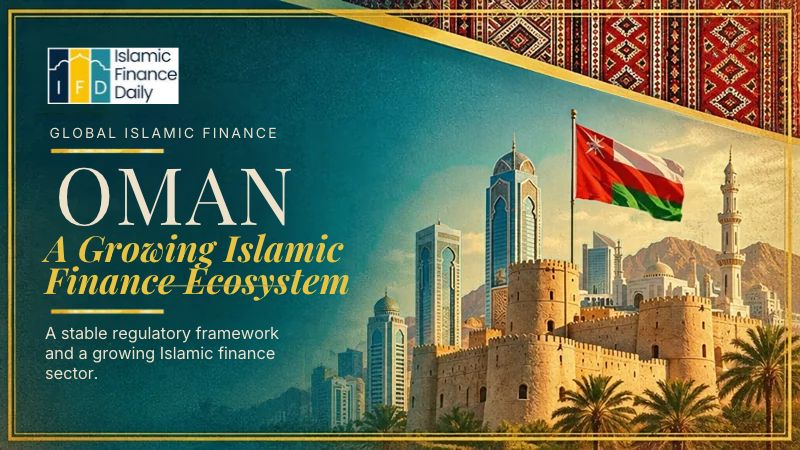
Oman Islamic Finance Industry: Complete Overview
Oman has developed a distinctive Islamic finance market since formally introducing Islamic banking in 2012. Its industry now includes full-fledged Islamic banks, Islamic banking windows, sovereign and corporate sukuk, takaful operators and an expanding financial technology ecosystem.
This profile follows the same structure as the previous country articles, with particular attention to Oman’s regulatory framework, the Central Bank of Oman’s Shariah governance arrangements and the latest available market statistics.
1. Introduction
Oman is an emerging but increasingly established market in the global Islamic finance industry. Unlike some other Gulf countries, Oman introduced formal Islamic banking relatively recently, with the sector officially beginning in 2012.
Since then, the country has developed a dual banking system in which Islamic banks and Islamic banking windows operate alongside conventional financial institutions. The market has also expanded into sukuk, takaful, Islamic investment services and financial technology.
The Central Bank of Oman (CBO) plays a central role in regulating Islamic banking and overseeing Shariah governance. The establishment of a High Shariah Supervisory Authority has further strengthened the country’s institutional framework.
Oman’s Islamic finance industry has grown steadily and now represents a meaningful share of the national banking system.
2. Historical Development of Islamic Finance in Oman
Oman’s modern Islamic finance industry began with the introduction of a formal legal and regulatory framework in 2012.
A major milestone was the issuance of Royal Decree No. 69/2012, which amended the previous Banking Law and introduced provisions allowing Islamic banking activities in the Sultanate.
The Central Bank of Oman subsequently issued the Islamic Banking Regulatory Framework (IBRF), providing requirements for the establishment and operation of full-fledged Islamic banks and Islamic banking windows.
Key milestones include:
| Year | Development |
|---|---|
| 2012 | Royal Decree 69/2012 introduced Islamic banking provisions. |
| 2012 | Central Bank of Oman issued the Islamic Banking Regulatory Framework. |
| 2012 | Bank Nizwa was licensed as Oman’s first full-fledged Islamic bank. |
| 2013 | Six local Islamic banking windows were licensed. |
| 2015 | First Omani-rial sovereign sukuk issued. |
| 2015 | High Shariah Supervisory Authority established at the CBO. |
| 2016 | First US-dollar-denominated sovereign sukuk issued. |
| 2017 | First sukuk issued by an Islamic banking entity, Meethaq Islamic Banking. |
| 2019 | Updated Islamic Banking Regulation issued. |
| 2020 | First retail sovereign sukuk issued in Omani rials. |
| 2022 | Introduction of the Wakala US-dollar money-market instrument. |
| 2024 | Deposit Protection Law introduced, including provisions for a takaful-based fund for Islamic financial institutions. |
| 2025 | New liquidity-management instruments, including Qard Hasan and Restricted Mudaraba, introduced for Islamic financial institutions. |
These developments illustrate how Oman has progressively built its Islamic finance infrastructure, from the initial licensing of Islamic banking institutions to the development of capital markets and liquidity-management instruments. Major Milestones in Islamic Finance+1
3. Market Size and Global Position
Oman has become an important Islamic banking market within the GCC.
According to the Central Bank of Oman, Islamic banking assets reached approximately OMR 9.156 billion at the end of December 2025, representing around 20% of the total assets of the country’s banking sector. Islamic Finance in Sultanate of Oman
Earlier data published in the Central Bank’s Financial Stability Report 2025 showed that:
- Islamic banking assets reached OMR 8.3 billion at the end of 2024.
- Islamic banking represented 19.3% of total banking-sector assets.
- Islamic banking assets grew by 16.7% during 2024.
- Financing increased by 14.1% during the year.
- Deposits increased by 21.3%. cbo.gov.om
Selected Islamic banking indicators
| Indicator | Reported figure |
|---|---|
| Islamic banking assets, December 2024 | OMR 8.3 billion |
| Islamic banking assets, December 2025 | OMR 9.156 billion |
| Share of total banking assets, December 2025 | Approximately 20% |
| Islamic banking asset growth during 2024 | 16.7% |
Sources: Central Bank of Oman Financial Stability Report 2025 and its Islamic Finance sector overview. Figures relate to different reporting periods.
The broader Islamic finance industry also includes sukuk, takaful and Islamic investment activities. These segments should be distinguished from Islamic banking assets when assessing the overall size of the market.
4. Regulatory Framework and Shariah Governance
Oman has established a dedicated regulatory framework for Islamic banking, with the Central Bank of Oman serving as the principal banking regulator.
Central Bank of Oman
The Central Bank of Oman (CBO) supervises the country’s banking sector, including Islamic banks and Islamic banking windows.
The original Islamic banking framework was introduced through Royal Decree 69/2012 and the Islamic Banking Regulatory Framework issued in the same year.
A major legislative update followed in 2025, when Banking Law No. 2/2025 replaced the previous Banking Law. Part Five, Articles 125–134, sets out the current legal provisions for Islamic banking activities.
The new law also expands the CBO’s regulatory authority over areas including financial technology, payment service providers, finance and leasing companies and crowdfunding platforms. Legal and Regulatory Framework+1
High Shariah Supervisory Authority
One of the distinctive features of Oman’s Islamic finance framework is the establishment of the High Shariah Supervisory Authority (HSSA) within the Central Bank.
The authority was established in 2015 and is responsible for advising the CBO on Shariah matters relating to Islamic banking.
Its responsibilities include:
- Issuing Shariah opinions on matters referred to it.
- Advising the Central Bank on Islamic banking transactions and activities.
- Resolving certain Fiqh disagreements between institutional Shariah supervisory boards.
- Providing guidance on Shariah-related regulatory matters.
The authority operates independently in discharging its responsibilities. Its decisions on relevant matters provide an important reference for the country’s Islamic financial institutions. High Shari’ah Supervisory Authority (HSSA)+1
Islamic Banking Regulatory Framework
The CBO’s Islamic Banking Regulatory Framework establishes requirements relating to:
- Licensing and permissible activities.
- Shariah governance and supervisory boards.
- Capital adequacy and risk management.
- Financial reporting and accounting.
- External audit and disclosure requirements.
- Compliance with applicable Islamic finance standards.
The framework also draws on international standards developed by organisations such as AAOIFI and the Islamic Financial Services Board. Legal and Regulatory Framework+1
Financial Services Authority
The Financial Services Authority of Oman (FSA) oversees non-banking financial services, including the insurance sector and relevant capital-market activities.
Its responsibilities include the supervision of insurance companies and the development of regulatory frameworks for the wider financial-services industry.
5. Islamic Banking Sector
Islamic banking is the largest component of Oman’s Islamic finance industry.
The market operates through two main models:
- Full-fledged Islamic banks established specifically to conduct Shariah-compliant banking activities.
- Islamic banking windows operated by conventional banks.
Full-fledged Islamic banks
Oman has two established full-fledged Islamic banks.
Bank Nizwa? | Company Profile | Manhom
1. Bank Nizwa
Established in 2012, Bank Nizwa was the first full-fledged Islamic bank licensed in Oman. It provides Shariah-compliant retail, corporate and investment banking services, including financing and deposit products.
List of Aliz Islamic Bank Branches and ATMs in Oman | Oman OFW
2. Alizz Islamic Bank
Alizz Islamic Bank provides Shariah-compliant banking products and services to retail and corporate customers. It is one of the country’s two full-fledged Islamic banks.
Both institutions are important participants in the country’s Islamic banking market. Licensed Banks+1
Islamic banking windows
In addition to full-fledged Islamic banks, Oman has Islamic banking windows operated by conventional banking groups.
These include:
- Meethaq Islamic Banking – the Islamic banking window of Bank Muscat.
- Muzn Islamic Banking – the Islamic banking window of National Bank of Oman.
- Maisarah Islamic Banking – the Islamic banking window of BankDhofar.
- Al Yusr Islamic Banking – the Islamic banking operation associated with Oman Arab Bank.
- Sohar Islamic – the Islamic banking window of Sohar International.
- Ahli Islamic – the Islamic banking operation of Ahli Bank.
The Islamic windows operate under the CBO’s Islamic banking regulatory requirements and maintain Shariah governance arrangements for their activities.
Together, full-fledged Islamic banks and Islamic windows provide a range of Shariah-compliant services, including Murabaha, Ijarah, Mudaraba, Musharakah and other financing and deposit structures. Major Milestones in Islamic Finance+2
6. Sukuk and Islamic Capital Markets
Sukuk have become an important part of Oman’s Islamic finance development.
The country’s sovereign sukuk programme began in 2015 with the issuance of the first Omani-rial sovereign sukuk. This marked an important step in developing domestic Islamic capital markets and providing Shariah-compliant investment instruments.
Major developments in Oman’s sukuk market
2015 – First sovereign sukuk
Oman issued its first sovereign sukuk denominated in Omani rials. The issuance provided an additional financing instrument for the government and helped establish a domestic sukuk market.
2016 – International sukuk issuance
Oman issued its first US-dollar-denominated sukuk, expanding its participation in international Islamic capital markets.
2017 – First sukuk by an Islamic banking entity
Meethaq Islamic Banking issued the first sukuk by an Islamic banking entity in Oman, marking an important development in corporate and financial-institution sukuk activity.
2020 – Retail sovereign sukuk
The government introduced its first retail sovereign sukuk in Omani rials, expanding access to sovereign Islamic investment instruments for individual investors. Major Milestones in Islamic Finance+1
Sukuk market development
Oman’s sukuk market serves several purposes:
- Government financing and funding diversification.
- Investment opportunities for Islamic banks and institutional investors.
- Liquidity management for Shariah-compliant financial institutions.
- Development of domestic Islamic capital markets.
- Access to international Islamic investors.
The market still has scope to develop further through additional sovereign and corporate issuance, a broader investor base and more active secondary-market trading.
7. Takaful and Islamic Insurance
Oman has an established takaful sector operating alongside conventional insurance providers.
The country’s insurance market is regulated by the Financial Services Authority under the relevant insurance legislation and regulatory requirements.
Takaful companies operate according to Islamic principles, using structures based on mutual assistance, risk-sharing and Shariah-compliant investment and underwriting arrangements.
Takaful Oman
Takaful Oman Insurance – Muscat – Contact Number, Email Address
Takaful Oman
Takaful Oman provides Shariah-compliant insurance products for individuals and businesses. Its offerings include motor takaful, health, travel, property and other general takaful products.
The company is registered with the Financial Services Authority and has a dedicated Shariah supervision structure. Islamic Insurance in Oman+1
Development of the takaful sector
The wider development of Oman’s takaful market is supported by:
- Growing awareness of Islamic insurance products.
- Digital distribution and online policy services.
- Demand for motor, health and family protection products.
- The development of Shariah-compliant financial services.
- Regulatory oversight and consumer protection.
Takaful remains smaller than Islamic banking in the country’s financial system, but it is an established component of Oman’s Islamic finance ecosystem.
8. Islamic Investment and Asset Management
Oman has an investment and asset-management industry that includes banks, investment firms, fund managers and capital-market participants.
Islamic investment activities include Shariah-compliant funds, sukuk investments, equity investments and other financial products structured according to Islamic principles.
The development of the domestic sukuk market has also created investment opportunities for Islamic banks and institutional investors.
Oman’s Islamic banking institutions participate in investment and treasury activities, while the wider financial market provides services such as:
- Portfolio and asset management.
- Shariah-compliant investment funds.
- Islamic equity investments.
- Sukuk investment and distribution.
- Wealth-management services.
- Investment advisory and capital-market activities.
The Muscat Stock Exchange provides the country’s principal securities-market infrastructure, while the Financial Services Authority oversees the relevant capital-market regulatory framework.
Note: Not all investment products offered by Omani financial institutions are Shariah-compliant. Individual funds and investment services should be assessed using their official product documentation and Shariah disclosures.
9. Islamic Fintech
Financial technology is an increasingly important area of development in Oman’s financial sector.
The Central Bank of Oman has introduced a Fintech Regulatory Sandbox to allow financial institutions and technology companies to test innovative products and services in a controlled regulatory environment.
The sandbox covers areas including:
- Digital payments.
- Distributed ledger technology and blockchain.
- Alternative modes of finance.
- Open banking.
The Central Bank’s programme is intended to support financial innovation while allowing regulators to assess potential risks and benefits before products are introduced more widely. Sandbox+1
Joint regulatory initiatives
In May 2024, the Central Bank of Oman and the Financial Services Authority signed a framework for a joint Fintech Co-Regulatory Sandbox.
The initiative aims to coordinate regulatory support for financial technology companies operating in areas supervised by the two authorities. Collaboration+1
Opportunities for Islamic fintech
The development of fintech provides opportunities for Shariah-compliant financial services, including:
- Digital Islamic banking.
- Online Murabaha and financing applications.
- Digital payments and transfers.
- Islamic crowdfunding.
- Digital investment platforms.
- Technology-supported Shariah governance and compliance.
Oman’s updated Banking Law also provides a regulatory basis for the licensing and supervision of certain fintech and crowdfunding activities, including activities that may operate according to Shariah principles. Legal and Regulatory Framework
The Islamic fintech segment remains an area of development, and the regulatory approval and Shariah status of individual products should be verified separately.
10. Education, Research and Professional Development
Education and professional development are important to the continued development of Oman’s Islamic finance industry.
The country’s higher education institutions provide programmes in economics, finance, business administration, Islamic studies and related disciplines.
Sultan Qaboos University is one of the country’s principal higher education and research institutions.
Other universities and educational institutions contribute to the development of knowledge and professional skills relevant to the financial sector.
Professional development in Islamic finance also benefits from international organisations and qualification providers, including:
- AAOIFI – Islamic finance accounting, auditing, governance and Shariah standards.
- Islamic Financial Services Board (IFSB) – prudential and supervisory standards for Islamic financial institutions.
- International Islamic liquidity and capital-market organisations – professional resources and market-development initiatives.
Relevant professional and academic areas include Islamic banking, Islamic economics, Shariah governance, sukuk, takaful, Islamic accounting, risk management and financial technology.
11. Key Institutions and Market Participants
Oman’s Islamic finance ecosystem includes regulators, banks, insurance providers, market infrastructure and international standard-setting organisations.
| Institution | Area of activity |
|---|---|
| Central Bank of Oman | Banking regulation and Islamic finance supervision |
| Financial Services Authority | Insurance and capital-market regulation |
| High Shariah Supervisory Authority | Central Shariah guidance for Islamic banking |
| Bank Nizwa | Full-fledged Islamic banking |
| Alizz Islamic Bank | Full-fledged Islamic banking |
| Meethaq Islamic Banking | Islamic banking window |
| Muzn Islamic Banking | Islamic banking window |
| Maisarah Islamic Banking | Islamic banking window |
| Al Yusr Islamic Banking | Islamic banking operation |
| Sohar Islamic | Islamic banking window |
| Ahli Islamic | Islamic banking window |
| Takaful Oman | Takaful and Islamic insurance |
| Muscat Stock Exchange | Securities-market infrastructure |
These institutions contribute to the development of Oman’s Islamic finance market through banking, regulation, investment, insurance and market infrastructure.
12. Oman’s International Participation and Global Role
Oman participates in the international Islamic finance industry through its financial institutions, regulatory authorities and engagement with international standard-setting organisations.
The Central Bank of Oman maintains relationships with international Islamic finance organisations and participates in initiatives relating to prudential regulation, Shariah governance and financial-sector development.
The country is also involved in the work of the Islamic Financial Services Board (IFSB), which develops international standards for the regulation and supervision of Islamic financial services.
In 2026, the Central Bank of Oman hosted the 17th IFSB Summit, highlighting the country’s participation in international discussions on Islamic financial stability, regulation and industry development. Major Milestones in Islamic Finance+1
Oman’s international role is also supported by:
- Sovereign sukuk issued in domestic and international markets.
- Islamic banking relationships and cross-border financial activities.
- Participation in international Islamic finance conferences.
- Engagement with international standards and regulatory initiatives.
- Development of Shariah-compliant liquidity-management instruments.
The country’s experience in building a regulatory framework for Islamic banking provides a useful example of how a dual banking system can accommodate Islamic financial institutions within a wider national financial system.
13. Challenges and Future Outlook
Oman’s Islamic finance industry has experienced considerable growth since 2012. However, several factors will influence its future development.
Expansion of Islamic banking
Islamic banking has reached approximately one-fifth of the country’s total banking assets. Continued growth will depend on product development, customer demand, financing opportunities and the ability of Islamic banks to compete with conventional institutions.
Scale and competition
Oman’s Islamic banking market includes two full-fledged Islamic banks and several Islamic windows. Competition between these institutions and conventional banks may influence profitability, operational efficiency and future consolidation.
Sukuk market development
The development of sovereign and corporate sukuk markets remains important for the industry’s long-term growth. A broader range of issuers, investors and tradable instruments could strengthen the domestic Islamic capital market.
Liquidity management
Islamic financial institutions require Shariah-compliant instruments for liquidity management. The introduction of Wakala, Qard Hasan and Restricted Mudaraba instruments by the Central Bank represents progress in this area.
Takaful and Islamic investment
Takaful and Islamic asset management have room to expand through improved distribution, product diversification and greater public awareness of Shariah-compliant financial products.
Fintech and digital financial services
The regulatory sandbox and updated banking legislation provide opportunities for fintech development. The industry will need to balance innovation with consumer protection, cybersecurity, financial stability and Shariah governance.
Talent and professional development
The continued expansion of Islamic finance will require professionals with expertise in Islamic banking, Shariah supervision, accounting, risk management, capital markets and financial technology.
Overall, Oman’s Islamic finance industry has a strong regulatory foundation and an expanding banking market. The next stage of development is likely to depend on deeper capital markets, improved liquidity-management infrastructure, digital innovation and the expansion of non-banking Islamic financial services.
14. Conclusion
Oman has developed a growing Islamic finance industry since the formal introduction of Islamic banking in 2012.
Its market is supported by two full-fledged Islamic banks, Islamic banking windows operated by conventional banks, a dedicated Shariah supervisory authority, sovereign and corporate sukuk activity, and an established takaful sector.
The Central Bank of Oman’s regulatory framework, together with the updated Banking Law of 2025, provides an important foundation for the industry’s continued development.
With Islamic banking assets reaching approximately OMR 9.156 billion by December 2025, Oman has established Islamic finance as a significant part of its banking system.
Further development of sukuk markets, liquidity-management instruments, takaful, Islamic investment and fintech will be important in strengthening Oman’s position in the global Islamic finance industry.
15. References and Research Sources
The following official and industry sources provide further information on Oman’s Islamic finance market, regulatory framework and financial institutions.
- Central Bank of Oman – Islamic Finance in the Sultanate of Oman – Market overview, milestones and Islamic banking development.
- Central Bank of Oman – Legal and Regulatory Framework – Islamic banking legislation and Shariah governance.
- Central Bank of Oman – Major Milestones in Islamic Finance – Historical developments in the sector.
- Central Bank of Oman – High Shariah Supervisory Authority – Central Shariah governance.
- Central Bank of Oman – Banking Law – Current banking legislation.
- Bank Nizwa – Oman’s first full-fledged Islamic bank.
- Alizz Islamic Bank – Islamic banking services.
- Takaful Oman – Shariah-compliant insurance services.
- Financial Services Authority – Insurance and capital-market regulation.
- Muscat Stock Exchange – Securities-market information.
- Islamic Financial Services Board – International Islamic finance standards and regulatory resources.
- Accounting and Auditing Organization for Islamic Financial Institutions – Shariah, accounting, auditing and governance standards.
- London Stock Exchange Group – Islamic Finance – Industry research and market information.
Disclaimer: IslamicFinanceDaily.com publishes this article for informational purposes only. The content is based on publicly available information and official announcements from the referenced institution. IslamicFinanceDaily.com does not provide financial, investment, or legal advice. Readers should verify information with the original source before making any financial or business decisions.