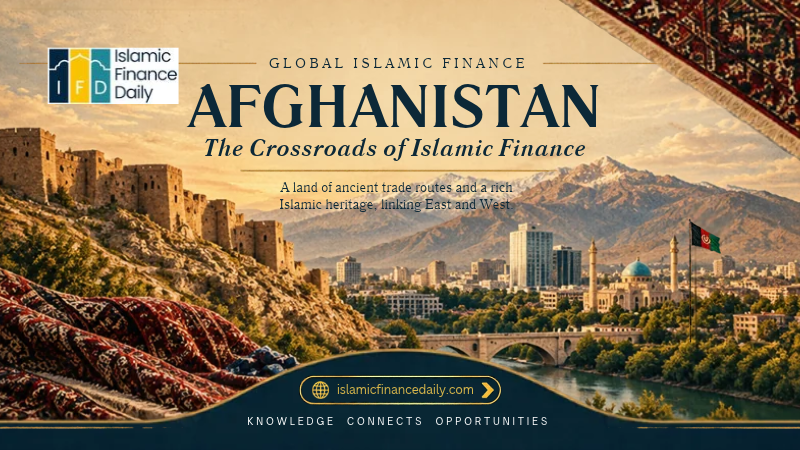
Afghanistan Islamic Finance Industry: Complete Overview
1. Introduction
Afghanistan’s Islamic finance industry has undergone a significant transformation in recent years. Islamic banking and finance existed in the country before 2021, but the subsequent restructuring of the financial system accelerated the transition towards Sharia-compliant banking and financial services.
Da Afghanistan Bank (DAB), the country’s central bank, has developed an extensive set of Islamic banking regulations, product guidelines and Shariah governance requirements. Financial institutions have been required to adapt their operations to the Islamic finance framework, while microfinance organisations have expanded Shariah-compliant financing for small businesses and households.
The industry includes Islamic banking, Islamic microfinance, Shariah-compliant financing products and an insurance regulatory framework that includes takaful. However, the development of Islamic capital markets, particularly sukuk, remains limited.
Afghanistan’s Islamic finance sector also operates within a challenging economic and financial environment. Banking-sector fragility, limited international financial connectivity, low public confidence and restrictions on access to financial services have affected the ability of institutions to expand their activities.
This article examines Afghanistan’s Islamic finance industry, including its historical development, regulatory framework, banking sector, Islamic microfinance, sukuk, takaful, digital financial services and future prospects.
2. Historical Development of Islamic Finance in Afghanistan
Islamic financial principles have long been relevant to Afghanistan’s commercial and economic activities. However, the development of formal Islamic banking institutions and regulated Shariah-compliant financial products is relatively recent.
Before the establishment of a dedicated Islamic banking framework, Afghanistan’s banking system operated primarily through conventional financial institutions. Islamic financial services gradually developed through specialist banking initiatives, regulatory reforms and support from international development organisations.
Da Afghanistan Bank established its Islamic Banking and Financial Services Department following the approval of its High Council in 2018. The department was tasked with supporting the development of Islamic banking, implementing Shariah standards and managing the secretariat of the central bank’s Shariah Supervisory Board.
Islamic Bank of Afghanistan became one of the country’s specialist Islamic banking institutions. It has operated as a licensed Islamic banking institution since 2009 under the country’s banking framework.
International development organisations also supported the expansion of Islamic microfinance. The Microfinance Investment Support Facility for Afghanistan (MISFA) and its partner institutions helped introduce Shariah-compliant financing products for micro, small and medium-sized enterprises.
Following the political changes in August 2021, Afghanistan’s financial system underwent further restructuring. The authorities moved towards a fully Sharia-compliant banking system, requiring financial institutions to adapt their products and operations.
This transition significantly changed the direction of the country’s financial sector and increased the importance of Islamic banking regulations, product development and Shariah governance.
3. Regulatory and Shariah Governance Framework
Da Afghanistan Bank is the principal regulatory authority responsible for banking supervision and the development of Islamic banking regulations in Afghanistan.
Its Islamic Banking Department oversees the regulatory and operational framework for Islamic financial services.
Da Afghanistan Bank
DAB has published a dedicated collection of Islamic Banking Regulations, product outlines, Shariah parameters, guidelines and supervisory manuals.
The regulatory framework covers several areas:
- Licensing of Islamic banks and Islamic banking windows
- Conversion of conventional banks into Islamic banks
- Islamic banking liquidity risk management
- Capital adequacy
- Asset classification and provisioning
- Profit distribution
- Shariah governance
- Financial reporting
- Risk management
- Shariah supervision and compliance
DAB has also published product guidance for Islamic financing contracts, including Murabaha, Mudaraba, Musharakah, Ijarah, Salam and Istisna.
Shariah governance
Shariah governance is an important component of Afghanistan’s Islamic banking framework.
DAB has published national Shariah governance frameworks for both full-fledged Islamic banks and Islamic banking windows or units.
The central bank’s regulatory materials also include guidance on Shariah supervisory boards, external Shariah auditors, product approval and Shariah compliance reviews.
These arrangements are intended to provide a framework for ensuring that financial products and banking operations comply with Islamic principles.
Microfinance regulation
The microfinance sector is also subject to regulatory supervision. DAB’s regulatory framework provides the basis for licensing and overseeing microfinance institutions, while MISFA supports partner institutions through funding, capacity development and sector coordination.
The development of these regulations is important because Islamic microfinance has become one of the more active areas of Shariah-compliant financing in Afghanistan.
References: Da Afghanistan Bank – Islamic Banking Regulations; Da Afghanistan Bank – Islamic Banking Department; MISFA.
4. Islamic Banking in Afghanistan
Islamic banking is a central component of Afghanistan’s financial-system transition.
The country has moved towards a fully Sharia-compliant banking framework, requiring banks to replace conventional interest-based products with Islamic financial structures.
Structure of the banking sector
Afghanistan’s banking market includes full-fledged Islamic banks and conventional banking institutions that have offered Islamic banking services through dedicated windows.
The World Bank’s Afghanistan Development Update, November 2025 reported that DAB had approved three Islamic banking products: Murabaha, Musharakah and Wakala.
At the time of that report, these products were offered through two full-fledged Islamic banks and six banks with Islamic windows.
These figures should be treated as the institutional picture reported in November 2025 rather than a verified November 2026 banking-sector count.
Islamic Bank of Afghanistan
Islamic Bank of Afghanistan is one of the country’s established specialist Islamic banking institutions.
The bank provides Shariah-compliant financial services under the regulatory framework of Da Afghanistan Bank. Its published institutional profile identifies a nationwide branch network and describes its operations as being based on Islamic banking principles.
Islamic banking products
The regulatory framework recognises several Shariah-compliant contracts.
Murabaha
Murabaha is a cost-plus sale arrangement in which the bank acquires an asset and sells it to the customer at an agreed price that includes a disclosed profit margin.
Musharakah
Musharakah is a partnership arrangement in which the parties contribute capital and share profits according to an agreed arrangement, while losses are generally allocated according to capital contributions.
Mudaraba
Mudaraba is a partnership in which one party provides capital and another provides management or entrepreneurial expertise. Profit is distributed according to an agreed ratio, while financial losses are generally borne by the capital provider, subject to the applicable rules.
Ijarah
Ijarah is a leasing arrangement under which an institution provides the use of an asset in exchange for rental payments.
Wakala
Wakala is an agency arrangement in which one party appoints another to act on its behalf for an agreed purpose.
Salam and Istisna
Salam and Istisna are contracts that can support financing for agricultural production, manufacturing and construction activities.
DAB’s published product outlines and Shariah parameters provide guidance for the use of these contracts.
Challenges facing Islamic banking
The transition to Islamic banking has taken place in a financial system already affected by significant economic and institutional challenges.
The World Bank has identified banking-sector fragility, constrained lending, rising non-performing loans and liquidity pressures as continuing concerns.
Its November 2025 development update also noted that limited product diversity and the lack of long-term Islamic financial instruments constrained financial intermediation.
The transition therefore involves more than changing the contractual structure of banking products. Institutions also need appropriate risk-management systems, Shariah expertise, capital, liquidity management and public confidence.
References: World Bank, Afghanistan Development Update, November 2025; Da Afghanistan Bank – Islamic Banking Regulations; Islamic Bank of Afghanistan.
5. Islamic Microfinance in Afghanistan
Islamic microfinance is one of the most active segments of Afghanistan’s Shariah-compliant financial sector.
It provides financing to micro, small and medium-sized enterprises, including businesses operating in agriculture, trade, services, handicrafts and manufacturing.
The development of Islamic microfinance became particularly important following the restructuring of the financial system after 2021.
MISFA has played a central role in supporting this transition by providing funding to partner financial institutions and helping them develop Shariah-compliant products.
Market development
MISFA’s published May 2026 sector snapshot reported:
| Indicator | May 2026 |
|---|---|
| Active Islamic financing clients | 69,105 |
| Women among Islamic financing clients | 44% |
| Gross Islamic financing portfolio | AFN 4.65 billion |
| Average outstanding financing per borrower | AFN 67,260 |
These figures refer to MISFA’s reported Islamic microfinance network and should not be interpreted as the total assets or financing of Afghanistan’s entire banking sector.
MISFA’s subsequent institutional updates in 2026 reported further expansion in its partner network. By October 2026, its supported institutions included seven microfinance institutions, two commercial banks and one microfinance bank.
Islamic microfinance products
Murabaha has been an important financing structure in Afghanistan’s Islamic microfinance sector.
Under this arrangement, the financing institution purchases an asset required by a customer and sells it to the customer at an agreed price.
Other Shariah-compliant structures include:
- Mudaraba
- Qard Hasan
- Salam
- Wakala
Their application depends on the financing institution, the nature of the business activity and the applicable regulatory requirements.
Financing for agriculture and small businesses
Agriculture is an important area for Islamic microfinance because many Afghan households and small enterprises depend on farming, livestock and related activities.
MISFA’s partner institutions have developed financing programmes targeting agricultural producers and rural businesses.
For example, Hassel, established in November 2024, provides agricultural financing to farmers and rural communities. MISFA reported that Hassel had more than 1,084 active Islamic financing clients and an outstanding portfolio exceeding AFN 403 million at the end of May 2026.
Sector challenges
Despite the expansion of Islamic microfinance, the sector faces several constraints:
- Limited access to diversified funding
- Shortage of qualified Islamic finance professionals
- Limited product diversification
- Operational and infrastructure constraints
- Challenges in reaching remote communities
- Dependence on institutional and development-partner funding
The sector’s continued development will depend on sustainable funding, stronger institutional capacity and the ability to expand financing beyond a limited range of products.
References: MISFA – Sector Statistics; MISFA – Annual Report 2025; MISFA – Hassel Funding Agreement, June 2026; FinDev Gateway, Microfinance Sector in Afghanistan (2026).
6. Sukuk and Islamic Capital Markets
Afghanistan’s Islamic capital market remains at an early stage of development.
Although the country has established an Islamic banking regulatory framework, the development of a functioning sukuk market has been more limited.
Sukuk are Shariah-compliant investment certificates representing ownership interests or rights in underlying assets, projects or investment activities, depending on the structure used.
They can provide governments and businesses with an alternative method of raising funds while offering investors access to Shariah-compliant investment instruments.
Sukuk development in Afghanistan
Earlier initiatives explored the development of a legal and regulatory framework for sukuk.
The Asian Development Bank previously identified sukuk legislation and an implementation plan among the areas being considered for the development of Islamic finance in Afghanistan.
However, the existence of earlier proposals should not be interpreted as evidence that a functioning sovereign sukuk programme or an active domestic sukuk market has been established.
The World Bank’s November 2025 Afghanistan Development Update also identified the absence of long-term Islamic financial instruments such as sukuk as a constraint on financial intermediation.
Future opportunities
Potential areas for the development of Islamic capital markets include:
- Sovereign sukuk
- Infrastructure sukuk
- Corporate sukuk
- Islamic investment funds
- Shariah-compliant government securities
- Long-term Islamic investment instruments
The development of this segment will require a clear legal framework, suitable underlying assets, investor participation, market infrastructure and appropriate regulatory supervision.
At present, Afghanistan’s Islamic finance market is more developed in banking and microfinance than in sukuk and capital-market activities.
References: Asian Development Bank – Islamic Finance; World Bank, Afghanistan Development Update, November 2025.
7. Takaful and Islamic Insurance
Insurance and takaful represent another area of Afghanistan’s financial-services framework.
The Ministry of Finance identifies the General Directorate of Takaful and Insurance (GDTI) as the government body responsible for regulating, supervising and developing the insurance sector.
The directorate was established in 2005 and has responsibilities that include licensing, market supervision, consumer protection and the development of insurance regulations.
Takaful
Takaful is an Islamic insurance arrangement based on mutual assistance and shared responsibility among participants.
Participants contribute to a common fund, which is used to provide benefits in accordance with the applicable takaful structure.
The development of takaful requires appropriate rules for contributions, claims, risk management, investment activities and Shariah governance.
Insurance-sector development
Afghanistan has an official insurance supervisory framework, but the existence of an insurance regulator does not by itself demonstrate that a large or mature takaful market is operating.
Reliable current data on the size of the takaful market, licensed takaful operators and Shariah-compliant insurance contributions should be obtained from the latest GDTI publications before making numerical claims.
Takaful therefore remains an area to monitor as Afghanistan’s wider Islamic financial-services framework develops.
Reference: Ministry of Finance – General Directorate of Takaful and Insurance.
8. Islamic Investment and Asset Management
Islamic investment and asset management remain less developed than Islamic banking and microfinance in Afghanistan.
The country’s financial system has limited access to long-term investment instruments, and the domestic capital market has not developed a broad range of Shariah-compliant investment products.
Potential areas for development include:
- Islamic investment funds
- Shariah-compliant securities
- Sukuk investment products
- Islamic asset management
- Investment structures for infrastructure projects
- Shariah-compliant financing for small and medium-sized enterprises
The expansion of these activities will depend on the development of capital-market legislation, suitable financial instruments, investor confidence and institutional capacity.
For now, Islamic investment activity is more closely associated with banking and microfinance than with a diversified asset-management industry.
9. Islamic Fintech and Digital Financial Services
Digital financial services are important to Afghanistan’s wider financial inclusion agenda.
The country has faced challenges in expanding formal banking access, strengthening payment infrastructure and developing reliable international financial connections.
Digital financial services can support access to payments, account services and financial products, but their expansion depends on telecommunications infrastructure, consumer trust, regulatory oversight and the ability of financial institutions to invest in technology.
Islamic fintech opportunities
The transition to Islamic finance creates opportunities for digital products structured around Shariah-compliant contracts.
Potential areas include:
- Digital Murabaha financing
- Mobile access to Islamic banking services
- Digital Islamic savings products
- Online applications for microfinance
- Digital payments and transfers
- Technology-supported Shariah compliance
- Digital financial services for small businesses
However, the presence of digital banking or payment services should not automatically be classified as Islamic fintech. A product should be identified as Islamic fintech only where its financial structure and operations are demonstrably Shariah-compliant.
The World Bank’s November 2025 report described progress in rebuilding payment access but also identified weak demand, limited connectivity and security concerns as constraints on payment infrastructure.
The development of Islamic fintech will therefore depend on both financial-sector reforms and wider improvements in digital infrastructure.
Reference: World Bank, Afghanistan Development Update, November 2025.
10. Islamic Social Finance and Zakat
Islamic social finance has potential relevance in Afghanistan because of the country’s economic conditions and the importance of community-based support.
Islamic social finance generally includes instruments such as:
- Zakat
- Sadaqah
- Waqf
- Qard Hasan
- Other charitable and community-financing arrangements
These instruments can support poverty alleviation, community development and assistance to vulnerable households.
Qard Hasan has also been used in the financing ecosystem supporting microfinance institutions. MISFA has provided Qard Hasan facilities to partner organisations to support their operational and financing activities.
For example, MISFA’s September 2026 agreement with Lamen included an additional AFN 56 million Qard Hasan facility to support the institution’s Shariah-compliant financing portfolio.
The wider development of Islamic social finance could provide opportunities to connect charitable resources, community institutions and financial inclusion initiatives.
However, Zakat and Waqf activities should be distinguished from commercial Islamic banking and investment. They have different purposes, governance arrangements and financial structures.
11. Islamic Finance Education, Research and Professional Development
The development of Islamic finance in Afghanistan requires professionals with expertise in Shariah principles, banking operations, financial regulation, accounting and risk management.
The transition to a Sharia-compliant financial system has increased the need for staff who understand Islamic contracts and their practical application in financial institutions.
Relevant areas for education and professional development include:
- Islamic banking operations
- Shariah governance and compliance
- Islamic finance accounting
- Islamic microfinance
- Risk management
- Murabaha and other financing structures
- Sukuk and Islamic capital markets
- Takaful operations
- Islamic fintech
Da Afghanistan Bank’s Islamic banking regulations, product guides and supervisory manuals provide technical resources for institutions and professionals working in the sector.
International Islamic finance organisations and development partners can also contribute through technical assistance, professional training and institutional capacity-building.
The availability of qualified Shariah scholars, auditors, risk specialists and banking professionals will be important for the sustainable development of the industry.
12. Afghanistan’s International Position in Islamic Finance
Afghanistan is part of the wider international Islamic finance industry, but its financial sector has a different development profile from more established markets such as Malaysia, Saudi Arabia, the United Arab Emirates and Indonesia.
Its Islamic finance industry is primarily focused on the transition of domestic banking institutions and the expansion of Islamic microfinance.
International development organisations have supported this process through technical assistance, regulatory development and financing for microfinance institutions.
The World Bank, Asian Development Bank and other development partners have contributed to research and initiatives relating to financial inclusion and Islamic finance.
International challenges
Afghanistan’s international financial connections remain constrained.
The World Bank has highlighted the effects of limited access to international banking channels, regulatory uncertainty and the fragile condition of the domestic banking sector.
These conditions affect cross-border payments, trade finance, international investment and the ability of financial institutions to obtain diversified funding.
Islamic Finance Development Indicator
The Islamic Corporation for the Development of the Private Sector (ICD) and London Stock Exchange Group (LSEG) publish the Islamic Finance Development Report and Islamic Finance Development Indicator (IFDI).
The indicator assesses countries across areas including financial performance, governance, knowledge, sustainability and awareness.
A specific IFDI rank or score for Afghanistan should only be included after checking the country-level data in the relevant edition. This article does not assign Afghanistan an unverified numerical ranking.
13. Recent Developments and Future Direction
Afghanistan’s Islamic finance industry continues to evolve as banks, microfinance institutions and regulators adapt to the country’s Sharia-compliant financial framework.
Several developments are particularly relevant to its future direction.
Expansion of Islamic microfinance
MISFA and its partner institutions continue to expand financing for small businesses, farmers and entrepreneurs.
In 2026, MISFA announced new financing agreements with institutions including Hassel, Lamen and Shahy Khazana Microfinance. These initiatives demonstrate continued activity in the Islamic microfinance segment.
Development of regulatory capacity
DAB’s collection of Islamic banking regulations, product guides and supervisory manuals provides an important foundation for the sector.
Continued development of Shariah governance, risk management and financial reporting will be necessary as institutions expand their activities.
Institutional and financial-sector stability
The wider banking system remains affected by constrained lending, liquidity pressures, limited international connectivity and concerns about financial-sector confidence.
The development of Islamic banking will depend on addressing these broader institutional and economic challenges.
Diversification of Islamic financial products
The current emphasis on a relatively limited number of Islamic banking and microfinance products creates a need for further diversification.
Potential areas include Salam-based agricultural financing, Ijarah, Musharakah, Mudaraba and other structures suited to business and infrastructure financing.
Development of sukuk and takaful
Sukuk and takaful remain areas with scope for further development, but their expansion will require appropriate legislation, market infrastructure and supervisory capacity.
Overall, Afghanistan’s Islamic finance industry is likely to remain focused on strengthening its domestic banking and microfinance framework before developing a broader range of Islamic capital-market and insurance products.
14. Conclusion
Afghanistan’s Islamic finance industry is undergoing a major transition towards a Sharia-compliant financial system.
Da Afghanistan Bank has established a dedicated Islamic banking regulatory framework, while financial institutions have adapted their operations and products to Islamic financial principles.
Islamic banking and microfinance are the principal areas of activity. In particular, MISFA and its partner institutions have supported the expansion of Sharia-compliant financing for small businesses, farmers and entrepreneurs.
However, the industry continues to face significant challenges involving banking-sector stability, liquidity, institutional capacity, financial inclusion and international financial connectivity.
The development of sukuk, takaful, Islamic investment products and digital Islamic financial services remains at an earlier stage.
Afghanistan’s future progress will depend on the effectiveness of its regulatory framework, the strength of financial institutions, the availability of diversified Islamic financial products and the restoration of confidence in the formal financial system.
References and Further Reading
- Da Afghanistan Bank – Islamic Banking Regulations
- Da Afghanistan Bank – Islamic Banking Department
- World Bank – Afghanistan Development Update, November 2025
- World Bank – Afghanistan Country Overview
- MISFA – Microfinance Investment Support Facility for Afghanistan
- MISFA – Annual Report 2025
- MISFA – Funding Agreement with Hassel, June 2026
- MISFA – Funding Agreement with Lamen, October 2026
- FinDev Gateway – Microfinance Sector in Afghanistan (2026)
- Ministry of Finance – General Directorate of Takaful and Insurance
- Islamic Bank of Afghanistan – Institutional Profile
- Asian Development Bank – Islamic Finance
- ICD–LSEG – Islamic Finance Development Report 2026
DISCLAIMER
IslamicFinanceDaily.com publishes this article for informational purposes only. The content is based on publicly available information and official announcements from the referenced institution. IslamicFinanceDaily.com does not provide financial, investment, or legal advice. Readers should verify information with the original source before making any financial or business decisions.