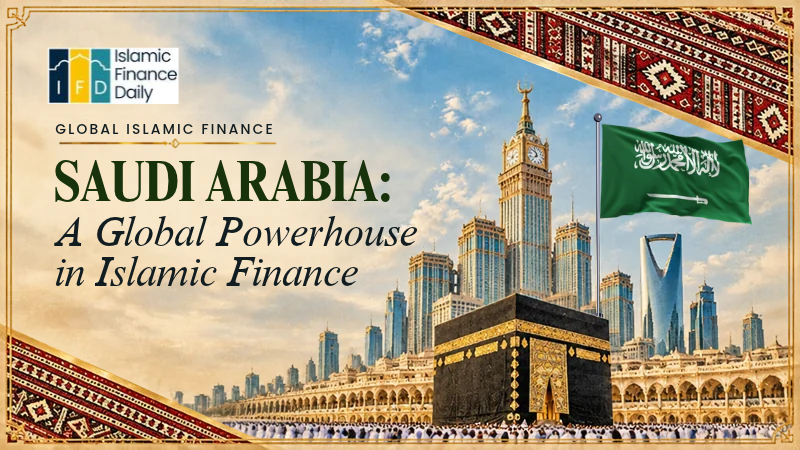
Saudi Arabia Islamic Finance Industry: Complete Overview
1. Introduction: Saudi Arabia’s Islamic finance industry
Saudi Arabia has one of the largest and most developed Islamic finance industries in the world. Its market is supported by a substantial Islamic banking sector, a major sovereign and corporate sukuk market, cooperative insurance, Islamic investment funds and an expanding financial technology ecosystem.
Islamic finance is deeply integrated into the Kingdom’s financial system. Shariah-compliant banking products and services account for a significant proportion of the country’s banking activities, serving individuals, businesses, government-related entities and institutional investors.
The Kingdom’s position is also supported by its role in international Islamic finance institutions and standard-setting organisations. Jeddah is home to the headquarters of the Islamic Development Bank (IsDB), while Saudi Arabia has played an important role in the development of the Islamic Financial Services Board (IFSB) and the global Islamic finance industry.
According to the ICD–LSEG Islamic Finance Development Report 2025, Saudi Arabia ranked second globally in Islamic finance development, following Malaysia. The report also identified Saudi Arabia as the world’s second-largest Islamic finance market by assets, with approximately US$1.316 trillion in Islamic finance assets at the end of 2024.
The Kingdom’s Islamic finance development is closely connected to Saudi Vision 2030 and the Financial Sector Development Program (FSDP), which seek to develop financial institutions, strengthen capital markets, increase investment opportunities and support economic diversification.
In the 2026 ICD–LSEG report, Saudi Arabia retained its position among the five most developed Islamic finance markets globally. LSEG
2. Historical development of Islamic finance in Saudi Arabia
Saudi Arabia’s Islamic finance industry developed through the expansion of Islamic banking, the establishment of specialised financial institutions and the introduction of regulatory frameworks governing Shariah-compliant financial activities.
The Kingdom has also played a significant role in the development of modern Islamic economics and finance through academic institutions, research organisations and international cooperation.
Some important milestones include:
- 1975 – Establishment of the Islamic Development Bank: The IsDB was established following the Declaration of Intent signed by member countries in 1973. Its headquarters were established in Jeddah, Saudi Arabia.
- 1979 – Establishment of Al Rajhi Banking and Investment Corporation: The institution developed into one of the world’s largest Islamic banking groups.
- 1980s – Expansion of Islamic banking: Saudi banks increasingly developed Shariah-compliant banking products and services.
- 1990 – Establishment of the Islamic Economics Institute’s predecessor: King Abdulaziz University developed its Islamic economics academic and research activities, contributing to specialised education in the field.
- 1990s – Development of Islamic capital markets: The Kingdom expanded its financial markets and participation in Shariah-compliant investment activities.
- 2002 – Establishment of the Islamic Financial Services Board: The IFSB was formally established in Kuala Lumpur, with Saudi Arabia among its founding members.
- 2010s – Financial sector reforms: The Kingdom introduced initiatives to strengthen financial regulation, develop capital markets and expand financial inclusion.
- 2016 – Launch of Saudi Vision 2030: Financial sector development became an important component of the Kingdom’s economic transformation programme.
- 2020 – Introduction of SAMA’s Shariah Governance Framework for local banks: The framework established supervisory requirements for Shariah governance within the domestic banking sector.
- 2023 – Implementation of the enhanced Shariah Governance Framework: The framework became effective from 1 January 2023, strengthening institutional responsibilities and supervisory oversight.
- 2025 – Continued expansion of Islamic finance: Saudi Arabia maintained its leading international position, supported by banking growth and significant sukuk issuance.
These developments illustrate the Kingdom’s transition into a comprehensive Islamic finance market, with activities spanning banking, capital markets, insurance, investment and financial education.
3. Market size and global position
Saudi Arabia is one of the largest Islamic finance jurisdictions internationally, with substantial assets across banking, sukuk, Islamic investment funds and cooperative insurance.
The ICD–LSEG Islamic Finance Development Report 2025 reported the following Islamic finance assets for 2024:
Saudi Arabia’s Islamic finance market
US$1.316 trillion
Total Islamic finance assets, 2024
Global market position
2nd
Islamic banking
Largest component
Sukuk
Major global issuer
Source: ICD–LSEG Islamic Finance Development Report 2025. LSEG Islamic Finance Development Report 2025+1
More recent figures from the Saudi Central Bank’s economic reporting provide an indication of continued banking-sector growth.
In the third quarter of 2025, Shariah-compliant banking finance provided by Islamic banks and Islamic windows reached SAR 2,709.3 billion, recording annual growth of 13.5%. Total assets and deposits in the segment also increased during the period. SAMA
These figures should be distinguished from total Islamic finance assets: the SAR 2.709 trillion figure represents Shariah-compliant banking finance, whereas the US$1.316 trillion figure represents the broader Islamic finance market using the ICD–LSEG report’s asset methodology.
The continued expansion of Islamic finance reflects strong domestic demand, the integration of Shariah-compliant products into the banking system and financing requirements associated with the Kingdom’s economic transformation.
4. Regulatory framework and Shariah governance
Saudi Arabia’s Islamic finance industry operates under a regulatory framework involving several authorities responsible for banking, finance companies, insurance, capital markets and endowment activities.
Unlike jurisdictions with a single national Shariah authority overseeing all Islamic financial institutions, Saudi Arabia uses an institutional Shariah governance model supported by regulatory supervision.
Saudi Central Bank (SAMA)
The Saudi Central Bank (SAMA) is responsible for regulating and supervising banks, finance companies and payment service providers.
Its responsibilities include:
- Licensing and supervising banks and finance companies.
- Regulating Islamic banking products and services.
- Establishing Shariah governance requirements for local banks.
- Supervising financial stability and risk management.
- Regulating payment systems and supporting financial innovation.
SAMA introduced its Shariah Governance Framework for local banks in 2020. The framework establishes responsibilities for boards of directors, executive management, Shariah committees and internal control functions.
The framework became effective in January 2023. SAMA Rulebook+1
Capital Market Authority (CMA)
The Capital Market Authority (CMA) regulates the Kingdom’s capital market.
Its responsibilities include supervising securities offerings, investment funds, capital market institutions, sukuk and debt instruments.
The CMA also establishes requirements for Shariah-compliant investment products and capital market activities.
Insurance Authority
The Insurance Authority became the principal regulator and supervisor of the insurance sector following the transfer of insurance regulatory responsibilities from SAMA in November 2023.
Its responsibilities include licensing, supervision and regulation of insurance companies operating in the Kingdom, including companies offering cooperative insurance products. eLibrary IMF
General Authority for Awqaf (GAA)
The General Authority for Awqaf is responsible for developing and regulating the endowment sector in Saudi Arabia.
Its activities include supervising waqf-related matters, supporting the development of endowment assets and facilitating the use of waqf as a mechanism for social and economic development.
Shariah governance at financial institutions
Saudi Arabia’s regulatory framework requires Islamic financial institutions to establish appropriate Shariah governance arrangements.
Individual institutions generally maintain their own Shariah committees or supervisory boards, which oversee product structures, transactions and compliance with applicable Shariah requirements.
This model allows institutions to maintain dedicated Shariah supervision while operating under the regulatory requirements established by the relevant authorities.
5. Islamic banking sector
Islamic banking is the largest component of Saudi Arabia’s Islamic finance industry. The Kingdom has a well-developed banking system in which Shariah-compliant products and services represent a substantial proportion of banking activities.
Saudi Arabia’s banking sector includes fully-fledged Islamic banks as well as conventional banks offering Islamic banking products through dedicated business units and windows.
Major Islamic banks
Al Rajhi Bank
Established in 1957 as a banking business and subsequently developed into one of the world’s largest Islamic banks, Al Rajhi Bank is a major participant in Saudi Arabia’s financial services industry.
Its services include retail banking, corporate banking, personal financing, trade finance, investment services and digital banking.
The bank also has international operations and subsidiaries, extending its presence beyond the domestic Saudi market.
Alinma Bank
Established in 2006, Alinma Bank provides Shariah-compliant retail, corporate and investment banking services.
Its activities include personal finance, real estate finance, corporate financing, deposits, investment products and digital financial services.
Bank Albilad
Bank Albilad is a Saudi Islamic bank providing retail and corporate banking services.
Its products include Shariah-compliant financing, deposits, treasury services, trade finance and investment solutions.
Bank AlJazira
Bank AlJazira is another important participant in the Kingdom’s Islamic banking industry.
It provides Islamic retail banking, corporate banking, treasury, investment and wealth management services.
Islamic banking services offered by other banks
Several other Saudi banks also offer substantial Shariah-compliant banking services, including:
- Saudi National Bank (SNB) – Retail, corporate and Islamic banking services.
- Riyad Bank – Islamic financing, banking and investment services.
- Banque Saudi Fransi – Shariah-compliant banking and financing products.
- Arab National Bank – Islamic banking products and services.
- Saudi Awwal Bank (SAB) – Islamic banking and financing solutions.
These institutions contribute to the broad availability of Islamic financial services across the Kingdom.
Islamic banking products and services
Saudi Islamic banks offer a wide range of products structured around Shariah-compliant contracts, including:
- Murabaha financing.
- Tawarruq financing.
- Ijara financing.
- Mudarabah investment accounts.
- Musharakah financing.
- Real estate and home financing.
- Corporate and trade finance.
- Shariah-compliant deposits and investment products.
The dominance of Islamic banking in the Kingdom is supported by consumer demand, institutional development and the availability of Shariah-compliant products across different banking segments. eLibrary IMF+2
6. Sukuk and Islamic capital markets
Saudi Arabia is one of the world’s most important sukuk markets and a leading international issuer of Islamic debt instruments.
The Kingdom’s sukuk market includes sovereign issuances, government-related entities, financial institutions and corporate issuers.
The Saudi government uses sukuk as part of its public financing and debt management activities, while companies and financial institutions access the market to diversify their funding sources.
Saudi Arabian government sukuk
The National Debt Management Center (NDMC) manages government debt activities and supports the development of the Kingdom’s domestic and international debt markets.
Its responsibilities include arranging government financing, managing public debt and developing the domestic sukuk market.
Saudi Arabia’s local currency sukuk programme provides regular issuance opportunities for investors, including individual and institutional participants.
International sukuk market
Saudi Arabia has become a major international sukuk issuer.
According to the ICD–LSEG Islamic Finance Development Report 2025, Saudi Arabia was the world’s largest sukuk issuer in 2024, with issuance reaching approximately US$75.3 billion.
The Saudi government accounted for US$42.3 billion of the country’s 2024 sukuk issuance, reflecting the importance of government financing requirements and Vision 2030-related expenditure. LSEG Islamic Finance Development Report 2025
Saudi capital market developments
The Capital Market Authority’s 2025 Annual Report, published in June 2026, reported that the combined value of listed sukuk and debt instruments in the Saudi capital market reached SAR 713.4 billion at the end of 2025, compared with SAR 663.5 billion at the end of 2024.
The CMA also reported that proceeds from corporate sukuk and debt offerings reached SAR 50.7 billion during 2025. The Capital Market Authority’s
These figures cover the combined sukuk and debt instruments market and should not be interpreted as sukuk-only values.
Saudi Exchange (Tadawul)
The Saudi Exchange (Tadawul) operates the Kingdom’s securities market and provides a platform for trading equities, sukuk and debt instruments.
Its market infrastructure supports the development of Islamic capital markets and provides access to Shariah-compliant investment opportunities.
Islamic investment indices
Saudi Arabia also has Shariah-compliant equity indices that help investors identify companies meeting specified Islamic investment screening criteria.
These indices support the development of Islamic investment products and provide benchmarks for Shariah-compliant portfolios.
The combination of sovereign sukuk issuance, corporate debt markets and Islamic investment products makes Saudi Arabia an important centre for the development of Islamic capital markets.
7. Takaful and cooperative insurance industry
Saudi Arabia’s insurance industry operates primarily under a cooperative insurance model.
Unlike some other jurisdictions where takaful is established as a separate insurance category, Saudi Arabia’s regulatory framework is based on cooperative insurance, which incorporates Shariah-related principles into the structure of insurance operations.
The Kingdom’s cooperative insurance sector is an important component of its wider Islamic financial services industry.
The Insurance Authority supervises insurance companies and regulates their operations, licensing and compliance requirements.
Major cooperative insurance companies
Selected participants in the Saudi insurance market include:
- Al Rajhi Company for Cooperative Insurance (Al Rajhi Takaful) – Provides insurance products structured around cooperative insurance principles.
- Tawuniya – One of the Kingdom’s major insurance companies, offering health, motor and other insurance products.
- Walaa Cooperative Insurance – Provides a range of cooperative insurance products.
- Salama Cooperative Insurance – Offers insurance solutions under the cooperative insurance framework.
- Medgulf – Provides health, motor and general insurance services.
- Arabian Shield Cooperative Insurance – Operates in the Kingdom’s cooperative insurance market.
The institutions listed above represent selected insurance market participants rather than an exhaustive list of takaful operators.
Market development
Saudi Arabia’s insurance market has expanded alongside economic diversification, population growth, compulsory insurance requirements and increasing demand for health and protection products.
The cooperative insurance model also provides opportunities for further development of Shariah-compliant insurance solutions.
The sector’s future growth is connected to regulatory development, digital distribution, product innovation and increasing insurance penetration. SAMA+1
8. Islamic investment and asset management
Saudi Arabia has developed a substantial Islamic investment and asset management industry, supported by investment banks, asset managers, financial institutions and specialised Shariah-compliant investment funds.
The market provides opportunities across equities, sukuk, real estate, private equity, money market instruments and other investment assets.
Al Rajhi Capital
Al Rajhi Capital is a major Saudi investment company offering brokerage, asset management, investment banking and wealth management services.
It provides Shariah-compliant investment products and manages investment funds serving individual and institutional investors.
Jadwa Investment
Jadwa Investment is a Saudi investment management and advisory firm.
Its activities include asset management, private equity, real estate investments, investment banking and financial advisory services.
It offers investment products across different asset classes, including Shariah-compliant funds.
Riyad Capital
Riyad Capital provides investment banking, brokerage, asset management and wealth management services.
Its activities include the management of investment funds and portfolios, including Shariah-compliant investment products.
Alinma Investment
Alinma Investment provides investment management and financial services, including Shariah-compliant funds, brokerage and investment solutions.
SNB Capital
SNB Capital is a major investment services provider in the Kingdom.
Its activities include asset management, investment banking, brokerage and wealth management, with products serving institutional and individual investors.
Islamic investment funds
The Saudi capital market includes several categories of Shariah-compliant investment funds, including:
- Islamic equity funds.
- Sukuk funds.
- Money market funds.
- Real estate investment funds.
- Exchange-traded funds.
- Private equity and alternative investment funds.
The CMA’s 2025 Annual Report recorded total assets under management exceeding SAR 1.2 trillion by the end of 2025, an annual increase of 18%.
It also reported growth in several investment fund categories, including private real estate and debt instrument funds. These figures cover the wider Saudi asset management industry, not exclusively Islamic investment funds. The Capital Market Authority’s
The development of Islamic investment products contributes to the diversification of the Kingdom’s financial market and provides additional opportunities for Shariah-conscious investors.
9. Islamic fintech and financial innovation
Saudi Arabia has become an increasingly important fintech market in the Middle East, supported by regulatory initiatives, digital infrastructure, investment and the development of financial services technology.
Financial technology is also relevant to the expansion of Islamic finance, particularly in digital banking, alternative financing, crowdfunding, payments and investment management.
SAMA Fintech initiatives
The Saudi Central Bank has introduced regulatory initiatives to support financial innovation, including its regulatory sandbox.
The sandbox provides an environment in which eligible financial technology companies can test innovative products and services under regulatory supervision.
SAMA’s initiatives have supported the development of digital payments, financing platforms and technology-enabled financial services.
Fintech Saudi
Fintech Saudi was launched by SAMA in collaboration with the Capital Market Authority to support the development of the Kingdom’s fintech ecosystem.
Its activities include ecosystem development, industry partnerships, education and support for fintech entrepreneurs.
Islamic fintech examples
Lendo
Lendo is a Saudi fintech company operating in the SME financing market.
Its platform connects businesses seeking financing with investors and provides digital financing solutions structured around Shariah-compliant principles.
Manafa
Manafa is a Saudi fintech platform providing investment and financing opportunities through digital financial services.
Its activities include crowdfunding and investment solutions for businesses and investors.
Forus
Forus is another participant in the Kingdom’s digital financing ecosystem, providing technology-enabled financing solutions.
These examples illustrate different forms of fintech activity in the Saudi market. Their individual licensing status, product structures and Shariah compliance should be checked against current regulatory and company disclosures before publication.
Digital banking development
Saudi Islamic banks have also expanded their digital services, including mobile banking, digital account opening, electronic payments, remote financing applications and online investment services.
The development of fintech is expected to remain an important component of the Kingdom’s financial sector transformation and the future delivery of Islamic financial services.
10. Islamic finance education, research and professional development
Saudi Arabia has an established academic and research environment supporting Islamic economics and finance.
The Kingdom is home to universities, specialised research institutions and professional development organisations contributing to the development of Islamic finance knowledge and expertise.
Islamic Economics Institute – King Abdulaziz University
The Islamic Economics Institute at King Abdulaziz University is one of the most recognised academic and research institutions in Islamic economics and finance.
Its work includes academic research, publications, conferences and postgraduate education in Islamic economics, banking and finance.
The institute has contributed to the development of Islamic economics research and the training of professionals and academics.
Islamic Development Bank Institute (IsDBI)
The Islamic Development Bank Institute is the knowledge and research arm of the Islamic Development Bank Group, headquartered in Jeddah.
Its activities include research, policy development, capacity building and knowledge dissemination in Islamic economics and finance.
The institute contributes to the development of Islamic finance through research publications, training initiatives and international knowledge-sharing activities.
Islamic University of Madinah
The Islamic University of Madinah contributes to Islamic studies and academic research, providing a broader educational environment relevant to Islamic economic and financial scholarship.
Umm Al-Qura University
Umm Al-Qura University is another major Saudi higher education institution with academic activities across Islamic studies, economics and related disciplines.
Other academic and professional development initiatives
Saudi Arabia also hosts conferences, professional programmes and specialist training activities organised by universities, regulatory institutions and industry organisations.
These initiatives contribute to the development of professionals in areas such as:
- Islamic banking and finance.
- Shariah governance.
- Islamic capital markets and sukuk.
- Takaful and cooperative insurance.
- Islamic economics.
- Financial regulation and risk management.
- Islamic fintech and digital finance.
The Kingdom’s academic and research institutions play an important role in supporting the continued development of the Islamic finance industry.
11. Key Islamic finance institutions and market participants
Saudi Arabia’s Islamic finance ecosystem includes regulatory authorities, banking institutions, capital market operators, insurance companies, investment firms and academic organisations.
The following table highlights selected participants.
| Institution | Main area of activity |
|---|---|
| Saudi Central Bank (SAMA) | Banking and financial regulation |
| Capital Market Authority (CMA) | Capital markets regulation |
| Insurance Authority | Insurance regulation |
| General Authority for Awqaf | Waqf development and supervision |
| Al Rajhi Bank | Islamic banking |
| Alinma Bank | Islamic banking |
| Bank Albilad | Islamic banking |
| Bank AlJazira | Islamic banking |
| Saudi National Bank | Banking and Islamic financial services |
| National Debt Management Center | Government debt and sukuk |
| Saudi Exchange | Securities and sukuk markets |
| Al Rajhi Capital | Islamic investment and asset management |
| Jadwa Investment | Investment management |
| Lendo | Digital SME financing |
| Tawuniya | Cooperative insurance |
| Islamic Development Bank | International Islamic development finance |
| Islamic Economics Institute | Islamic economics and finance research |
| Islamic Development Bank Institute | Islamic finance research and knowledge development |
The institutions listed represent selected participants and are not intended to constitute a complete directory of Saudi Arabia’s Islamic finance industry.
12. International participation and Saudi Arabia’s global role
Saudi Arabia plays an important role in the international Islamic finance industry through its financial institutions, regulatory participation, research activities and international capital market operations.
The Kingdom’s influence extends beyond its domestic financial sector through several important institutions and initiatives.
Islamic Development Bank (IsDB)
The Islamic Development Bank is headquartered in Jeddah and is one of the most important multilateral development institutions in the Islamic world.
Its activities include financing infrastructure, supporting economic development, promoting trade and providing financial assistance to member countries.
The bank also plays an important role in developing Islamic finance markets through its financing activities and institutional partnerships.
Islamic Financial Services Board (IFSB)
Saudi Arabia is a founding member of the IFSB, an international standard-setting organisation responsible for developing prudential and supervisory standards for the Islamic financial services industry.
SAMA has participated in the organisation’s international activities and hosted its 20th-anniversary symposium and council meetings in Riyadh in August 2023.
Accounting and Auditing Organization for Islamic Financial Institutions (AAOIFI)
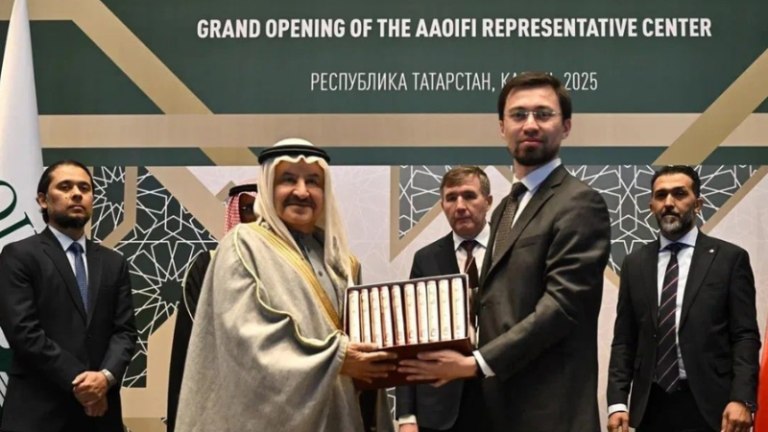
Saudi financial institutions and professionals participate in the wider international Islamic finance standards ecosystem developed by AAOIFI.
Its standards cover accounting, auditing, governance, ethics and Shariah requirements for Islamic financial institutions.
International sukuk markets
Saudi Arabia is a major international sukuk issuer, attracting participation from international investors and financial institutions.
Its sovereign and corporate issuances contribute to the development of global Islamic capital markets and provide financing opportunities for large-scale economic and infrastructure projects. LSEG Islamic Finance Development Report 2025+2
The Kingdom’s international role is further supported by its participation in Islamic finance research, academic cooperation and the development of global financial standards.
13. Challenges and future outlook
Saudi Arabia enters the next phase of Islamic finance development with one of the world’s largest Islamic banking markets, a substantial sukuk industry and an expanding financial services ecosystem.
However, several areas will remain important to the industry’s future development.
Further development of Islamic capital markets
The growth of corporate sukuk, investment funds and other Shariah-compliant instruments will be important in diversifying the Kingdom’s capital markets.
Continued development of domestic and international investor participation can support the expansion of Islamic financing opportunities.
Strengthening Shariah governance
Maintaining effective Shariah governance across banks, finance companies, insurance operators and investment institutions remains important.
The implementation of supervisory frameworks and institutional Shariah committees will continue to influence the development of the industry.
Expanding Islamic fintech
Digital financial services offer opportunities to improve access to Islamic banking, SME financing, investment management and payments.
The development of Shariah-compliant crowdfunding and alternative financing platforms can also contribute to financial inclusion.
Developing cooperative insurance
Further expansion of cooperative insurance products and greater public awareness can support the development of the insurance sector.
Digital distribution, product innovation and regulatory development will remain important areas.
Developing specialised talent
The growth of Islamic banking and capital markets increases demand for professionals with expertise in Islamic financial contracts, Shariah governance, risk management, sukuk, fintech and financial regulation.
Academic institutions and professional training providers will have an important role in meeting these requirements.
Supporting Vision 2030
Saudi Vision 2030 continues to provide the broader economic framework for financial sector development.
The Financial Sector Development Program supports the objectives of developing financial institutions, increasing investment opportunities, strengthening capital markets and improving financial inclusion.
The Kingdom’s 2025 Vision 2030 Annual Report highlighted continued progress in economic diversification, with non-oil activities accounting for approximately 55% of GDP in 2025. Saudi Press Agency+1
The future development of Islamic finance will be closely connected to these wider economic objectives.
14. Conclusion
Saudi Arabia has established itself as one of the world’s most significant Islamic finance markets, supported by a substantial Islamic banking sector, a major international sukuk market, cooperative insurance institutions and a growing Islamic investment industry.
The Kingdom’s financial ecosystem extends beyond domestic banking through the presence of the Islamic Development Bank, international standard-setting participation and specialised academic and research institutions.
The development of Islamic fintech, digital banking, investment management and cooperative insurance is further broadening the range of financial services available in the country.
Saudi Vision 2030 and the Financial Sector Development Program provide an important framework for the continued transformation of the financial services industry.
With its established institutions, regulatory infrastructure, financial market depth and international participation, Saudi Arabia is expected to remain a major contributor to the development of the global Islamic finance industry.
15. References and research sources
The following sources were used to prepare this country profile. Official regulatory and institutional publications are prioritised, alongside recognised international industry research.
- ICD–LSEG: Islamic Finance Development Report 2026.
- ICD–LSEG: Islamic Finance Development Indicator Report 2025.
- ICD–LSEG: Islamic Finance Development Report 2025 – Sukuk Market Findings.
- Saudi Central Bank (SAMA): Shariah Governance Framework for Local Banks.
- Saudi Central Bank (SAMA): Key Economic Developments – Q3 2025.
- Saudi Central Bank (SAMA): Annual Reports and Economic Publications.
- Capital Market Authority (CMA): 2025 Annual Report.
- Capital Market Authority (CMA): Reports and Statistical Bulletins.
- Saudi Vision 2030: Vision 2030 Overview and Annual Reports.
- Saudi Central Bank: Saudi Arabia Islamic Finance Report 2021.
- International Monetary Fund: Saudi Arabia – Financial Sector Assessment and Islamic Finance Regulation.
- Islamic Development Bank: Official Website.
- Islamic Financial Services Board: Official Website.
- General Authority for Awqaf: Official Website.
Disclaimer: IslamicFinanceDaily.com publishes this article for informational purposes only. The content is based on publicly available information and official announcements from the referenced institution. IslamicFinanceDaily.com does not provide financial, investment, or legal advice. Readers should verify information with the original source before making any financial or business decisions.