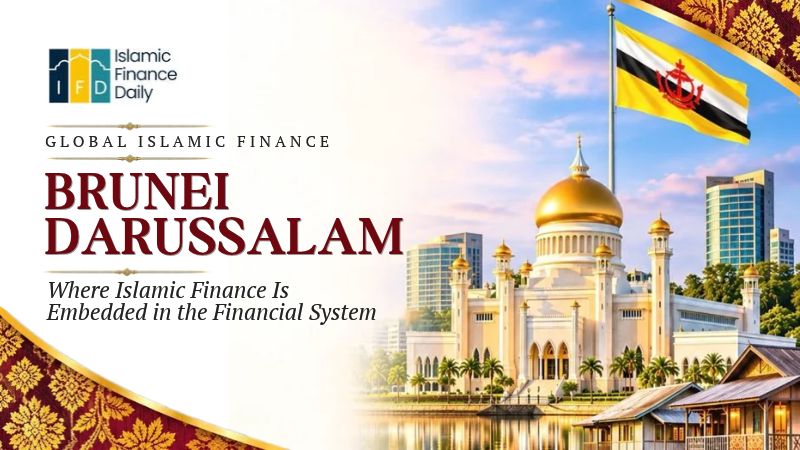
Brunei Darussalam Islamic Finance Industry: Complete Overview
Brunei Darussalam is one of Southeast Asia’s established Islamic finance markets, with an industry built around Islamic banking, takaful, government sukuk and Shariah-compliant financial services.
Unlike emerging markets where Islamic finance is still developing its regulatory foundations, Brunei has a long-established Islamic financial system supported by dedicated legislation, centralised Shariah governance and institutions operating across several segments of the financial sector.
The country’s Islamic finance journey began in 1991 with the establishment of Perbadanan Tabung Amanah Islam Brunei (TAIB), its first Islamic financial institution. Subsequent developments included the establishment of Islamic Bank of Brunei, the introduction of Islamic banking and takaful legislation, and the development of a regular government Sukuk Al-Ijarah programme.
Today, Bank Islam Brunei Darussalam (BIBD) is the country’s principal full-fledged Islamic bank, supported by an ecosystem that includes Islamic finance companies, takaful operators, Islamic investment products and capital-market institutions.
Brunei’s position is also reflected in the 2026 Islamic Finance Development Indicator (IFDI), in which it ranks 13th globally with a score of 36. icd-ps.org
The country’s Financial Sector Blueprint 2026–2035 provides an important framework for its next stage of financial development, including the continued development of Islamic finance, digital innovation and capital markets.
This article examines Brunei Darussalam’s Islamic finance industry, its historical development, regulatory structure, financial institutions, market performance and future opportunities.
1. Introduction
Brunei Darussalam has developed an Islamic finance industry that operates alongside its conventional financial system. Islamic finance is an important component of the country’s financial services sector and reflects its national Islamic identity and economic development priorities.
The country follows a dual financial system, allowing conventional and Islamic financial institutions to operate under the supervision of the Brunei Darussalam Central Bank (BDCB).
Its Islamic finance industry includes:
- Islamic banking.
- Islamic finance and leasing companies.
- Family and general takaful.
- Government Sukuk Al-Ijarah.
- Islamic investment funds.
- Shariah-compliant securities and investment services.
- Islamic finance education and professional development.
Brunei’s approach is distinctive because it combines a centralised national Shariah governance structure with institution-level Shariah advisory bodies.
The country has also established a dedicated Islamic finance development initiative, Brunei Darussalam Islamic Finance (BDIF), to showcase its institutions, regulatory framework, products and professional development opportunities.
According to BDCB, Islamic finance accounted for 57.5% of the country’s total financial sector assets in 2020, when total financial sector assets stood at BND 22.3 billion. More recent developments indicate that Islamic finance continues to account for more than half of the financial system’s assets.
2. Historical Development of Islamic Finance in Brunei Darussalam
Brunei’s modern Islamic finance industry developed through the establishment of Islamic financial institutions, the introduction of dedicated legislation and the expansion of government-supported Islamic capital markets.
2.1 Establishment of Perbadanan TAIB – 1991
A major milestone occurred on 29 September 1991 with the establishment of Perbadanan Tabung Amanah Islam Brunei (TAIB).
TAIB became the country’s first financial institution to conduct all its activities according to Islamic principles.
Established as a statutory body under the Perbadanan Tabung Amanah Islam Brunei Act, TAIB was created to provide Islamic financial services and support the financial needs of the Bruneian community.
Its establishment marked the beginning of organised Islamic financial activity in the country.
2.2 Development of Islamic Banking – 1993–2005
In 1993, the International Bank of Brunei was converted into the Islamic Bank of Brunei (IBB).
The same year also saw the establishment of Takaful TAIB and Takaful IBB, introducing dedicated Islamic insurance services.
Another important development occurred in 2001, when the Development Bank of Brunei was converted into the Islamic Development Bank of Brunei (IDBB).
These developments expanded the country’s Islamic financial infrastructure beyond savings and banking services.
In 2005, Islamic Bank of Brunei and Islamic Development Bank of Brunei merged to form Bank Islam Brunei Darussalam (BIBD).
The merger created a stronger Islamic banking institution with a broader range of financial services. BDCB
2.3 Introduction of Islamic Banking and Takaful Legislation – 2008
The introduction of the Islamic Banking Act, Chapter 168, and the Takaful Order, 2008, provided dedicated legal frameworks for Islamic banking and takaful activities.
These laws established a clearer regulatory foundation for Islamic financial institutions and strengthened the country’s ability to supervise Shariah-compliant financial services.
2.4 Development of Government Sukuk – 2006 Onwards
Brunei introduced short-term Government Sukuk Al-Ijarah in 2006.
The programme was developed to support government financing requirements and establish a domestic government securities yield curve.
In 2013, the government introduced six-month and nine-month Sukuk Al-Ijarah tenors to further develop the domestic securities market.
The programme has continued through regular issuances administered by BDCB on behalf of the government.
2.5 Development of Islamic Finance Institutions and Investment Products
During the following years, Brunei expanded its Islamic finance ecosystem through:
- Islamic investment funds.
- Islamic securities and brokerage services.
- Takaful subsidiaries.
- Islamic hire-purchase financing.
- Islamic asset management.
- Professional Islamic finance education.
The establishment of the Centre for Islamic Banking, Finance and Management (CIBFM) in 2010 was another important development in professional capacity building.
2.6 Brunei Darussalam Islamic Finance Initiative
In 2017, BDCB introduced the Brunei Darussalam Islamic Finance initiative to promote the country’s Islamic financial ecosystem internationally.
The initiative aims to showcase Brunei’s Islamic financial institutions, regulatory framework, products, education and training opportunities.
It also supports the country’s ambition to strengthen its international position in Islamic finance.
3. Regulatory and Shariah Governance Framework
Brunei Darussalam has established a dedicated regulatory framework for Islamic financial activities.
The framework is administered primarily by the Brunei Darussalam Central Bank, which supervises Islamic banking, takaful and Islamic capital-market activities.
A defining feature of the system is its two-tier Shariah governance structure, combining national-level oversight with institution-level advisory bodies.
3.1 Brunei Darussalam Central Bank
Brunei Darussalam Central Bank (BDCB)
BDCB is the country’s central bank and principal financial regulator.
It was established under the Brunei Darussalam Central Bank Order, 2010, and commenced operations on 1 January 2011.
Its responsibilities include:
- Monetary and financial stability.
- Banking regulation and supervision.
- Insurance and takaful supervision.
- Regulation of capital-market activities.
- Payment-system oversight.
- Financial-sector development.
- Islamic finance policy and regulatory development.
BDCB plays a central role in supporting the development of Islamic finance through regulation, supervision and industry initiatives.
3.2 Syariah Financial Supervisory Board
The Syariah Financial Supervisory Board (SFSB) is the central Shariah authority for Islamic financial matters in Brunei.
It was established under the Syariah Financial Supervisory Board Act, Chapter 295, which came into force on 17 January 2006.
The SFSB has authority to:
- Ascertain Islamic law in relation to financial matters.
- Issue rulings on matters referred to it.
- Advise on Shariah issues affecting Islamic financial business.
- Provide guidance on Islamic banking and takaful activities.
- Support consistent Shariah governance across the financial industry.
BDCB, through its Syariah Finance department, acts as the secretariat to the SFSB.
3.3 Institution-Level Shariah Advisory Bodies
In addition to national-level oversight, Islamic financial institutions are required to establish their own Syariah Advisory Bodies (SABs).
These bodies provide institution-level advice on Shariah compliance and review the institution’s financial products, services and operations.
The two-tier structure allows Brunei to maintain centralised Shariah oversight while ensuring that individual institutions have internal arrangements for compliance.
3.4 Islamic Banking Legislation
Islamic banking activities are governed by the Islamic Banking Act, Chapter 168.
The legislation establishes requirements concerning the operation and supervision of Islamic banks.
Islamic banks are also subject to applicable prudential regulations and reporting requirements administered by BDCB.
3.5 Takaful Legislation
Takaful activities are governed by the Takaful Order, 2008.
Other relevant legislation includes the Insurance Order, 2006, and the International Insurance and Takaful Order, 2002.
BDCB is responsible for registering, regulating and supervising takaful operators and insurance intermediaries.
Its regulatory responsibilities include protecting policyholders, promoting fair treatment and supporting the stability of the insurance and takaful industry.
3.6 Islamic Capital-Market Regulation
Islamic capital-market activities are governed under the Securities Markets Order, 2013, and the Securities Markets Regulations, 2015.
These regulations provide the framework for securities-market activities, including Islamic securities and investment products.
BDCB supervises the relevant activities within its regulatory mandate.
3.7 Financial Sector Blueprint 2026–2035
An important policy development is the Brunei Darussalam Financial Sector Blueprint 2026–2035.
The blueprint provides a strategic framework for the next decade of financial-sector development.
It addresses areas including:
- Financial-sector competitiveness.
- Digital financial services.
- Capital-market development.
- Sustainable finance.
- Islamic finance.
- Financial inclusion.
- Institutional and regulatory development.
For Islamic finance, the blueprint is particularly relevant because it provides a longer-term policy context for expanding the industry’s contribution to the national economy.
3.8 Main Regulatory Institutions
| Institution | Main responsibility |
|---|---|
| BDCB | Central banking and financial regulation |
| SFSB | Centralised Shariah supervision |
| Syariah Advisory Bodies | Institution-level Shariah compliance |
| Ministry of Finance and Economy | Government fiscal policy and public finance |
| Brunei Darussalam Islamic Finance (BDIF) | Islamic finance industry promotion |
4. Islamic Banking in Brunei Darussalam
Islamic banking is the largest and most established component of Brunei’s Islamic finance industry.
The country has developed a banking system in which a full-service Islamic bank operates alongside conventional banking institutions.
4.1 Bank Islam Brunei Darussalam
Bank Islam Brunei Darussalam (BIBD) is the country’s principal Islamic banking institution.
Established in 2005 following the merger of Islamic Bank of Brunei and Islamic Development Bank of Brunei, BIBD provides a comprehensive range of financial services.
Its activities include:
- Personal banking.
- Business and corporate banking.
- Retail financing.
- Trade finance.
- Treasury services.
- Wealth management.
- Investment services.
- Digital banking.
BIBD is also active in regional Islamic finance through its subsidiaries and associated companies.
Its group structure includes BIBD Securities, BIBD At-Tamwil and Syarikat Takaful Brunei Darussalam.
4.2 BIBD Financial Performance
According to BIBD’s audited 2025 figures, the bank reported:
BIBD GROUP – FY2025
BND 11.3bn
Total group assets
BND 121.6m
Profit after zakat and taxation
18.2%
Tier 1 capital adequacy ratioBIBD
These figures relate to BIBD Group, rather than the entire Bruneian Islamic banking sector.
4.3 Perbadanan Tabung Amanah Islam Brunei (TAIB)
Perbadanan Tabung Amanah Islam Brunei (TAIB) is a statutory Islamic financial institution established in 1991.
TAIB provides financial services to individuals and the wider community.
Its activities include:
- Savings products.
- Deposit and investment services.
- Financing.
- Islamic financial planning.
- Services through its subsidiary companies.
TAIB is also the parent organisation of Insurans Islam TAIB Sendirian Berhad, Darussalam Holdings Sendirian Berhad and TAIB Filling Station Sendirian Berhad. taib.com.bn
An important distinction is that TAIB is a statutory Islamic financial institution and should not be confused with a full-service Islamic commercial bank such as BIBD.
4.4 Bank Usahawan
Bank Usahawan was established to support micro, small and medium-sized enterprises in Brunei.
The institution provides financing solutions for businesses, including Shariah-compliant financing products.
Its role is relevant to the development of Islamic SME financing and financial inclusion.
Bank Usahawan should be distinguished from BIBD, which is the country’s full-fledged Islamic bank. Brunei Darussalam Islamic Finance
4.5 Islamic Banking Market Position
Brunei’s Islamic banking industry has a substantial position within its domestic financial system.
According to BDCB-related reporting published in 2026, Islamic banks accounted for approximately 52% of total financial system assets in 2025. Brunei Darussalam Islamic Finance
This indicates that Islamic banking is not a marginal segment of the country’s financial system.
However, a comparable consolidated set of 2025 Islamic banking assets, deposits and financing figures should be obtained from BDCB’s statistical publications before assigning precise market totals to the whole sector.
4.6 Islamic Banking Products and Services
Brunei’s Islamic banking institutions offer a range of financial products structured according to Islamic principles.
These include:
| Islamic finance structure | Typical application |
|---|---|
| Murabaha | Trade and asset financing |
| Ijarah | Leasing arrangements |
| Mudarabah | Profit-sharing investment |
| Musharakah | Partnership financing |
| Wakala | Agency-based investment |
| Qard Hasan | Interest-free financing |
| Bai’ Bithaman Ajil | Deferred-payment sale financing |
These structures provide the basis for personal, business and institutional Islamic financial services.
5. Islamic Non-Bank Financial Institutions
Brunei’s Islamic finance industry extends beyond banking through a number of specialised institutions offering leasing, financing, securities brokerage and other financial services.
These institutions contribute to the development of the wider Islamic financial ecosystem by providing services to individuals, businesses and institutional custome
BIBD At-Tamwil Berhad is a wholly owned subsidiary of BIBD.
Its principal activity is the provision of Islamic hire-purchase facilities.
The company provides financing arrangements that enable customers to acquire assets through structures designed to comply with Islamic finance principles.
Its activities support the development of consumer and asset-based financing outside the bank’s direct operations.
5.2 Bank Usahawan
Bank Usahawan contributes to Brunei’s SME financing environment through financing solutions designed for local entrepreneurs and businesses.
Its activities include Shariah-compliant financing, supporting the development of participation-based financing options for smaller businesses.
This segment is important because SMEs often require financing for working capital, equipment and business expansion.
5.3 Islamic Securities and Brokerage Services
BIBD Securities Sdn Bhd is a wholly owned subsidiary of BIBD.
Its activities include Islamic wealth management products and brokerage services.
The company provides access to local BIBD shares and foreign securities listed on the Kuala Lumpur and Singapore stock exchanges.
This is particularly relevant to Brunei’s investment market because the country does not yet have a domestic stock exchange.
5.4 Darussalam Holdings
Darussalam Holdings Sdn Bhd is a subsidiary of TAIB.
Its activities include services related to Hajj and Umrah and other travel-related business.
Although it is part of the broader TAIB corporate structure, its activities should not be confused with those of a licensed Islamic bank or investment management company.
5.5 Islamic Finance Companies
Brunei also has specialised Islamic finance companies and subsidiaries that provide services such as hire-purchase financing, asset financing and other participation-based financial arrangements.
BDCB’s licensed-institution register identifies BIBD At-Tamwil as an Islamic finance company. BDCB
The presence of these specialised institutions contributes to the diversity of Brunei’s Islamic financial services industry.
6. Sukuk and Islamic Capital Markets
Sukuk are among the longest-established components of Brunei’s Islamic capital-market infrastructure.
The country has maintained a government Sukuk Al-Ijarah programme since 2006, providing Shariah-compliant government securities and supporting liquidity management within the domestic financial system.
However, Brunei’s Islamic capital market remains relatively concentrated in short-term sovereign issuances, while corporate sukuk and longer-term private-sector Islamic securities are less developed.
6.1 Government Sukuk Al-Ijarah Programme
The Brunei government introduced its first short-term Sukuk Al-Ijarah securities in April 2006.
The programme is administered by BDCB, acting as the government’s agent for managing and administering the issuances.
Under the arrangement, the government issues sukuk structured according to Ijarah principles, with the rental rate and maturity specified for each series.
The programme serves several purposes:
- Providing Shariah-compliant government securities.
- Supporting domestic liquidity management.
- Offering investment instruments to Islamic financial institutions.
- Establishing a government securities yield curve.
- Supporting the development of the wider Islamic capital market.
The programme is also important because Islamic banks require suitable Shariah-compliant instruments for liquidity management.
6.2 Government Sukuk Issuance – October 2026
On 15 October 2026, BDCB announced the successful pricing of the 265th series of Government Sukuk Al-Ijarah securities.
265th Government Sukuk Al-Ijarah
BND 55 million
Amount issued
| Particulars | Details |
|---|---|
| Issuance date | 15 October 2026 |
| Maturity date | 14 January 2027 |
| Tenor | 91 days |
| Amount offered | BND 100 million |
| Bids received | BND 55 million |
| Rental rate | 1.3750% |
BDCB
The announcement also reported that cumulative government Sukuk Al-Ijarah issuance had reached BND 18.71 billion since the programme’s launch in April 2006.
Total outstanding government sukuk stood at BND 335 million as of 15 October 2026.
It is important to distinguish cumulative issuance from outstanding securities: the BND 18.71 billion represents issuance over the programme’s history, not the amount currently outstanding.
6.3 Corporate Sukuk
Brunei’s corporate sukuk market has developed more slowly than its sovereign issuance programme.
An early milestone occurred in 2005, when Brunei LNG issued a USD 100 million Sukuk Al-Ijarah facility.
The transaction demonstrated the potential for private-sector Islamic capital-market financing in the country.
However, subsequent corporate sukuk activity has remained limited. Brunei Darussalam Islamic Finance
The limited number of corporate issuers and the relatively small domestic investment market continue to constrain the expansion of private-sector Islamic securities.
6.4 Brunei Darussalam Islamic Investment Products
Brunei’s capital-market framework also supports Islamic collective investment schemes and other Shariah-compliant investment products.
The country’s financial institutions have developed Islamic investment funds and related services, although a considerable proportion of the available products are domiciled in international markets.
6.5 Islamic Capital-Market Development
The Brunei Darussalam Financial Sector Blueprint 2026–2035 provides useful indicators of the domestic capital market’s development.
According to the blueprint, the market recorded the following figures in 2025:
| Indicator | 2025 |
|---|---|
| Total collective investment schemes (CIS) | 31 |
| Islamic collective investment schemes | 11 |
| Total asset under management | BND 1.13 billion |
| Total CIS assets under distribution | BND 685.7 million |
| Total sukuk outstanding | BND 360 million |
The number of Islamic collective investment schemes increased by two compared with 2016. bdcb.gov.bn
These figures show that Brunei has developed an investment-fund sector, although Islamic investment products still represent a relatively specialised part of the wider capital market.
6.6 Development of a Domestic Stock Exchange
Brunei does not yet have an operational domestic stock exchange.
The government has been pursuing plans to establish a national exchange to broaden access to capital-market financing and investment products.
A report published by BDIF in August 2026 indicated that the planned launch of the country’s first stock exchange was targeted for the third quarter of 2027.
This remains a future development rather than an operational market. Brunei Darussalam Islamic Finance
A domestic exchange could create opportunities for:
- Corporate sukuk listings.
- Shariah-compliant equity securities.
- Islamic exchange-traded funds.
- Domestic investment products.
- Greater participation by local investors.
The development of a functioning exchange would represent an important structural change for Brunei’s Islamic capital market.
7. Takaful and Islamic Insurance
Takaful is an established component of Brunei’s financial services industry.
The country has developed a regulatory framework for both family and general takaful, supported by dedicated operators and the subsidiaries of established financial institutions.
Takaful is based on mutual assistance and shared responsibility, with participants contributing to a common pool used to provide protection against specified risks.
7.1 Development of Takaful in Brunei
The development of Brunei’s takaful sector began in the early 1990s.
In 1993, Takaful TAIB and Takaful IBB were established, providing dedicated Islamic insurance services.
A major restructuring occurred in 2010, when Takaful IBB and Takaful BIBD were merged into two separate entities:
- Takaful Brunei Keluarga (TBK).
- Takaful Brunei Am (TBA).
The restructuring helped establish a more consolidated takaful structure in the country.
7.2 Takaful Brunei
Syarikat Takaful Brunei Darussalam Sdn Bhd is a major participant in the country’s Islamic insurance market.
It provides general and family takaful services through its subsidiaries:
- Takaful Brunei Am (TBA).
- Takaful Brunei Keluarga (TBK).
These institutions provide Islamic insurance solutions for individuals, households and businesses.
7.3 Insurans Islam TAIB
Insurans Islam TAIB Sdn Bhd is a wholly owned subsidiary of Perbadanan TAIB.
Its activities include general and family takaful services.
The company contributes to the development of participation-based insurance and provides customers with additional options for Islamic protection products.
7.4 Takaful Market Structure
The insurance and takaful market includes conventional insurers and takaful operators.
The BDIF market overview identifies 11 licensed insurance and takaful companies in total, comprising five life/family takaful operators and six general insurance/takaful operators.
It also identifies one registered insurance broker and 489 agents.
There are currently no domestic reinsurers or retakaful operators listed in that market overview. Brunei Darussalam Islamic Finance
A separate 2026 industry report refers to four takaful operators. The difference reflects the distinction between the number of dedicated takaful operators and the wider count of licensed insurance and takaful companies. These figures should not be treated as interchangeable.
7.5 Takaful Market Statistics
The Brunei Darussalam Financial Sector Blueprint 2026–2035, drawing on BDCB’s Financial Stability Report 2025, provides the following indicators:
TAKAFUL AND INSURANCE INDUSTRY – 2025
BND 2.2bn
Total industry assets
BND 349.8m
Gross premiums
28.5%
Takaful share of industry assets
1.4%
Insurance and takaful penetrationbdcb.gov.bn
The takaful share of 28.5% refers to assets within the combined takaful and insurance industry, not the entire national financial system.
The same blueprint reported that total insurance and takaful industry assets increased by BND 698 million from 2016 to 2025.
7.6 Future Development of Takaful
The Financial Sector Blueprint 2026–2035 identifies several areas for further development:
- Inclusive coverage for underserved communities.
- Microinsurance and usage-based insurance.
- Digital underwriting and risk management.
- Climate-resilient insurance products.
- Digital health and insurance integration.
These priorities are intended to improve the accessibility and relevance of insurance and takaful products in Brunei.
8. Islamic Investment and Asset Management
Brunei’s Islamic investment and asset management sector includes investment funds, securities brokerage and wealth management services.
Although the sector is smaller than Islamic banking and takaful, it provides additional opportunities for individuals and institutional investors seeking Shariah-compliant investment products.
8.1 Islamic Collective Investment Schemes
Islamic collective investment schemes are an important component of Brunei’s investment market.
They allow investors to participate in professionally managed portfolios that follow applicable Shariah investment criteria.
The Financial Sector Blueprint 2026–2035 reports that Brunei had 11 Islamic collective investment schemes in 2025.
The number increased by two compared with 2016.
8.2 BIBD Securities
BIBD Securities provides Islamic wealth management and brokerage services.
Its activities include access to local BIBD shares and securities listed on foreign exchanges, particularly in Malaysia and Singapore.
This cross-border arrangement is important because Brunei does not yet have its own operational stock exchange.
8.3 BIBD Al-Kauthar Funds
BIBD Al-Kauthar Funds are part of Brunei’s Islamic investment fund history.
The funds were launched in 2009 and contributed to the development of locally available Shariah-compliant investment products.
8.4 Lion-BIBDS Islamic Income & Growth Fund
An important development occurred in July 2026, when BIBD Securities partnered with Lion Global Investors to launch the Lion-BIBDS Islamic Income & Growth Fund.
The fund is a Shariah-compliant multi-asset investment product that invests in global equities and sukuk.
The partnership expands the range of investment opportunities available to Bruneian investors through international fund-management expertise.
However, the fund is domiciled overseas rather than representing a newly established domestic Brunei investment fund. Brunei Darussalam Islamic Finance
8.5 Islamic Asset Management Development
Potential areas for further development include:
- Islamic equity funds.
- Sukuk investment funds.
- Shariah-compliant multi-asset portfolios.
- Islamic pension and retirement products.
- Sustainable Islamic investment funds.
- Cross-border investment management.
The relatively small domestic capital market and the absence of a local stock exchange remain important constraints on the expansion of this segment.
9. Islamic Fintech and Digital Financial Services
Brunei’s Islamic fintech ecosystem is developing alongside the country’s broader digital financial services industry.
The Brunei Darussalam Central Bank has introduced regulatory initiatives designed to encourage financial innovation while maintaining appropriate regulatory oversight.
9.1 BDCB Fintech Regulatory Sandbox
The BDCB Fintech Regulatory Sandbox provides a controlled environment for eligible financial technology businesses to test innovative financial products and services.
It allows businesses to assess their solutions under regulatory supervision before broader commercial deployment.
In May 2026, the sandbox framework was expanded to allow banks and financial institutions, including Islamic banks and TAIB, to participate alongside fintech companies.
This represents an important development because it opens the innovation framework to established financial institutions rather than limiting participation to fintech businesses. Brunei Darussalam Islamic Finance
9.2 Jana Kapital
Jana Kapital is an example of a local Islamic fintech initiative.
The platform focuses on crowdfunding-based financing for micro, small and medium-sized enterprises.
In 2024, Jana Kapital completed testing within BDCB’s Fintech Regulatory Sandbox.
Its development demonstrates the potential for digital platforms to connect businesses seeking financing with investors through Shariah-compliant structures. Brunei Darussalam Islamic Finance
9.3 Digital Banking and Financial Services
BIBD has invested in digital banking through its BIBD NEXGEN services.
Its digital channels include mobile banking, online banking and digital payment facilities.
BIBD’s wider digital ecosystem provides customers with access to banking and financing services through electronic channels.
9.4 Opportunities for Islamic Fintech
Potential areas for Islamic fintech development in Brunei include:
- Digital Murabaha financing.
- Islamic crowdfunding.
- Digital investment platforms.
- Online sukuk distribution.
- Islamic payment services.
- Digital takaful.
- Technology-enabled SME financing.
The development of fintech will depend on regulatory support, investment in digital infrastructure and collaboration between financial institutions and technology providers.
A consolidated national Islamic fintech market-size figure has not been established from the available official sources.
10. Islamic Microfinance and Social Finance
Islamic microfinance and social finance are relevant to Brunei’s financial inclusion and wider economic development objectives.
The country has a long-established Islamic financial institution in TAIB and a range of financing institutions that provide services to individuals, entrepreneurs and businesses.
10.1 SME and Microenterprise Financing
Bank Usahawan and other financial institutions contribute to the provision of financing for small and medium-sized businesses.
Shariah-compliant financing structures can support businesses requiring funds for equipment, operations and expansion.
BIBD At-Tamwil also contributes through Islamic hire-purchase facilities.
These institutions provide channels through which participation-based financing can support economic activity beyond traditional banking.
10.2 Waqf and Islamic Social Finance
Waqf is an important traditional Islamic social finance mechanism.
In Brunei, the administration of Islamic religious and charitable affairs is supported by public institutions, including the Ministry of Religious Affairs and the Islamic Religious Council.
A significant policy development was reported in March 2026, when a proposed Waqf Act was described as being in its final drafting stage.
The proposed legislation was intended to strengthen the legal and institutional framework governing waqf. Brunei Darussalam Islamic Finance
However, the reported drafting stage should not be treated as proof that the legislation has subsequently been enacted. Its final legal status should be checked against the latest official legislation register before publication.
10.3 Zakat and Charitable Activities
Zakat is administered within Brunei’s established Islamic religious framework.
The country’s Islamic financial institutions also provide services that facilitate charitable contributions and community support.
BIBD, for example, provides zakat-related services through its banking channels.
10.4 Future Development Opportunities
Potential areas for further development include:
- Waqf-based social investment.
- Digital zakat collection and distribution.
- Qard Hasan financing.
- Islamic microfinance for small businesses.
- Socially responsible Islamic investment.
- Financial inclusion initiatives.
These areas could strengthen the relationship between Islamic finance, social development and the country’s broader economic priorities.
11. Islamic Finance Education, Research and Professional Development
Brunei has developed an institutional education and professional development environment to support the growth of Islamic finance.
Universities, specialist training organisations, financial institutions and international academic partners contribute to the development of knowledge and professional expertise.
11.1 Brunei Institute of Leadership & Islamic Finance
Brunei Institute of Leadership & Islamic Finance (BILIF) is an important institution supporting professional education and capacity building in Brunei’s financial services industry.
Previously known as the Centre for Islamic Banking, Finance and Management (CIBFM), the institution was established in 2010.
Its activities include professional training, leadership development, Islamic finance education and industry capacity building.
Its programmes cover several areas of financial services, including:
- Islamic banking.
- Takaful.
- Islamic capital markets.
- Financial regulation.
- Leadership and management.
- Risk management.
- Governance and compliance.
BILIF supports the development of qualified professionals capable of working across the different segments of the financial sector.
11.2 Universiti Islam Sultan Sharif Ali
Universiti Islam Sultan Sharif Ali (UNISSA) is an important academic institution contributing to Islamic studies, Islamic economics and related research.
Its academic activities provide a foundation for the development of knowledge relevant to Islamic finance, Shariah governance and Islamic commercial principles.
UNISSA also participates in research and academic cooperation initiatives relating to Islamic finance.
In November 2026, it was among the co-organisers of the third BDIF Call-for-Papers initiative and the BDIF Symposium 2026.
11.3 Universiti Brunei Darussalam
Universiti Brunei Darussalam (UBD) contributes to the country’s higher education and research environment.
Its academic activities in business, economics and related disciplines are relevant to the development of financial-sector expertise.
The university also provides opportunities for research and interdisciplinary engagement in areas connected to financial development and economic policy.
11.4 Islamic Finance Research and Conferences
Brunei has increasingly supported Islamic finance research through conferences, academic publications and international collaboration.
A significant example is the Brunei Darussalam Islamic Finance Symposium 2026.
On 18 November 2026, BDCB announced that it had organised the symposium with Universiti Islam Sultan Sharif Ali, International Islamic University Malaysia, INCEIF University and Perbanas Institute.
BILIF served as the symposium’s event partner.
The theme was “Innovating Sukuk for Sustainable and Inclusive Growth”.
The symposium provided a platform for academic research, industry discussions and cooperation between practitioners, researchers and public-sector institutions. BDCB
11.5 Leadership in Islamic Finance and Economics Programme
BILIF also offers the Leadership in Islamic Finance and Economics (LIFE) professional learning pathway.
The programme covers Islamic banking, takaful and capital markets.
Its purpose is to develop professionals with knowledge and competencies relevant to the country’s financial industry and international standards. Brunei Darussalam Islamic Finance
11.6 International Academic Cooperation
Brunei’s Islamic finance education sector benefits from cooperation with international institutions.
The participation of IIUM, INCEIF University and Perbanas Institute in the 2026 BDIF Symposium demonstrates the importance of regional academic partnerships.
Such collaboration can support:
- Specialist Islamic finance education.
- Research publications.
- Professional training.
- Shariah governance expertise.
- Knowledge exchange.
- International academic networks.
12. Brunei Darussalam’s International Position in Islamic Finance
Brunei has a recognised position in the international Islamic finance industry, supported by its regulatory framework, Islamic banking sector, takaful market and sovereign sukuk programme.
Although the country has a relatively small domestic economy, Islamic finance represents an important part of its financial system.
12.1 Islamic Finance Development Indicator (IFDI) 2026
The Islamic Finance Development Indicator (IFDI), developed by the Islamic Corporation for the Development of the Private Sector (ICD) and London Stock Exchange Group (LSEG), assesses the development of Islamic finance across countries.
It measures five dimensions:
- Financial performance.
- Governance.
- Sustainability.
- Knowledge.
- Awareness.
According to the 2026 Islamic Finance Development Report, Brunei Darussalam ranked 13th globally, with an overall IFDI score of 36.
BRUNEI DARUSSALAM – IFDI 2026
#13
Global ranking
36
Overall IFDI score
| IFDI dimension | Score |
|---|---|
| Financial performance | 8 |
| Governance | 73 |
| Sustainability | 14 |
| Knowledge | 20 |
| Awareness | 85 |
icd-ps.org
The results show that Brunei’s strongest dimensions are governance and awareness.
Its governance score of 73 reflects the country’s established regulatory and institutional arrangements, while its awareness score of 85 reflects its activities in Islamic finance publications, education and industry awareness.
The financial performance score of 8 indicates that there is room for improvement in the scale and activity of the country’s Islamic financial markets.
12.2 International Sukuk Market
Brunei has maintained a regular government sukuk programme since 2006.
The programme has established a long-term record of sovereign Islamic securities issuance and provides a domestic benchmark for Shariah-compliant investments.
Its cumulative issuance reached BND 18.71 billion by October 2026. BDCB
12.3 Takaful Market Position
Brunei’s takaful industry is another important component of its international Islamic finance profile.
The 2025 IFDI report identified Brunei as ranking tenth globally in total takaful assets, valued at approximately USD 0.5 billion based on 2024 data.
This highlights the country’s relative strength in takaful compared with its broader Islamic financial market size. cms.bdcb.gov.bn
This tenth-place takaful ranking relates to the 2025 report and should not be confused with Brunei’s overall 2026 IFDI ranking.
12.4 Regional Islamic Finance Cooperation
Brunei’s participation in international Islamic finance initiatives is supported by its regulatory institutions, academic organisations and financial-sector stakeholders.
Its connections with Malaysia and other Southeast Asian Islamic finance markets are particularly important.
The country’s participation in the BDIF Symposium 2026, alongside international academic institutions, demonstrates continued efforts to strengthen research and professional cooperation.
12.5 Brunei as an International Islamic Finance Centre
Brunei’s aspiration to become an international Islamic finance hub is reflected in its BDIF initiative and long-term financial-sector strategies.
Its established Shariah governance framework, Islamic banking infrastructure and takaful industry provide a foundation for this ambition.
However, the relatively small domestic market, limited corporate sukuk activity and lack of an operational stock exchange remain challenges to expanding its international financial-market presence.
13. Recent Developments and Future Direction
Brunei’s Islamic finance industry is entering a new development phase supported by financial-sector reforms, sustainable finance initiatives and digital innovation.
Several developments during 2025 and 2026 provide important context for the industry’s future direction.
13.1 Financial Sector Blueprint 2026–2035
The Brunei Darussalam Financial Sector Blueprint 2026–2035 provides a strategic framework for the development of the country’s financial system over the next decade.
It addresses the development of banking, insurance, capital markets, financial technology and other financial services.
For Islamic finance, the blueprint provides a framework for strengthening market infrastructure, improving financial-sector competitiveness and supporting sustainable economic development. 13.2 Sustainable Finance Roadmap 2025–2030
In November 2025, BDCB launched the Brunei Darussalam Sustainable Finance Roadmap 2025–2030.
The roadmap recognises the role of sustainable finance in supporting national development and highlights the relevance of Islamic finance principles, particularly Maqasid al-Shariah.
It provides a policy context for connecting sustainable financial activities with the country’s Islamic finance ecosystem. Brunei Darussalam Islamic Finance
13.3 Expansion of the Fintech Regulatory Sandbox
In May 2026, BDCB expanded its Fintech Regulatory Sandbox framework to allow banks and financial institutions, including Islamic banks and TAIB, to participate alongside fintech companies.
This development could encourage greater collaboration between established financial institutions and technology businesses.
It may also support the development of new digital Islamic financial products and services. Brunei Darussalam Islamic Finance
13.4 Waqf Legislation
In March 2026, the proposed Waqf Act was reported to be in its final drafting stage.
If enacted and implemented, the legislation could strengthen the administration and development of waqf activities.
It may also create opportunities for greater integration between Islamic social finance and wider economic development.
The enactment status should be verified separately before describing the legislation as effective. Brunei Darussalam Islamic Finance
13.5 Islamic Capital-Market Development
The government’s ongoing sukuk programme remains central to Brunei’s Islamic capital-market infrastructure.
At the same time, the proposed domestic stock exchange and the development of Islamic investment products could broaden the market beyond short-term sovereign securities.
The planned third-quarter 2027 stock exchange launch, as reported in August 2026, is an important future development to monitor. Brunei Darussalam Islamic Finance
13.6 Continued Takaful Development
The Financial Sector Blueprint 2026–2035 identifies opportunities to expand takaful and insurance through technology, product diversification and broader coverage.
Areas of interest include microinsurance, climate-related insurance solutions and digital health integration.
These developments could help increase the contribution of takaful to the country’s financial inclusion and resilience objectives.
13.7 Potential Areas of Future Development
The next phase of Brunei’s Islamic finance industry could be shaped by several important areas.
Islamic banking: Further product innovation and digital banking development could strengthen the sector’s contribution to the national economy.
Sukuk: Continued government issuance and the introduction of more corporate sukuk could diversify Islamic capital-market activity.
Takaful: Greater product diversification and technological development could expand insurance penetration.
Islamic investment: The development of domestic investment infrastructure could reduce reliance on offshore products.
Islamic fintech: Greater collaboration between financial institutions and fintech companies could support new Shariah-compliant services.
Waqf and social finance: Improved legal and institutional arrangements could strengthen the role of Islamic social finance.
International cooperation: Stronger academic, regulatory and industry partnerships could help Brunei increase its international visibility and attract cross-border Islamic finance activity.
These areas represent opportunities and policy directions rather than guaranteed market outcomes.
14. Conclusion
Brunei Darussalam has developed an established Islamic finance industry supported by a comprehensive regulatory framework, a full-service Islamic bank, a longstanding takaful sector and a regular government sukuk programme.
The country’s Islamic finance journey began in 1991 with the establishment of Perbadanan TAIB and expanded through the development of Islamic banking institutions, dedicated takaful operators and Islamic capital-market instruments.
BIBD remains the principal full-fledged Islamic bank, while TAIB, BIBD At-Tamwil, BIBD Securities and other specialised institutions contribute to the wider Islamic financial ecosystem.
The country also benefits from a centralised Shariah governance structure through the Syariah Financial Supervisory Board, supported by institution-level Syariah Advisory Bodies.
Its government Sukuk Al-Ijarah programme, which has recorded cumulative issuance of BND 18.71 billion by October 2026, is an important part of its domestic Islamic capital-market infrastructure.
Takaful is another established segment, with dedicated family and general operators contributing to the national insurance industry.
Nevertheless, several challenges remain. Corporate sukuk activity is limited, the domestic investment market is relatively small and the country does not yet have an operational stock exchange. Islamic fintech and social finance also have opportunities for further development.
The Financial Sector Blueprint 2026–2035, Sustainable Finance Roadmap 2025–2030 and expansion of the fintech regulatory sandbox provide important foundations for the industry’s next stage.
Brunei’s 13th-place position in the 2026 IFDI demonstrates its established international standing, particularly in governance and industry awareness.
Overall, Brunei Darussalam represents a mature Islamic finance market in terms of its regulatory foundations and institutional development, with further opportunities to expand capital markets, digital financial services, takaful and international investment connectivity.
References and Further Reading
The following sources provide the institutional, regulatory and research material used in preparing this country profile.
Government and regulatory institutions
- Brunei Darussalam Central Bank – Islamic Finance Development.
- BDCB – Financial Sector Blueprint 2026–2035.
- BDCB – Takaful and Insurance Regulatory Framework.
- BDCB – 265th Government Sukuk Al-Ijarah Issuance, October 2026.
- BDCB – Brunei Darussalam Islamic Finance Symposium 2026.
Islamic financial institutions
- Bank Islam Brunei Darussalam – Official Website and 2025 Financial Highlights.
- BIBD – Subsidiaries and Associates.
- Perbadanan TAIB – Official Institutional Information.
- BDCB – List of Licensed Financial Institutions.
- BDIF – Takaful Market Overview.
International Islamic finance research
- ICD–LSEG – Islamic Finance Development Report 2026.
- BDCB – Brunei Darussalam Ranked 13th in IFDI 2025.
- Brunei Darussalam Islamic Finance – Overview of BDIF.
Recent developments and industry research
- Brunei: Sustainable Finance and Digital Innovation, August 2026.
- BILIF – Leadership in Islamic Finance and Economics Programme.
DISCLAIMER
IslamicFinanceDaily.com publishes this article for informational purposes only. The content is based on publicly available information and official announcements from the referenced institution. IslamicFinanceDaily.com does not provide financial, investment, or legal advice. Readers should verify information with the original source before making any financial or business decisions.