Uzbekistan Islamic Finance Industry: Complete Overview
Country: Uzbekistan
Series: Global Islamic Finance Industry by Country
Research updated: November 2026
1. Introduction
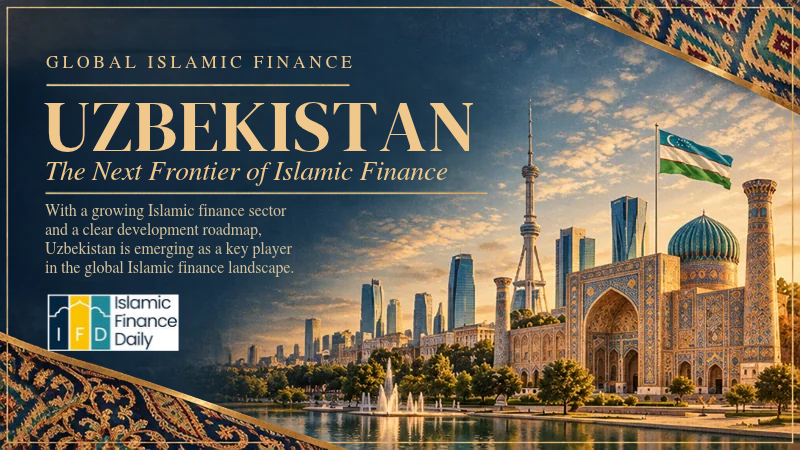
Uzbekistan is an emerging Islamic finance market in Central Asia. Its development is particularly significant because the country is moving from a relatively limited Islamic financial services environment towards a formal regulatory framework for Islamic banking and broader Islamic finance activities.
For many years, Islamic financial services were not widely available through the country’s conventional banking system. However, regulatory reforms, the expansion of Islamic microfinance and cooperation with international Islamic finance institutions have created new opportunities.
A major turning point came in 2026 with the introduction of legislation establishing a legal framework for Islamic banking.
The country’s development is also attracting international attention because of its potential to connect Central Asian markets with established Islamic finance centres in the Gulf and Southeast Asia.
2. Historical Development of Islamic Finance in Uzbekistan
Uzbekistan’s Islamic finance development has progressed gradually through financial sector reforms, regulatory initiatives and efforts to introduce Shariah-compliant financial services.
Although the country has a long Islamic intellectual and commercial heritage, formal Islamic banking was not previously established as a separate licensed banking activity within its financial system.
For several years, the development of Islamic finance was primarily discussed in the context of financial inclusion, attracting foreign investment, expanding financial services and diversifying the banking sector.
An important regulatory development occurred in April 2022, when Uzbekistan introduced amendments to its legislation on non-bank credit organisations.
These changes provided a legal basis for non-bank credit organisations to offer certain Islamic financing services.
The Central Bank subsequently introduced regulatory provisions governing Islamic financing operations within the microfinance sector.
This enabled microfinance organisations to introduce products structured around Islamic financial principles, including:
- Murabaha.
- Mudaraba.
- Musharaka.
- Ijara.
- Salam.
The introduction of these services represented an initial stage in the country’s Islamic finance development.
A further major milestone came on 27 March 2026, when the President signed Law No. ZRU-1126, introducing amendments to several legislative acts to establish the legal framework for Islamic banking activities.
The law entered into force on 29 June 2026.
It introduced provisions concerning Islamic banking licences, financial operations, Shariah governance, regulatory supervision and taxation.
In October 2026, Uzbekistan reached another milestone when the Central Bank issued the country’s first licence for Islamic banking activities to Open Bank.
These developments mark the beginning of a new phase in Uzbekistan’s Islamic finance journey.
3. Regulatory and Shariah Governance Framework
Uzbekistan’s Islamic finance regulatory framework is being developed through several national institutions.
Central Bank of the Republic of Uzbekistan
The Central Bank of the Republic of Uzbekistan is the principal regulator of the country’s banking sector.
Its responsibilities include:
- Licensing and supervising banks.
- Regulating Islamic banking activities.
- Approving Islamic financial standards.
- Developing Islamic banking regulations.
- Supporting Shariah governance.
- Promoting financial stability.
- Developing Islamic financial market infrastructure.
Law No. ZRU-1126 provides the Central Bank with authority to approve Islamic financial standards for credit institutions.
It also establishes the legal basis for an Islamic Finance Council under the Central Bank.
The council is intended to contribute to the development of Islamic finance standards, regulatory guidance and the resolution of Shariah-related disputes.
Ministry of Economy and Finance
The Ministry of Economy and Finance plays an important role in the development of the country’s financial and capital market policies.
Its involvement is particularly relevant to the development of sovereign sukuk, Islamic public financing instruments and the integration of Islamic finance into national economic development strategies.
The ministry has also participated in discussions concerning the 2026–2030 Islamic finance development roadmap.
National Agency of Perspective Projects (NAPP)
The National Agency of Perspective Projects is involved in the regulation and development of several non-bank financial market activities.
Its responsibilities within the broader financial system include areas relevant to insurance, capital markets and financial innovation.
The agency has participated in initiatives concerning the development of takaful and Islamic financial services.
Shariah Governance Framework
One of the important provisions introduced through Law No. ZRU-1126 concerns Shariah governance.
The legislation provides for:
- An Islamic Finance Council under the Central Bank.
- Islamic finance or Shariah councils within licensed institutions conducting Islamic banking activities.
- The adoption of Islamic financial standards.
- Regulatory oversight of Islamic banking operations.
This structure is intended to establish a formal basis for Shariah compliance as the Islamic banking industry develops.
4. Islamic Banking in Uzbekistan
Islamic banking is one of the most significant areas of development within Uzbekistan’s Islamic finance industry.
Historically, the country’s commercial banking system operated predominantly through conventional banking institutions.
The introduction of Law No. ZRU-1126 in March 2026, effective from 29 June 2026, established a dedicated legal framework for Islamic banking activities.
The legislation provides for the licensing of institutions conducting Islamic banking and allows existing banks to seek authorisation to undertake Islamic banking activities.
Recognised Islamic Financial Operations
The new legal framework recognises several Islamic financial operations, including:
- Murabaha: Financing through the purchase and resale of an asset at an agreed markup.
- Mudaraba: An arrangement involving capital provided by one party and management by another, with profits shared according to agreed terms.
- Musharaka: A partnership arrangement involving shared capital and agreed profit distribution.
- Ijara: A leasing arrangement involving the use of an asset in return for rental payments.
- Salam: A sale contract involving advance payment for specified goods delivered at a future date.
- Wakala: An agency arrangement in which one party appoints another to act on its behalf.
These instruments provide the contractual foundation for offering a wider range of Shariah-compliant financial services.
First Islamic Banking Licence
On 26 October 2026, the Central Bank of Uzbekistan issued the country’s first licence for Islamic banking activities to Open Bank.
The decision followed the introduction of the new Islamic banking legislation.
Open Bank is a digital bank that provides banking services through remote channels.
The first licence represents a significant institutional milestone because it moves Uzbekistan’s Islamic banking development from legislative preparation towards licensed banking operations.
Future Islamic Banking Development
The government and Central Bank have also discussed expanding the number of Islamic banking institutions.
Plans announced in 2025 and 2026 included the development of Islamic banking operations within existing commercial banks and the establishment of additional fully fledged Islamic banks.
The country’s longer-term ambition includes the development of a wider Islamic banking market by 2030.
However, these are development targets and should not be interpreted as the number of Islamic banks already operating in Uzbekistan.
5. Islamic Microfinance in Uzbekistan
Islamic microfinance has been an important starting point for the development of Shariah-compliant financial services in Uzbekistan.
Before the introduction of the dedicated Islamic banking framework, non-bank credit organisations were among the first institutions able to offer Islamic financial products under the country’s evolving regulatory arrangements.
The sector provides opportunities to extend financial services to individuals, entrepreneurs and small businesses.
Market Development
In June 2026, the Deputy Chairman of the Central Bank reported that 12 microfinance organisations were offering Islamic financial products, compared with eight in 2025.
The reported Islamic financing volume reached UZS 21 billion during the earlier period, while Islamic financial services provided during the first five months of 2026 amounted to UZS 22 billion.
The reported distribution of Islamic financing products included:
- Murabaha: 63%.
- Mudaraba: 17%.
- Musharaka: 14%.
The remaining share comprised other Islamic financial operations.
A specialised microfinance organisation operating exclusively on the basis of mudaraba had also financed more than 300 women entrepreneurs.
These developments demonstrate the role of Islamic microfinance in supporting entrepreneurship and providing access to alternative financial arrangements.
Importance of Microfinance
Islamic microfinance is particularly relevant to Uzbekistan because small businesses and individual entrepreneurs represent an important part of the national economy.
Shariah-compliant financing arrangements can provide alternatives for businesses seeking financing structures based on trade, leasing and partnership rather than conventional interest-bearing lending.
The expansion of this sector also provides practical experience for regulators and financial institutions as the country moves towards the development of Islamic banking.
6. Sukuk and Islamic Capital Markets
Uzbekistan’s Islamic capital market remains at an early stage of development.
The country has been exploring the introduction of sukuk and other Islamic capital market instruments as part of its wider financial market reform agenda.
Sukuk Development
In 2022, Uzbekistan introduced policy initiatives to examine the possibility of issuing securities based on Islamic finance principles, including sukuk.
The initiative included plans to explore experimental government or corporate sukuk issuance and develop the necessary legal framework.
However, the development of a full domestic sukuk market requires additional regulatory and institutional infrastructure.
Important areas include:
- Legal recognition of sukuk structures.
- Asset ownership and transfer arrangements.
- Tax treatment of Islamic financial transactions.
- Shariah governance.
- Investor protection.
- Listing and trading arrangements.
- Liquidity management.
Sovereign Sukuk Plans
In 2026, President Shavkat Mirziyoyev highlighted plans to launch a sovereign Islamic bond, or sukuk, programme as part of efforts to diversify investment instruments and develop the country’s capital market.
The announcement represents an important policy direction.
However, a planned sovereign sukuk programme should not be confused with an already completed sovereign sukuk issuance.
Future Market Opportunities
The introduction of sukuk could provide Uzbekistan with additional financing opportunities for infrastructure, energy, transport and other eligible development projects.
It could also attract investment from international Islamic financial institutions and investors seeking Shariah-compliant investment opportunities in Central Asia.
7. Takaful and Islamic Insurance
Takaful is another area of potential development within Uzbekistan’s Islamic finance industry.
The country’s insurance sector has traditionally operated through conventional insurance arrangements.
However, growing interest in Islamic finance has encouraged discussions about introducing Shariah-compliant insurance products and developing the necessary regulatory and institutional infrastructure.
Takaful Development Initiatives
In June 2025, the United Nations Development Programme (UNDP), in cooperation with Uzbekistan’s National Agency of Perspective Projects, organised specialised training on the practical implementation of takaful.
The programme involved representatives from:
- The insurance market regulator.
- Insurance companies.
- Government institutions.
- Islamic finance stakeholders.
- Other industry participants.
The training covered takaful models, Shariah governance, contractual structures, product development, distribution channels and risk management.
More than 40 participants took part in the programme.
This initiative demonstrates that takaful development has entered the country’s financial sector policy discussions.
However, Uzbekistan’s takaful market remains at an early development stage. The training programme should not be interpreted as evidence of a fully established domestic takaful industry.
Future Opportunities
Potential areas for takaful development include:
- Family takaful.
- General takaful.
- Motor protection.
- Property protection.
- Business and commercial protection.
- Microtakaful.
The introduction of an appropriate regulatory framework and the development of qualified professionals will be important for establishing sustainable takaful operations.
8. Islamic Investment and Asset Management
Uzbekistan’s Islamic investment and asset management sector is also at an early stage of development.
The country’s wider financial market includes conventional investment products, securities and investment management services.
The introduction of Islamic finance legislation and plans for sovereign sukuk could create opportunities for Shariah-compliant investment products.
Potential areas include:
- Islamic investment funds.
- Shariah-compliant securities.
- Sukuk investment portfolios.
- Islamic asset management.
- Shariah-compliant investment mandates.
- Alternative investment structures.
The development of these products will require appropriate legislation, regulatory approval, Shariah governance and investor protection arrangements.
The country’s planned capital market reforms could provide an opportunity to integrate Islamic investment products into the broader domestic financial market.
9. Islamic Fintech and Digital Financial Services
Digital financial services are an important component of Uzbekistan’s broader financial sector development.
The country has been promoting digital payments, financial technology, online banking and the development of its digital economy.
These initiatives also provide opportunities for Islamic fintech.
Potential areas include:
- Digital Islamic banking.
- Online Islamic microfinance.
- Digital murabaha financing.
- Islamic investment platforms.
- Shariah-compliant payment services.
- Digital takaful.
- Islamic crowdfunding.
Digital Islamic Finance Opportunities
The licensing of Open Bank for Islamic banking activities is particularly relevant because it provides a connection between digital banking infrastructure and the emerging Islamic banking framework.
Digital delivery channels could help Islamic financial institutions expand their services beyond major urban centres.
They may also support access to financial services for small businesses and individuals who have limited access to traditional banking infrastructure.
International Cooperation
During the Silk Road Finance & Technology Forum in August 2026, Uzbekistan highlighted the potential for regional cooperation in digital Islamic finance.
The Azimuth initiative introduced an ambition to develop a shared regulatory sandbox and common adoption objectives for digital Islamic finance across the Gulf, Central Asia and South Asia.
This initiative reflects the country’s interest in developing financial technology solutions that can operate across different markets and regulatory environments.
10. Islamic Finance Education, Research and Professional Development
The development of Islamic finance in Uzbekistan requires investment in professional knowledge, academic research and institutional capacity.
As Islamic banking, microfinance, sukuk and takaful expand, financial institutions will need professionals with specialised expertise in Islamic financial contracts, Shariah governance, financial regulation and risk management.
Institutional Capacity Building
The Central Bank of Uzbekistan has been working with the Islamic Financial Services Board (IFSB) to support the development of the country’s Islamic finance industry.
In May 2026, an IFSB delegation visited Uzbekistan to assist with the preparation of a national Islamic finance development roadmap for 2026–2030.
The discussions involved representatives from the Central Bank, Ministry of Economy and Finance, Ministry of Higher Education, Science and Innovation, financial institutions, universities, insurance organisations and other stakeholders.
The discussions included:
- Islamic banking regulation.
- Islamic capital market development.
- Takaful.
- Islamic finance standards.
- Professional training.
- Institutional capacity building.
Academic and Professional Development
Uzbekistan’s wider higher education system provides opportunities for the introduction and expansion of Islamic economics and finance programmes.
Relevant areas for academic and professional development include:
- Islamic economics.
- Islamic banking and finance.
- Shariah governance.
- Islamic accounting and auditing.
- Sukuk structuring.
- Takaful operations.
- Islamic microfinance.
- Islamic financial regulation.
The development of specialised courses, professional qualifications and industry training will be important as the country establishes its Islamic financial infrastructure.
11. Uzbekistan’s International Position in Islamic Finance
Uzbekistan is attracting increasing international attention as an emerging Islamic finance market in Central Asia.
Its development is supported by regulatory reforms, the introduction of Islamic microfinance, the establishment of a legal framework for Islamic banking and cooperation with international institutions.
The country’s geographical position also provides opportunities for cooperation between Central Asian financial markets and established Islamic finance jurisdictions.
International Institutional Cooperation
The Islamic Development Bank (IsDB) and other international development institutions have contributed to economic and financial sector development in Central Asia.
The Islamic Financial Services Board (IFSB) has also been working with Uzbekistan’s Central Bank to support regulatory development and capacity building.
The May 2026 discussions on the national Islamic finance roadmap represent an important example of this cooperation.
Central Asia’s Islamic Finance Potential
A joint report published in 2025 by the Eurasian Development Bank, Islamic Development Bank Institute and London Stock Exchange Group examined the future of Islamic finance in Central Asia.
The report estimated that the region’s total Islamic finance assets reached approximately US$699 million in 2024.
It also identified Uzbekistan as one of the countries with significant potential for future Islamic finance expansion.
The report highlighted opportunities in Islamic banking, sukuk, microfinance and cross-border financial cooperation.
These findings demonstrate that Uzbekistan’s development is part of a wider regional movement towards establishing Islamic finance markets in Central Asia.
12. Recent Developments and Future Direction
Uzbekistan’s Islamic finance development agenda has accelerated considerably during 2025 and 2026.
Several developments are particularly important.
Introduction of Islamic Banking Legislation
Law No. ZRU-1126, signed on 27 March 2026 and effective from 29 June 2026, established the legal framework for Islamic banking activities.
This represents one of the most important milestones in the country’s Islamic finance development.
First Islamic Banking Licence
In October 2026, Open Bank received the country’s first Islamic banking licence.
This marked the beginning of licensed Islamic banking operations under the new framework.
National Islamic Finance Roadmap 2026–2030
Uzbekistan has developed a five-year Islamic finance roadmap with support from the IFSB.
The roadmap contains 39 actions across five thematic areas and is intended to guide the development of the national Islamic finance ecosystem.
Sovereign Sukuk Development
The government has announced plans to introduce sovereign sukuk as part of its capital market development strategy.
The development of an appropriate legal and regulatory framework will be important before a sovereign sukuk market can be established.
Development of Takaful
Capacity-building initiatives and regulatory discussions are creating a foundation for the future development of Shariah-compliant insurance.
Professional Training and International Cooperation
Cooperation with international institutions, particularly the IFSB, is supporting regulatory development, technical knowledge and professional capacity building.
Together, these developments indicate that Uzbekistan is moving from the initial introduction of Islamic financial services towards a broader national Islamic finance ecosystem.
13. Conclusion
Uzbekistan is emerging as an important potential Islamic finance market in Central Asia.
Its development has progressed through the introduction of Islamic microfinance, regulatory reforms, the establishment of a dedicated Islamic banking framework and increased cooperation with international Islamic finance institutions.
The enactment of Law No. ZRU-1126 in March 2026 and the issuance of the country’s first Islamic banking licence to Open Bank in October 2026 represent particularly significant milestones.
At the same time, the country’s plans for sovereign sukuk, the development of takaful and the implementation of its 2026–2030 Islamic finance roadmap indicate a broader ambition to establish a diversified Islamic financial system.
Uzbekistan’s experience demonstrates how an emerging market can develop Islamic finance through phased regulatory reform, institutional cooperation and investment in professional expertise.
As the country continues to build its financial infrastructure, it has the potential to become an important contributor to the development of Islamic finance across Central Asia.
References and Further Reading
- Central Bank of the Republic of Uzbekistan – Central Bank and IFSB Discuss Draft Roadmap for Developing Islamic Finance Industry in Uzbekistan.
- Government of Uzbekistan – Law No. ZRU-1126: Introduction of Islamic Banking Activities.
- Central Bank of Uzbekistan – Silk Road Finance & Technology Forum, August 2026.
- Uzbekistan Banking Association – Open Bank Receives Uzbekistan’s First Islamic Banking Licence.
- Central Bank of Uzbekistan – Islamic Finance and Microfinance Developments.
- United Nations Development Programme (UNDP) – Capacity Increased in Takaful with the Support of UNDP.
- Eurasian Development Bank, IsDB Institute and LSEG – The Future of Islamic Finance in Central Asia.
- LSEG and ICD – Islamic Finance Development Report 2026.
- President of the Republic of Uzbekistan – Address at the Fifth Tashkent International Investment Forum.
Disclaimer: IslamicFinanceDaily.com publishes this article for informational purposes only. The content is based on publicly available information and official announcements from the referenced institution. IslamicFinanceDaily.com does not provide financial, investment, or legal advice. Readers should verify information with the original source before making any financial or business decisions.